Group · Condiments & sauces
Yellow mustard
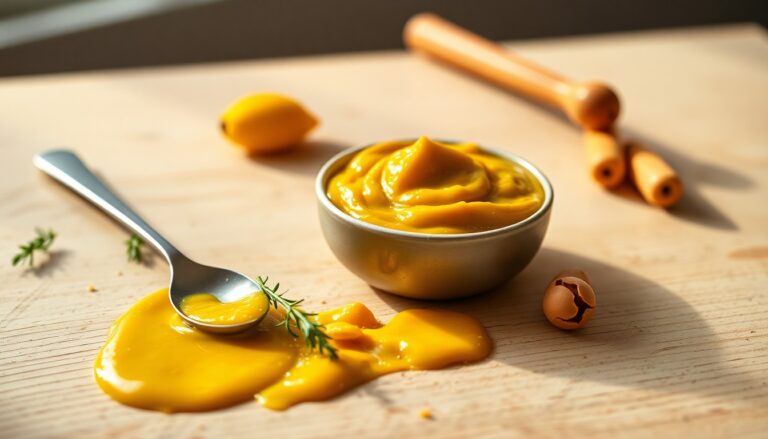
Yellow mustard, also called American or mild mustard, is a condiment made from ground white mustard seeds, with added vinegar, water, salt and often turmeric, which gives it its characteristic bright colour. Milder than Dijon mustard, it stands out for its tangy, not very hot taste that appeals to most people. With just 151 kcal per 100 g, it remains a light condiment, rich in flavour but low in calories. It provides a little protein (6.92 g), moderate carbohydrates (4.33 g) and fibre (3.3 g). Versatile, yellow mustard has its place in a balanced diet to liven up sandwiches, vinaigrettes and grilled food.
Macronutrient breakdown
Nutrition table per 100 g
| Calories | 151 kcal |
| Kilojoules | 628 kJ |
| Protein | 7 g |
| Carbohydrate | 4,4 g |
| Fat | 11,2 g |
| Fibre | 3,3 g |
Micronutrients per 100 g
All measured nutrients, ranked by share of the daily reference intake.
- Omega-3 ALA1,15 g58 %
- Total omega-31,16 g47 %
- Selenium21 µg38 %
- Manganese0,57 mg29 %
- Magnesium98,8 mg26 %
- Calcium207 mg26 %
- Phosphorus154 mg22 %
- Iron2,64 mg19 %
See the other 12 nutrients
- Omega-6 LA1,74 g17 %
- Copper0,14 mg14 %
- Zinc1,12 mg11 %
- Potassium205 mg10 %
- Vitamin B20,11 mg8 %
- Iodine10,7 µg7 %
- Vitamin B10,08 mg7 %
- Vitamin B913 µg7 %
- Vitamin B60,07 mg5 %
- Vitamin B30,8 mg5 %
- EPA0,01 g4 %
- Vitamin B50,19 mg3 %
Anses Ciqual 2025. Source: Anses, 2025, Ciqual food composition table
Tips
Yellow mustard is the ally of tasty, low-calorie seasoning. A teaspoon is generally enough to flavour a dish, which makes it a condiment to favour when you are watching your weight. Its energy density is low, but watch the salt: like many condiments, it can be salty, so use it in moderation if you are watching your sodium intake.
How should you eat yellow mustard?
- Spread on a sandwich, a homemade burger or a hot dog.
- In a homemade vinaigrette emulsified with a drizzle of oil and vinegar, to lift raw vegetables and salads.
- In a marinade for white meat, chicken or summer barbecues.
- Mixed with plain yoghurt for a light sauce, smarter than a classic mayonnaise, which is high in fat.
Nutrition facts and benefits. Mustard seeds contain sulphur compounds that give them their flavour, as well as fibre (3.3 g per 100 g) which contributes to digestive comfort. Yellow mustard also provides small amounts of minerals such as selenium, magnesium and phosphorus. Its main value remains its taste: it lets you cut down on added fats in your preparations while keeping the flavour. It is a good habit in a balanced diet plan, where the aim is to keep the pleasure without piling on the calories.
Tip for active people. Yellow mustard is not a significant source of protein or carbohydrate at the scale of a portion, but it lets you season meals rich in lean protein (chicken, turkey, fish) without excess fat. To lift a grilled chicken breast or a post-workout pulse salad, it adds flavour without empty calories. Remember to vary with other condiments such as spicier brown mustard, depending on your taste.
Storage. Once opened, the jar keeps in the fridge for several weeks, if well closed. If a crust forms on the surface, stir it in or remove it before use. Mustard copes well with the cold and keeps its kick for a long time.
To compare yellow mustard with other condiments and make the right choices every day, explore the condiments and sauces family and check the food calorie table. Used well, it remains a smart condiment for eating tasty food without guilt.