Group · Herbs & spices
Ground oregano
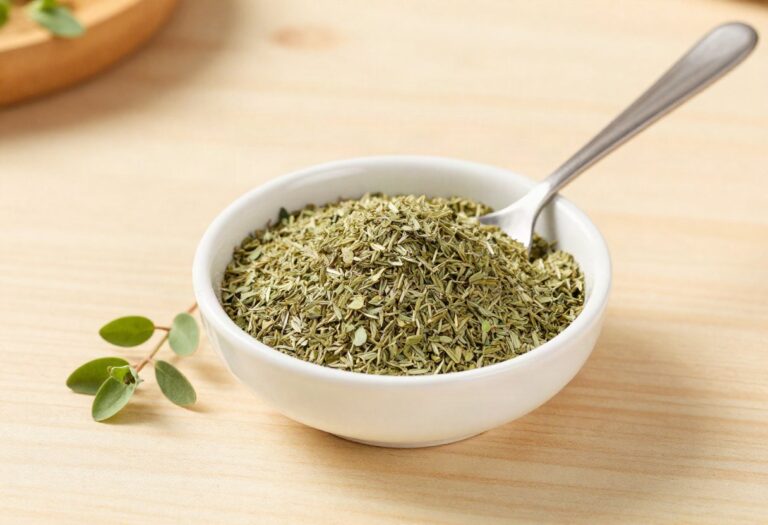
Ground oregano is an aromatic herb that is dried and then ground, emblematic of Mediterranean and Italian cooking. Coming from a plant of the mint family (Lamiaceae), it is a green powder with a warm, slightly peppery and resinous fragrance. It is also found in other forms (dried leaves, fresh sprigs), but the ground version is easy to measure and quickly releases its aromas. Like most herbs and spices, it is used in small amounts, which makes its calorie contribution negligible at the scale of a dish. Rich in aromatic compounds, ground oregano lifts sauces, vegetables and meat while limiting the need for added salt or fat, a real advantage in a balanced diet.
Macronutrient breakdown
Nutrition table per 100 g
| Calories | 265 kcal |
| Kilojoules | 1100 kJ |
| Protein | 9 g |
| Carbohydrate | 26,4 g |
| Fat | 4,3 g |
| Fibre | 42,5 g |
Micronutrients per 100 g
All measured nutrients, ranked by share of the daily reference intake.
- Vitamin K1622 µg829 %
- Iron36,8 mg263 %
- Manganese4,99 mg250 %
- Calcium1600 mg200 %
- Vitamin E18,3 mg153 %
- Vitamin B61,04 mg74 %
- Magnesium270 mg72 %
- Potassium1260 mg63 %
- Vitamin B9dietary folate equivalents237 µg
See the other 10 nutrients
- Copper0,63 mg63 %
- Vitamin B20,53 mg38 %
- Omega-3 ALA0,62 g31 %
- Vitamin B34,64 mg29 %
- Zinc2,69 mg27 %
- Phosphorus148 mg21 %
- Vitamin B10,18 mg16 %
- Vitamin B50,92 mg15 %
- Vitamin A83,9 µg10 %
- Vitamin C2,3 mg3 %
Anses Ciqual 2025. Source: Anses, 2025, Ciqual food composition table
Tips
Ground oregano is measured to the gram: a pinch to half a teaspoon is enough to flavour a tomato sauce, a pizza, a marinade or a dish of roasted vegetables. Even though the nutrition facts show 265 kcal per 100 g, real portions are tiny, so the contribution in calories is insignificant on the plate. That is exactly what makes it a slimming ally: it maximises taste without calorie density.
In terms of composition, ground oregano stands out for its richness in fibre (around 42.5 g per 100 g), its carbohydrate mostly tied up in that fibre, and a modest share of protein (9 g) and fat (4.28 g). At the amounts used, these figures do not weigh on your intake, but they show a concentrated, aromatic plant material. To compare other spices and herbs, you can consult the food calorie table.
Practical tips for eating it:
- Add oregano at the end of cooking or as a finishing touch to preserve its volatile aromas.
- Pair it with garlic, thyme and rosemary for a blend in the style of herbes de Provence.
- Combine it with tomato, olive oil, courgettes, peppers and fresh cheeses.
- Store it in an airtight jar, away from light and damp, to keep its strength for several months.
Oregano shares the table with other versatile herbs such as basil or paprika, and belongs to the large family of herbs and spices, perfect for seasoning without weighing down your recipes.
For active people, the appeal of oregano is above all culinary: it makes meals based on lean protein and vegetables tasty, without resorting to fatty or sugary sauces. That is valuable when you are monitoring your intake during a cutting phase or a controlled bulk. Sprinkle it on a chicken breast, an omelette, oven-baked fish or wholewheat pasta after exercise, and top up your protein intake according to your needs, for example with the ideas in the guide to fitness nutrition.
One thing to watch: ground oregano has no magical properties and remains a seasoning. Favour a pure powder with no added salt, and vary your herbs to multiply flavours. Used regularly, it mainly helps you cut down on salt and make healthy cooking more enjoyable every day.