Group · Vegetables
Leek
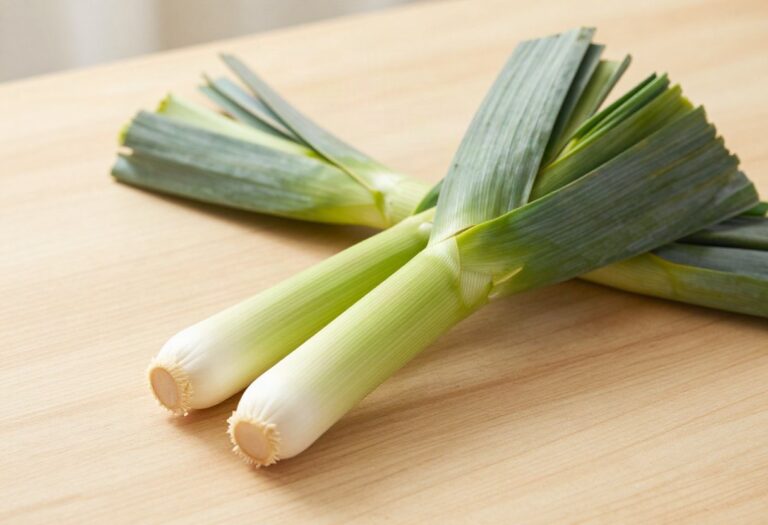
The leek belongs to the large allium family, like onion and garlic. Recognisable by its long white shaft topped with green leaves, this winter vegetable is enjoyed from autumn to spring. There is a distinction between the early leek, thinner and more tender, and the winter leek, more robust and flavourful. Appreciated for its mild, slightly sweet taste, it goes into soups, fondues, quiches and tarts. Nutritionally, the leek is low in calories (around 24.7 kcal per 100 g), rich in water and fibre, while providing vitamins and minerals. It is a great ally in a balanced diet, versatile and easy to cook every day, adding variety of flavour without weighing down the plate.
Macronutrient breakdown
Nutrition table per 100 g
| Calories | 25 kcal |
| Kilojoules | 103 kJ |
| Protein | 2,6 g |
| Carbohydrate | 2,3 g |
| Fat | 0,3 g |
| Fibre | 3,4 g |
Micronutrients per 100 g
All measured nutrients, ranked by share of the daily reference intake.
- Copper0,08 mg8 %
- Vitamin E0,75 mg6 %
- Potassium120 mg6 %
- Manganese0,11 mg6 %
- Vitamin K13,6 µg5 %
- Vitamin C3,79 mg5 %
- Calcium35 mg4 %
- Vitamin B60,06 mg4 %
- Vitamin B9dietary folate equivalents22,8 µg
See the other 9 nutrients
- Phosphorus26 mg4 %
- Vitamin A28,6 µg4 %
- Iron0,45 mg3 %
- Vitamin B10,03 mg3 %
- Vitamin B30,3 mg2 %
- Magnesium6,5 mg2 %
- Vitamin B50,09 mg1 %
- Zinc0,14 mg1 %
- Total omega-30,03 g1 %
Anses Ciqual 2025. Source: Anses, 2025, Ciqual food composition table
Tips
The leek lends itself to many preparations. Thinly sliced, it softens gently in a pan to go with fish and poultry. Whole or in chunks, it can be steamed, boiled, made into a gratin or a comforting soup. Steaming or gentle cooking best preserves its vitamins (vitamin C, vitamin K, folate) and minerals such as potassium and manganese.
Remember to clean it well: split the shaft lengthways and run it under water to remove the soil lodged between the leaves. The white part, more tender, cooks quickly; the green part, more fibrous, is ideal for flavouring stocks and sauce bases. A portion of 150 to 200 g makes a good starter or side.
- Nutritional values: around 24.7 kcal, 2.23 g of carbohydrate, 3.4 g of fibre and 2.56 g of protein per 100 g.
- Weight-loss strengths: rich in water and fibre, the leek provides fullness for few calories, which makes it a useful vegetable in a balanced diet.
- Glycaemic index: moderate, as long as you limit fatty preparations such as overly creamy gratins.
For active people, the leek fits well into a recovery meal: combine it with a complex carbohydrate source (rice, potatoes) and protein (fish, egg, poultry) to replenish your reserves after exercise. Light and digestible when cooked, it completes a balanced plate without weighing on digestion. To go further on organising your meals, discover fitness nutrition.
As for pairings, the leek goes with potato in a classic soup, or with other seasonal vegetables such as carrot and turnip in a pot-au-feu or a mixed vegetable stew. You can also vary things with other vegetables to build colourful, fibre-rich plates.
Storage: keep fresh leeks for a few days in the fridge salad drawer, wrapped in a cloth. You can also blanch and freeze them in chunks to have them to hand. Points to watch: although the leek is low in calories itself, keep an eye on the sauces, butter and cream that often go with fondues and gratins, and which raise the energy count of the plate.