Group · Herbs & spices
Marjoram (dried)
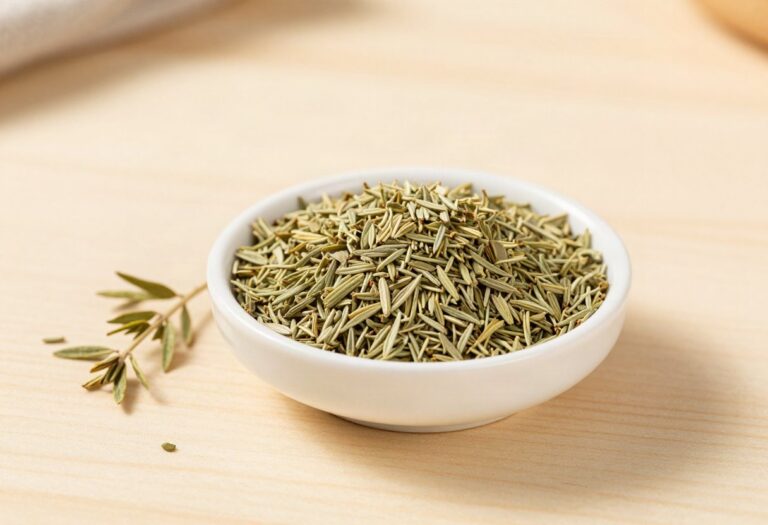
Dried marjoram is an aromatic herb from the Lamiaceae family, a cousin of oregano, with a delicate, warm and slightly sweet scent. Once dried, its small leaves concentrate all their flavour and aromatic compounds, making it a valuable seasoning for lifting dishes. Very popular in Mediterranean and Provençal cooking, it flavours sauces, meats, vegetables and stocks. Nutritionally, marjoram stands out for its fibre and its good mineral content, all for use in very small amounts. With 276 kcal per 100 g, its calories are trivial at the scale of a pinch. A great flavour booster in a balanced, tasty diet.
Macronutrient breakdown
Nutrition table per 100 g
| Calories | 276 kcal |
| Kilojoules | 1140 kJ |
| Protein | 12,7 g |
| Carbohydrate | 20,3 g |
| Fat | 7,1 g |
| Fibre | 40,3 g |
Micronutrients per 100 g
All measured nutrients, ranked by share of the daily reference intake.
- Vitamin K1622 µg829 %
- Iron82,7 mg591 %
- Manganese5,43 mg272 %
- Calcium1990 mg249 %
- Copper1,13 mg113 %
- Magnesium346 mg92 %
- Vitamin B61,19 mg85 %
- Potassium1520 mg76 %
- Vitamin B9dietary folate equivalents274 µg
See the other 8 nutrients
- Vitamin C51,4 mg64 %
- Vitamin A401 µg50 %
- Phosphorus306 mg44 %
- Zinc3,6 mg36 %
- Vitamin B10,29 mg26 %
- Vitamin B34,12 mg26 %
- Vitamin B20,32 mg23 %
- Vitamin E1,69 mg14 %
Anses Ciqual 2025. Source: Anses, 2025, Ciqual food composition table
Tips
Dried marjoram is used in small touches: a pinch is enough to flavour a whole dish. Its aroma is more subtle than that of oregano, so it is often added at the end of cooking to preserve its floral notes. It goes wonderfully with tomatoes, courgettes, white meats, omelettes, sauces and soups. You can also add it to a homemade herbes de Provence blend, alongside thyme and rosemary.
Nutrition facts and benefits: per 100 g, dried marjoram provides 272 kcal, 12.7 g of protein, 20.3 g of carbohydrate, 7.04 g of fat and above all 40.3 g of fibre. That fibre density is remarkable, but remember that you rarely use more than 1 to 2 g per dish, so the real calorie impact stays negligible. Marjoram also contains minerals (calcium, iron, magnesium) and antioxidant aromatic compounds, making it a good ally for tasty, low-salt dishes. Replacing some of the salt with herbs is a good habit that fits in with reducing salt through your diet.
- Storage: keep it in an airtight jar, away from light and moisture. Dried, it keeps its aroma for several months.
- Pairings: excellent with roasted vegetables, fish, pulses and olive oil marinades.
- Amount: start with a small pinch and adjust, as its scent comes out with heat.
For active people: marjoram provides no significant energy, but it deserves a place in a balanced home kitchen. It makes dishes rich in lean protein and vegetables, useful for recovery, much tastier without adding fat or unnecessary salt. For recovery meals, pair it with sources of protein and complex carbohydrate; you can find more in our nutrition and fitness section.
Slimming and weight control: adding flavour without weighing a dish down is one of the great advantages of herbs. Marjoram brings taste for almost zero calories per portion, which helps you enjoy light dishes. To vary the flavours, also try basil or the other plants in the herbs and spices family. By cooking at home and playing with herbs, you naturally cut back on fatty sauces and processed seasonings.