Group · Herbs & spices
Ground savory
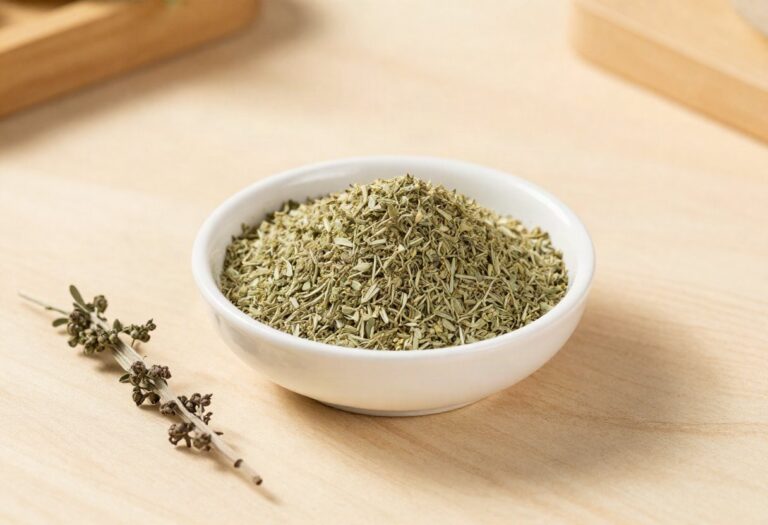
Ground savory is a dried and ground aromatic herb, from a Mediterranean plant with a warm, peppery, slightly camphorous fragrance. There are winter savory (perennial) and summer savory (annual), both prized for their powerful aroma. Ground into powder, it is easy to measure and flavours a multitude of dishes with no notable calorie contribution when used in small amounts. Nutritionally, it provides 264 kcal per 100 g, but these nutrition facts remain theoretical as it is used by the pinch. Its richness in fibre and aromatic compounds makes it a great choice for lifting tasty, balanced cooking while limiting salt.
Macronutrient breakdown
Nutrition table per 100 g
| Calories | 264 kcal |
| Kilojoules | 1090 kJ |
| Protein | 6,8 g |
| Carbohydrate | 23 g |
| Fat | 6 g |
| Fibre | 45,7 g |
Micronutrients per 100 g
All measured nutrients, ranked by share of the daily reference intake.
- Manganese6,1 mg305 %
- Iron37,9 mg271 %
- Calcium2130 mg266 %
- Vitamin B61,81 mg129 %
- Magnesium377 mg101 %
- Copper0,85 mg85 %
- Vitamin C50 mg63 %
- Potassium1050 mg53 %
See the other 4 nutrients
- Zinc4,3 mg43 %
- Vitamin B10,37 mg34 %
- Vitamin B34,08 mg26 %
- Phosphorus140 mg20 %
Anses Ciqual 2025. Source: Anses, 2025, Ciqual food composition table
Tips
Ground savory is used in small touches: a pinch is enough to flavour a dish. Its peppery, resinous taste is ideal with pulses (lentils, beans, chickpeas), slow-cooked meats, stuffings, tomato sauces and fresh cheeses. It is also a key ingredient in herbes de Provence blends, where it sits alongside thyme, rosemary and marjoram.
Practical tips for eating it:
- Add savory at the end or the start of cooking depending on the intensity you want: cooked for longer, it mellows; added late, it stays sharp.
- Use it to replace some of the salt and lift your dishes without adding to the calorie bill.
- Keep the powder in an airtight jar, away from light and moisture, to preserve its aromatic essential oils.
- Combine it with garlic powder and black pepper for an instant marinade base.
Nutritional profile: with about 6.73 g of protein and nearly 45.7 g of fibre per 100 g, ground savory is very dense in fibre, but remember that real portions are tiny (often less than a gram). Its carbohydrates (23 g/100 g) come largely from indigestible fibre. As for benefits, it provides aromatic compounds and adds to the enjoyment of food, a valuable lever for tasty, minimally processed herb and spice cooking.
For active people: savory provides no energy as such, but it helps make appetising the dishes rich in lean protein and complex carbohydrates that are essential for recovery. Seasoning your pulses and meats with herbs rather than fatty sauces lets you keep a balanced diet while varying flavours during bulking or weight-loss phases.
Weight control: good news, savory is almost neutral on your calorie balance at usual doses. It lets you cut down on added fats and salt without sacrificing flavour. To go further in your choices, you can check the food calorie table and put together tasty low-calorie recipes. In short, it is a clever spice: few calories, lots of aroma, and real help for healthy everyday cooking.