Group · Vegetables
Hearts of palm
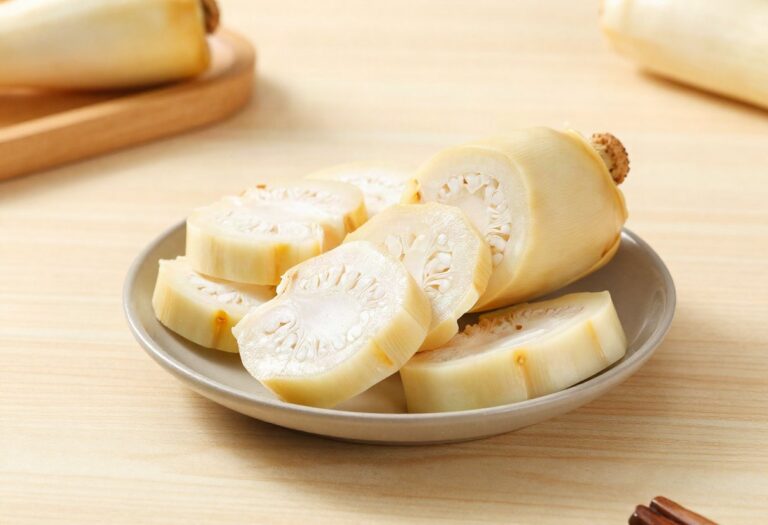
Heart of palm is a tender, refined vegetable harvested from the centre of the trunk of certain palm trees. Most often sold tinned or in a jar, sometimes fresh in producing regions, it comes as white, melting cylinders with a delicate, slightly tangy taste. Popular in exotic salads and buffets, it is one of those unusual vegetables that bring variety to the plate. On nutrition facts, heart of palm has around 41.5 kcal per 100 g, very little fat (0.56 g) and a notable share of carbohydrate. Light, tasty and easy to include, it fits naturally into a balanced diet.
Macronutrient breakdown
Nutrition table per 100 g
| Calories | 42 kcal |
| Kilojoules | 174 kJ |
| Protein | 2,6 g |
| Carbohydrate | 5,5 g |
| Fat | 0,6 g |
| Fibre | 2,2 g |
Micronutrients per 100 g
All measured nutrients, ranked by share of the daily reference intake.
- Manganese1,39 mg70 %
- Iron3,13 mg22 %
- Copper0,13 mg13 %
- Zinc1,15 mg12 %
- Magnesium38 mg10 %
- Vitamin C7,9 mg10 %
- Phosphorus65 mg9 %
- Potassium177 mg9 %
- Vitamin B9dietary folate equivalents39 µg
See the other 7 nutrients
- Calcium58 mg7 %
- Vitamin B20,06 mg4 %
- Vitamin B30,44 mg3 %
- Vitamin B50,13 mg2 %
- Vitamin B60,02 mg2 %
- Vitamin B10,01 mg1 %
- Iodine0,5 µg0 %
Anses Ciqual 2025. Source: Anses, 2025, Ciqual food composition table
Tips
Heart of palm is best eaten raw, simply drained and rinsed to soften the taste of the brine. You can slice it into rounds in a mixed salad, or pair it with avocado, lime, prawns or tomatoes for a fresh, colourful starter. It also goes very well with cucumber or tomato in a light, thirst-quenching summer salad.
Varieties and culinary uses: it is mainly found tinned, more rarely fresh. Its melting texture makes it an interesting substitute in vegetarian dishes, where it can mimic certain shredded preparations. You can also sear it briefly, gratinate it or add it to a risotto, but it does not like prolonged cooking, which softens it too much.
Key nutrients: heart of palm stays low in fat and provides a small amount of plant protein and fibre. It contains minerals such as potassium, iron and zinc, in modest but useful amounts as part of a varied diet. To compare its calories with other vegetables, the food calorie table can help you plan your meals. To discover other options, explore the vegetable family.
Tips for active people: light and digestible, heart of palm suits a post-workout salad, to be combined with a source of protein (fish, egg, chicken) and good carbohydrate for recovery. Its low fat content makes it an ally of pre-competition meals, when digestion needs to stay easy. Remember, though, to vary your intake with other green vegetables such as broccoli to cover your vitamin and mineral needs.
Weight control: its energy density stays moderate and its fat content is almost nil, which makes it an interesting food for slimming. Beware, however, of salads with too much dressing, mayonnaise or oil, which push up the calorie count. Also watch the salt content of tinned versions: a good rinse limits excess sodium.
- Always rinse and drain tinned hearts of palm.
- Keep an opened jar in the fridge, covered in its liquid, and eat within 3 to 4 days.
- Pair them with crunchy vegetables and a light vinaigrette.
- Limit fatty dressings to keep the dish light.