Raclette when pregnant: yes, but not just any way
The short answer
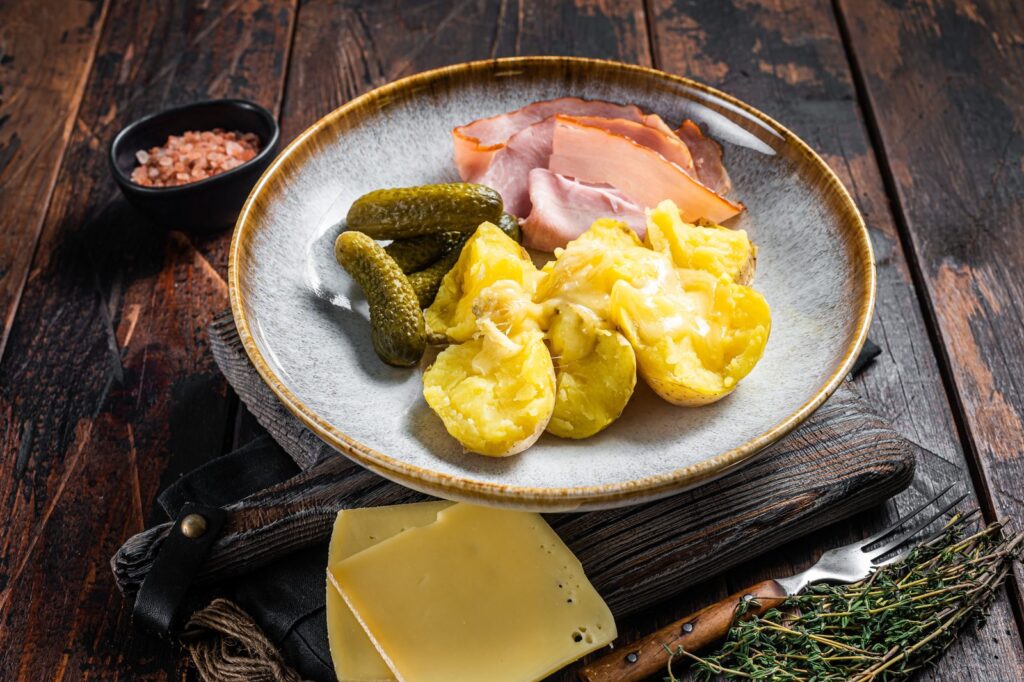
Yes, a pregnant woman can eat raclette, on two conditions: the cheese must be fully melted and piping hot, and there must be no raw cured meat. Raclette cheese is an uncooked pressed cheese, sometimes made with raw milk: eaten raw, it is one of the cheeses Santé publique France advises against during pregnancy. But heat destroys Listeria, the bacterium involved. The real trap with raclette lies elsewhere: the raw ham, rosette, coppa or Grisons air-dried beef on the platter, which are not recommended because of listeriosis and toxoplasmosis. Replace them with reheated cooked ham or cooked chicken.
These guidelines follow official French recommendations. If in doubt, your midwife or doctor can advise you.
The real risks
- Listeriosis, caused by Listeria monocytogenes: rare, with fewer than fifty cases a year in pregnant women in France according to Santé publique France, but serious for the baby. The bacterium is found mainly in raw-milk cheeses and some cured meats, and it multiplies in the fridge. Cooking destroys it.
- Toxoplasmosis, caused by a parasite found in raw or undercooked meat and on poorly washed vegetables. It affects pregnant women who are not immune: the blood test you have early in pregnancy shows whether that is the case for you.
Santé publique France and Manger Bouger advise against raw-milk cheeses during pregnancy, except cooked pressed cheeses such as comté, lightly matured uncooked pressed cheeses, cheese rinds, as well as dry sausage, dry-cured ham and raw or undercooked meat. Cooked ham, for its part, should be reheated before eating.
The traffic-light guide to the raclette platter
| Item | Pregnant | Why |
|---|---|---|
| Raclette cheese made with pasteurised or thermised milk, fully melted | 🟢 allowed | treated milk and heat |
| Raw-milk raclette cheese, melted until sizzling | 🟢 allowed | heat destroys Listeria; the cheese must be very hot, not lukewarm |
| Raw-milk raclette cheese, barely warmed or raw | 🔴 avoid | raw milk, uncooked pressed cheese |
| Cheese rind | 🟠 with conditions | rinds are not recommended; remove it, or melt it completely |
| Raw ham, coppa, Grisons air-dried beef, bresaola | 🔴 avoid | raw cured meats: listeriosis and toxoplasmosis |
| Rosette, dry sausage, chorizo | 🔴 avoid | dry sausage is not recommended |
| Cooked ham, bacon, lardons (diced bacon) | 🟢 allowed if reheated | heat on the raclette grill or in the oven until piping hot |
| Cooked chicken or turkey breast | 🟢 allowed | meat cooked through |
| Potatoes, gherkins, onions | 🟢 allowed | cooked or tinned foods |
| Green salad | 🟢 allowed if washed at home | raw vegetables must be washed thoroughly; avoid in restaurants |
How can you tell whether your cheese is made with raw milk? The words « au lait cru » (raw milk) are compulsory on the label. Raclette de Savoie can be made with raw or thermised milk: read the label. If you buy raw-milk cheese, just make sure each portion is thoroughly melted.
How much?
Once the safety question is settled, raclette is still a very rich meal:
| For | Calories | Protein | Saturated fat | Salt | Calcium |
|---|---|---|---|---|---|
| 100 g of raclette cheese | 342 kcal | 23.4 g | 18.5 g | 1.69 g | 658 mg |
| 150 g of raclette cheese | 513 kcal | 35.1 g | 27.8 g | 2.54 g | 987 mg |
| 200 g of steamed potatoes | 152 kcal | – | – | 0.28 g | – |
150 g of cheese already provides more saturated fat than the daily reference value of 20 g, and half the salt recommended by the WHO, less than 5 g a day. An occasional raclette, with a big, well-washed salad and potatoes, is perfectly compatible with pregnancy; making it a weekly meal is less so. If you have gestational diabetes, pay particular attention to the potatoes: see potatoes and diabetes.
The whole meal, in numbers
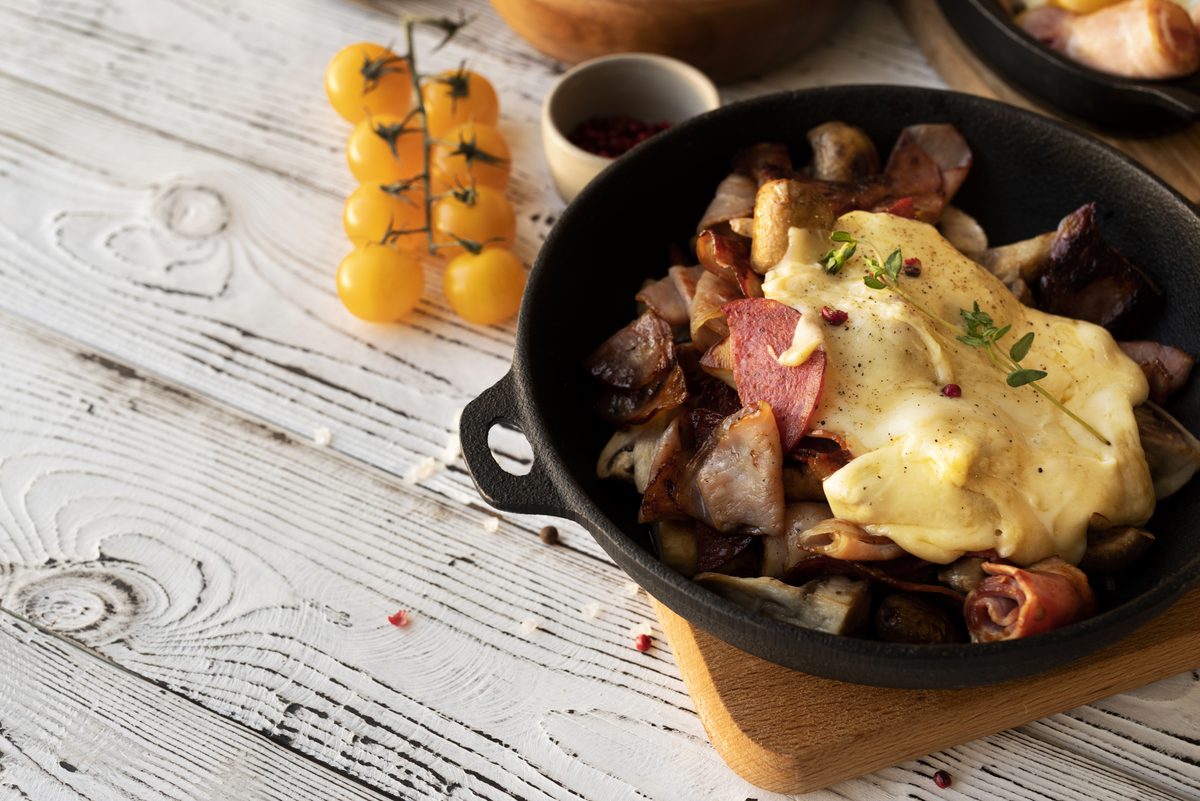
The cheese never comes alone. Here is what a full plate of raclette adds up to, and a lighter version that keeps all the pleasure:
| Plate | Calories | Protein | Saturated fat | Salt |
|---|---|---|---|---|
| Classic: 150 g of cheese, 200 g of potatoes, 50 g of cooked ham, 30 g of gherkins | 727 kcal | 50 g | 28.4 g | 4.3 g |
| Lighter: 100 g of cheese, 250 g of potatoes, 50 g of cooked ham, a big salad | 589 kcal | 39 g | 19.2 g | 3.0 g |
| Benchmark for the whole day | 20 g | 5 g |
The classic plate alone provides almost all the salt recommended for the day and more than the reference value for saturated fat. By cutting the cheese to 100 g and adding potatoes and salad, you stay within the benchmarks, with still 39 g of protein. Gherkins, by the way, are surprisingly salty: 1.72 g of salt per 100 g according to Ciqual.
Raclette and heartburn
Especially in late pregnancy, many pregnant women suffer from acid reflux, notably because of the baby pressing on the stomach. A rich, fatty meal of melted cheese in the evening brings together everything that encourages it. Ameli, in its pregnancy advice updated in June 2026, recommends:
- spreading meals out and avoiding those that are too large;
- not making big efforts after the meal, and in particular avoiding bending forward;
- not lying down straight after dinner, but waiting three hours;
- raising the head of the bed and sleeping on your back.
For a raclette, that means: plan it for lunch or early evening, keep to a reasonable portion of cheese, and take your time. If heartburn is frequent, talk to your doctor or midwife.
Useful nutrients during pregnancy
Raclette cheese is an excellent source of calcium, 658 mg per 100 g according to Ciqual, and of protein. For everyday calcium, cooked pressed cheeses, which are allowed even when made with raw milk, such as comté or emmental, are other good choices. See our guides to cheese and diabetes, foods high in calcium and how much cheese per day.
What about white wine?
Raclette is traditionally served with white wine. During pregnancy, the recommendation from Santé publique France is simple: no alcohol at all, throughout pregnancy, because alcohol passes into the baby’s blood. There is no known safe amount. Sparkling water with lemon, apple juice or a hot herbal tea go very well with melted cheese.
Alternatives for a worry-free raclette
- Cheese: a pasteurised raclette cheese, or a mix with emmental or comté, which are cooked pressed cheeses.
- Meat: cooked ham, turkey or chicken breast, reheated on the grill; mushrooms and grilled vegetables.
- Sides: steamed potatoes, a big green salad washed at home, gherkins.
And for another melted-cheese evening, tartiflette and potato gratin dauphinois, baked in the oven, raise fewer questions: see our gratin dauphinois. For all the rules, see our guide to eating during pregnancy.
Fondue, tartiflette, mont d’or: the other melted-cheese dishes
The raclette question also comes up for all winter cheese dishes. The Listeria rule is the same everywhere: a cheese heated until very hot is no longer a problem, even if it is made with raw milk or is a soft cheese. But some dishes have a trap of their own.
| Dish | Pregnant | What to watch |
|---|---|---|
| Tartiflette, reblochon baked in the oven | 🟢 allowed | served piping hot; lardons cooked |
| Hot mont d’or, baked in the oven | 🟢 allowed | soft cheese, raw not recommended; hot right through, and rind set aside |
| Aligot | 🟢 allowed | fresh tomme melted into hot mash |
| Croque-monsieur | 🟢 allowed | ham and cheese heated right through |
| Gratin dauphinois or vegetable and cheese gratin | 🟢 allowed | baked in the oven |
| Savoyard fondue | 🟠 with conditions | the cheese is hot, but the white wine and kirsch leave some alcohol |
| Alcohol-free fondue, made with stock or apple juice | 🟢 allowed | same pleasure, no alcohol |
The alcohol in fondue does not completely evaporate
You often hear that alcohol « evaporates during cooking ». Measurements from the US Department of Agriculture show that this is false, or at least very incomplete:
| How the alcohol is cooked | Share of the alcohol that remains |
|---|---|
| Poured into a hot liquid, off the heat | 85% |
| Flambéed | 75% |
| Simmered or baked for 15 minutes | 40% |
| Simmered for 30 minutes | 35% |
| Simmered for 1 hour | 25% |
| Simmered for 2 hours | 10% |
| Simmered for 2 hours 30 minutes | 5% |
A Savoyard fondue, where the wine is heated just long enough to melt the cheese and then through the meal, therefore keeps a good part of its alcohol, and the kirsch, often added at the end of preparation, keeps almost all of it. As there is no safe dose of alcohol during pregnancy, the simplest thing is to ask for a fondue made without wine or kirsch, or to make it at home with stock.
These figures apply to all dishes cooked with wine: a beef bourguignon simmered for more than two hours keeps only 5 to 10% of the added alcohol, whereas a sauce deglazed with wine and served straight away keeps most of it.
And while breastfeeding?
While breastfeeding, the precautions against listeriosis and toxoplasmosis that apply to pregnancy no longer apply: raclette and its cured meats become possible again. The white wine that often goes with it, however, passes into breast milk. See eating while breastfeeding.
Frequently asked questions
Can you eat raclette when pregnant?
Yes, if the cheese is fully melted and hot, and with no raw cured meat. Raw-milk cheese is acceptable if it sizzles; raw or lukewarm, it is best avoided.
Is raw-milk raclette cheese dangerous when pregnant?
Raw, yes, it is not recommended. Melted until very hot, the heat destroys Listeria.
Which cured meats can you have with raclette when pregnant?
Cooked ham, bacon or poultry breast, reheated. Avoid raw ham, coppa, rosette, Grisons air-dried beef and dry sausage.
Can you eat the raclette rind when pregnant?
Cheese rinds are not recommended. Remove it, or melt it completely.
I ate raw ham at a raclette while pregnant, what should I do?
The risk from a one-off occasion is low. If you get a fever in the following weeks, tell your doctor or midwife; if you are not immune to toxoplasmosis, your monthly blood tests will allow this to be checked.
Can you eat a Savoyard fondue when pregnant?
The cheese is piping hot, so there is no risk of listeriosis, but the white wine and kirsch leave a significant share of alcohol: between 25 and 85% depending on the cooking, according to USDA measurements. Choose an alcohol-free fondue.
Is tartiflette allowed when pregnant?
Yes: the reblochon is baked in the oven with the potatoes and lardons. Serve it piping hot.
Does alcohol evaporate during cooking?
Not completely: 75% of the alcohol remains after flambéing, 40% after 15 minutes of cooking and still 5% after 2 hours 30 minutes of simmering, according to the USDA.
Does an evening raclette cause heartburn?
It is a large, fatty meal, which encourages the acid reflux that is common in late pregnancy. Ameli advises avoiding meals that are too large and waiting three hours before lying down.
Can you eat it when pregnant? The series
Food by food, what is allowed, allowed with conditions or best avoided during pregnancy: cheesecake when pregnant, foie gras when pregnant, feta when pregnant, mozzarella when pregnant, surimi when pregnant, cured meats when pregnant, smoked salmon when pregnant, tiramisu when pregnant, chorizo when pregnant, taramasalata when pregnant, honey when pregnant, camembert and brie when pregnant, prawns when pregnant, soft-boiled egg when pregnant, sushi when pregnant, raw ham when pregnant, hummus when pregnant, tinned tuna when pregnant.
Our sources
- Manger Bouger (Santé publique France), « Quels aliments éviter et quelles précautions prendre quand on est enceinte ? », updated 2026.
- Santé publique France, 1000 premiers jours website: « Les précautions alimentaires pendant la grossesse ».
- Ameli, foods to avoid during pregnancy; toxoplasmosis: preventive measures.
- Santé publique France, listeriosis surveillance data.
- Ciqual 2025 table (Anses): raclette cheese, steamed potato. WHO: less than 5 g of salt per day.
- USDA, Table of Nutrient Retention Factors, Release 6 (2007): alcohol retention by cooking method; Augustin J et al., Alcohol retention in food preparation, J Am Diet Assoc, 1992 (PMID 1556354).
- Ameli, « Nausées, vomissements, remontées acides et constipation lors de la grossesse », updated 19 June 2026.
- Santé publique France: no alcohol during pregnancy.
- Ciqual 2025 table (Anses): superior-quality cooked ham, gherkin in vinegar.