Group · Starchy foods
Tapioca
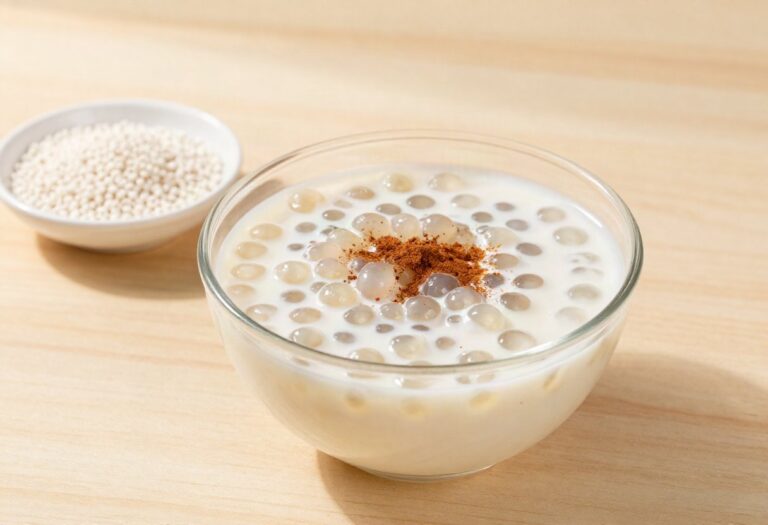
Tapioca is a starchy food made from the starch extracted from the root of cassava. Sold as small translucent white pearls, sometimes as flakes or flour, it is notable for its soft texture once cooked and its very neutral taste. Widely used in Latin American, African and Asian cooking, it is used to thicken preparations as well as to make desserts and puddings. Naturally gluten-free, tapioca is a source of easily digested carbohydrates. With around 354 kcal per 100 g and over 87.8 g of carbohydrates, it is a very energy-rich food but low in protein, fat and fibre, to be included in moderation in a balanced diet.
Macronutrient breakdown
Nutrition table per 100 g
| Calories | 354 kcal |
| Kilojoules | 1500 kJ |
| Protein | 0,2 g |
| Carbohydrate | 87,8 g |
| Fat | 0,1 g |
| Fibre | 0,9 g |
Micronutrients per 100 g
All measured nutrients, ranked by share of the daily reference intake.
- Iron1,58 mg11 %
- Manganese0,11 mg6 %
- Calcium20 mg3 %
- Vitamin B50,14 mg2 %
- Copper0,02 mg2 %
- Iodine2,7 µg2 %
- Zinc0,12 mg1 %
- Phosphorus7 mg1 %
- Vitamin B9dietary folate equivalents4 µg
See the other 7 nutrients
- Vitamin B60,01 mg1 %
- Potassium11 mg1 %
- Selenium0,3 µg1 %
- Vitamin B10 mg0 %
- Magnesium1 mg0 %
- Omega-3 ALA0 g0 %
- Omega-6 LA0 g0 %
Anses Ciqual 2025. Source: Anses, 2025, Ciqual food composition table
Tips
Tapioca has many culinary uses. The pearls are cooked in milk, water or stock: they swell and turn translucent, ideal for a creamy pudding, a dessert flavoured with vanilla or coconut, or for thickening a soup. Tapioca flour is used as a binder in sauces, custards and gluten-free baking.
A few practical tips:
- Allow a reasonable portion of 20 to 30 g of dry pearls per person, as tapioca swells a great deal when cooked.
- Rinse the pearls briefly, then simmer them gently, stirring to stop them sticking.
- Store dry tapioca in an airtight jar, away from damp; it keeps for a very long time.
- Limit the sugar added to desserts so as not to push up the calorie count.
In terms of nutrition facts, tapioca is a starchy food that is almost entirely carbohydrate: hardly any protein, very little fat and little fibre. Its glycaemic index is high, which makes it a quickly available source of energy. That is useful for a boost, less so for lasting fullness. To balance a meal, pair it with a source of protein (egg, dairy, fish) and with vegetables or fruit to add fibre and micronutrients. If you are looking for starchy foods higher in fibre, turn to quinoa or brown rice instead.
For active people: thanks to its fast carbohydrates and high digestibility, tapioca can serve as fuel before exercise or as a carbohydrate refuel after training. A tapioca milk pudding, served with a source of protein such as yoghurt or a portion of protein powder, makes a practical recovery snack. To go further, discover our ideas for protein snacks suited to sport.
Weight control: with its 354 kcal per 100 g dry, tapioca has a high calorie density and is not very filling because of its low fibre content. Keep an eye on portions and added sugar if you are watching your figure. To compare its calories with other starchy foods, see the page for the starchy foods family. Tapioca has a place in a varied diet, provided you include it in moderation and build the rest of the plate well.