Fenugreek: benefits, side effects and how much to take
The short answer
Fenugreek is a legume whose seeds are used as a spice and as a supplement. What is it good for? The best-studied benefit is blood sugar: in trials, mainly in people with diabetes and from about 5 g of seed powder a day, it modestly lowers fasting glucose and HbA1c. Evidence for breast milk supply is weak, and trials show no effect on body weight. It is not risk-free: the European Medicines Agency (EMA) advises against it in pregnancy and breastfeeding, it is contraindicated with peanut, soy or legume allergy, and it needs caution with diabetes medication or blood thinners.
This article is for information and does not replace medical advice. If you are pregnant, breastfeeding or take medication (diabetes, anticoagulants), talk to your doctor before using fenugreek supplements.
What is fenugreek?
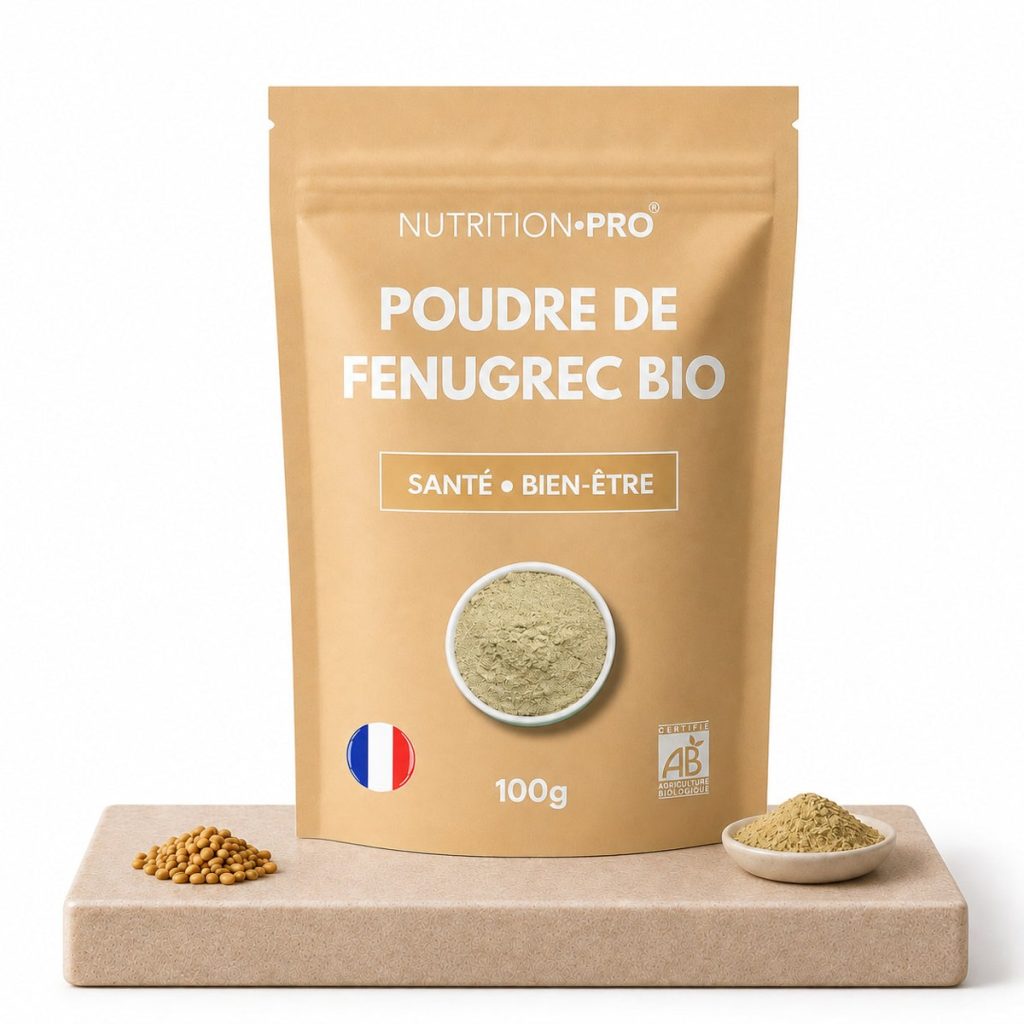
Fenugreek (Trigonella foenum-graecum) belongs to the legume family, like chickpeas, lentils and peanuts. Its small, hard, yellow-brown seeds are sold whole or ground, and its leaves (methi) are used in Indian cooking. It tastes slightly bitter, nutty and maple-like, thanks to a compound called sotolon. The seeds also contain mucilage (a soluble fibre), trigonelline, 4-hydroxyisoleucine and saponins such as diosgenin.
| Fenugreek seed powder | Per 100 g | Per teaspoon (5 g) |
|---|---|---|
| Energy | 340 kcal | 17 kcal |
| Protein | 25 g | 1.3 g |
| Carbohydrates | 50 g | 2.5 g |
| Fat | 6.5 g | 0.3 g |
Full nutrient details are on our fenugreek nutrition page. In the kitchen, a pinch lifts a curry such as our chickpea and spinach curry.
Fenugreek benefits: what the research shows
Blood sugar: the best-documented effect
| Meta-analysis | Trials | Main result |
|---|---|---|
| Chehregosha et al., 2025 | 26 RCTs | Fasting glucose -16.8 mg/dL; 2-hour glucose -22.3 mg/dL; HbA1c -0.63 points; no significant effect on insulin resistance (HOMA-IR) |
| Neelakantan et al., 2014 | 10 trials | Fasting glucose -0.96 mmol/L (about -17 mg/dL); HbA1c -0.85 points (3 trials); effect only in people with diabetes taking at least 5 g of seed powder a day |
Doses in the trials ranged from 1 to 100 g a day. Low doses (under 2 g of extract) showed no effect, most trials were of low quality and results varied widely. Fenugreek can support a suitable diet, not replace treatment. See our type 2 diabetes diet guide, low GI foods, our best blood sugar supplement comparison and berberine benefits and side effects.
Cholesterol: a small effect
Across 12 randomised trials and 560 adults (Askarpour et al., 2020), fenugreek lowered total cholesterol by 9.4 mg/dL, LDL by 6.6 mg/dL and triglycerides by 13.8 mg/dL, and raised HDL by 3.5 mg/dL. Modest; food comes first: see foods to lower cholesterol.
Fenugreek benefits for women: breast milk supply
A network meta-analysis (Khan et al., 2018; 5 studies, 122 women on fenugreek) found a small increase in milk volume versus placebo, but less than two other galactagogues (coleus and dates). The broader Cochrane review (Foong et al., 2020; 41 trials) rated the evidence for natural galactagogues low to very low. LactMed notes the effect may be partly psychological, and in a survey of 85 mothers who used it, 45% reported a side effect. Check latch and feeding frequency with a lactation consultant first. See also what to eat while breastfeeding.
Fenugreek benefits for men
A meta-analysis of 7 studies (Isenmann et al., 2023; 449 participants) found a small rise in total testosterone in male athletes, mostly with standardised extracts rather than seed powder.
Weight gain and breast enlargement
The EMA recognises fenugreek only as a traditional remedy for temporary loss of appetite, based on long-standing use. In Askarpour’s meta-analysis, body weight did not change, and in a 6-week trial in 39 overweight men (Chevassus et al., 2010), a seed extract slightly reduced fat intake without changing weight. To gain weight, eat more calories and enough protein: see nutrition for muscle gain. As for “bust enhancing” products, a review in Obstetrics & Gynecology (Fugh-Berman, 2003) found no published clinical trials and advised against them.
Fenugreek side effects and safety
| Topic | EMA position |
|---|---|
| Contraindications | Allergy to fenugreek, peanut, soy or other legumes |
| Pregnancy, breastfeeding | Not recommended, nor in women of childbearing age without contraception (reproductive toxicity in animals) |
| Under 18 | Not recommended (no safety data) |
| Treated diabetes | Possible blood-sugar-lowering effect: monitor glucose closely |
| Side effects | Flatulence, diarrhoea, dizziness; allergic reactions (asthma, rhinitis, facial swelling after skin use) |
| High doses | 25 to 100 g of powder a day: digestive upset in 4 out of 10 cases |
- Pregnancy: a toxicology review (Ouzir et al., 2016) reports anti-implantation and abortifacient effects and birth defects in animals, and concludes fenugreek is not recommended in pregnancy. See our pregnancy diet guide.
- Peanut and legume cross-allergy: in sera from 13 patients allergic to both (Faeste et al., 2010), two fenugreek proteins closely resembled the major peanut allergens Ara h 1 and Ara h 3. LactMed also lists cross-reaction with chickpeas. If you are allergic to peanuts, avoid fenugreek, including in curry blends.
- Low blood sugar: it may add to the effect of diabetes medication. Talk to your doctor first.
- Blood thinners: the EMA reports no interaction, but a published case (Lambert and Cormier, 2001) describes a rise in INR on warfarin with boldo and fenugreek, which reversed on stopping and recurred on restarting; LactMed also flags a bleeding risk with warfarin. The Nutrition•pro product page itself advises against use with anticoagulants.
- Maple syrup odour: sotolon can make urine, sweat and possibly breast milk smell of maple syrup. Harmless. LactMed also mentions rare liver injury reports and lowered potassium.
How to take fenugreek
| Use | Reference dose | Source |
|---|---|---|
| Temporary loss of appetite (traditional use) | Powder: 380 to 1,100 mg three times a day before meals (1.1 to 3.3 g a day); tea: 1 to 6 g in 250 ml of boiling water | EMA |
| Breastfeeding | 1 to 6 g a day (typical doses) | LactMed |
| Blood sugar | Effect from 5 g of powder a day, in people with diabetes | Neelakantan 2014 |
Start low (digestive upset rises with dose), take it with food, see a doctor if appetite loss lasts more than two weeks, and avoid it under 18, in pregnancy and while breastfeeding unless your doctor agrees.
Nutrition•pro: organic, single-ingredient fenugreek powder
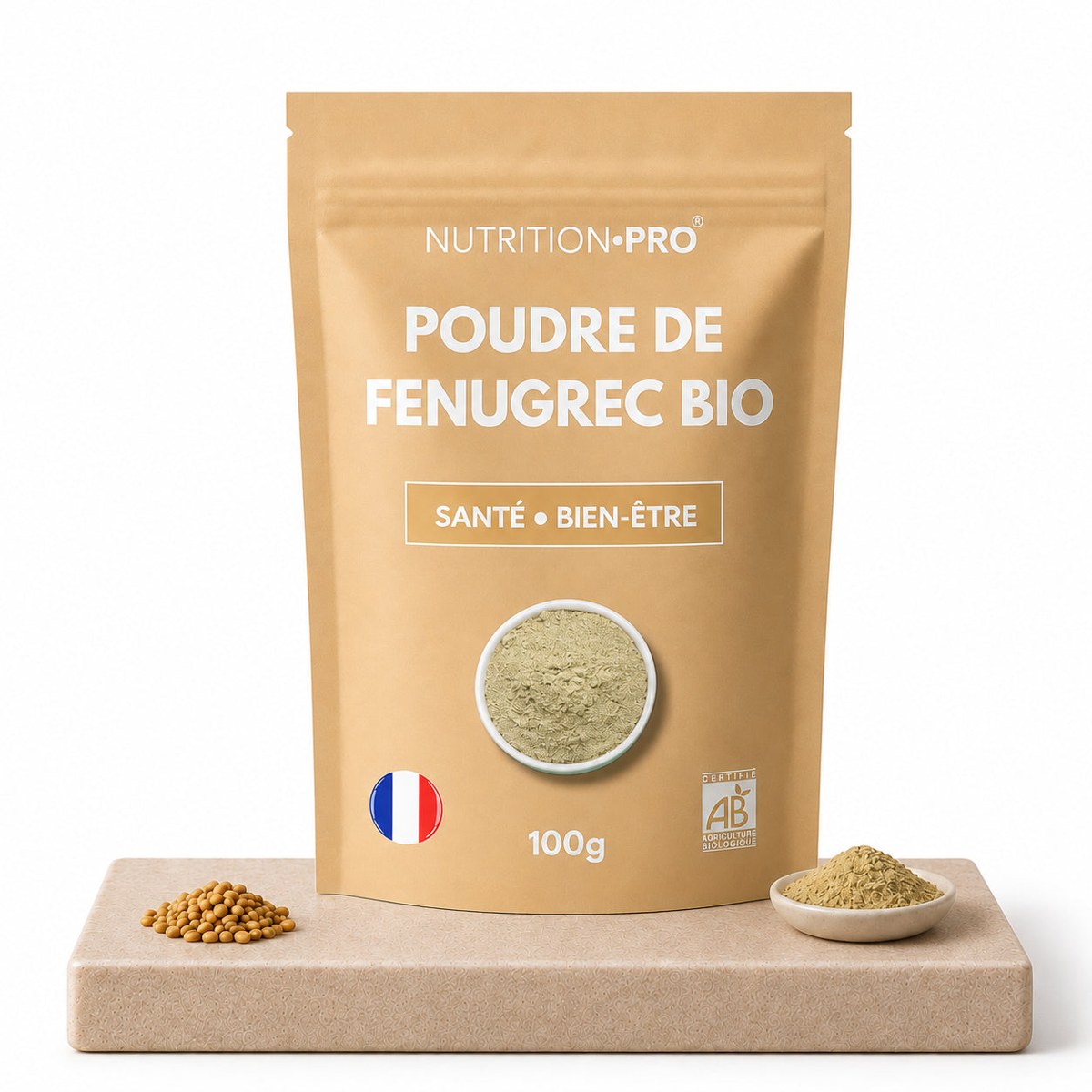
Nutrition•pro is a French brand based in Paris. Its organic fenugreek powder keeps it simple: ground seeds and nothing else, which is the very form used in the blood sugar trials.
- single ingredient: organic fenugreek seed powder (Trigonella foenum-graecum);
- origin: the product page presents fenugreek as a plant native to the Near and Middle East;
- suggested use: 1 teaspoon (3 to 5 g) a day in a hot drink, smoothie, soup, bread or savoury dish;
- 100 g bag (20 to 33 days depending on dose) or 500 g (100 to 166 days);
- €14.99 per 100 g and €49.99 per 500 g (prices checked on 22/11/2026), about €0.45 to €0.75 a day (100 g) or €0.30 to €0.50 a day (500 g).
How does the dose compare? 3 to 5 g a day is slightly above the EMA traditional dose for appetite (1.1 to 3.3 g), within the usual breastfeeding range (1 to 6 g), and at the low end of the range where blood sugar effects were seen in people with diabetes. The studies above used various preparations, not this product. The brand advises against use with anticoagulants; add the EMA cautions (pregnancy, breastfeeding, peanut or legume allergy, diabetes medication).
Promo code: SEOCONSULTINGSL for 10% off your order: €13.49 per 100 g and €44.99 per 500 g (as of 22/11/2026).
See Nutrition•pro organic fenugreek powder →
Partner link: we earn a commission if you order through this link, at no extra cost to you.
Frequently asked questions
What is fenugreek good for?
Mainly a modest drop in fasting glucose and HbA1c in people with diabetes, from 5 g of powder a day, plus a small effect on cholesterol. It is also a traditional remedy for temporary loss of appetite.
What are the benefits of fenugreek for females?
It is widely used to boost breast milk, but the evidence is weak, and the EMA does not recommend it while breastfeeding or pregnant. No trial shows breast enlargement.
What are the side effects of fenugreek?
Gas, diarrhoea, dizziness, maple-scented sweat and urine, and allergic reactions, especially in people allergic to peanuts or legumes. It can lower blood sugar and may interact with warfarin.
Does fenugreek make you gain weight?
Not according to trials: body weight did not change in a meta-analysis of 12 trials.
How much fenugreek per day?
1.1 to 3.3 g of powder for appetite (EMA), 1 to 6 g for breastfeeding (LactMed), and at least 5 g in the blood sugar trials, with medical follow-up.
Sources
- EMA, Committee on Herbal Medicinal Products. European Union herbal monograph on Trigonella foenum-graecum L., semen. EMA/HMPC/179591/2018, revision 1, 24 November 2021. ema.europa.eu
- Chehregosha F. et al. The effects of fenugreek (Trigonella foenum-graecum) seed on glycemic parameters: an updated systematic review and meta-analysis of randomized controlled trials. Avicenna J Phytomed, 2025; 15(6): 1677-1699. PubMed 41509111
- Neelakantan N. et al. Effect of fenugreek (Trigonella foenum-graecum L.) intake on glycemia: a meta-analysis of clinical trials. Nutr J, 2014; 13: 7. PubMed 24438170
- Askarpour M. et al. Effect of fenugreek supplementation on blood lipids and body weight. J Ethnopharmacol, 2020; 253: 112538. PubMed 32087319
- Khan T.M. et al. Effectiveness of fenugreek as a galactagogue: a network meta-analysis. Phytother Res, 2018; 32(3): 402-412. PubMed 29193352
- Foong S.C. et al. Oral galactagogues for increasing breast milk production in mothers of non-hospitalised term infants. Cochrane Database Syst Rev, 2020; 5: CD011505. PubMed 32421208
- Drugs and Lactation Database (LactMed). Fenugreek. NICHD, updated 2026. PubMed 30000838
- Ouzir M. et al. Toxicological properties of fenugreek. Food Chem Toxicol, 2016; 96: 145-54. PubMed 27498339
- Faeste C.K. et al. Characterization of potential allergens in fenugreek. J Proteomics, 2010; 73(7): 1321-33. PubMed 20219717
- Lambert J.P., Cormier J. Potential interaction between warfarin and boldo-fenugreek. Pharmacotherapy, 2001; 21(4): 509-12. PubMed 11310527
- Chevassus H. et al. A fenugreek seed extract selectively reduces spontaneous fat intake in overweight subjects. Eur J Clin Pharmacol, 2010; 66(5): 449-55. PubMed 20020282
- Isenmann E. et al. The anabolic effect of fenugreek: a systematic review with meta-analysis. Int J Sports Med, 2023; 44(10): 692-703. PubMed 37253363
- Fugh-Berman A. “Bust enhancing” herbal products. Obstet Gynecol, 2003; 101(6): 1345-9. PubMed 12798545