Diet while breastfeeding: the guide

When you breastfeed, no special diet is needed: this is the position of Santé publique France. Your milk stays nourishing even if your plate is not perfect. A few guidelines do matter, though: drink more, keep up your intake of protein, iodine, calcium and omega-3, limit caffeine, avoid alcohol and soya, and above all do not start a weight-loss diet. Here is what French and European authorities say, and how to put it into practice day to day, with a baby in your arms.
👉 Free tool: Calorie needs – calculate it in 30 seconds, no sign-up needed.
How much extra energy?
Producing milk costs energy. EFSA estimates the cost of milk production during exclusive breastfeeding at about 670 kcal a day, part of which (about 170 kcal) is drawn from the body’s reserves. The surplus to be supplied by food is therefore about 500 kcal a day during the first six months of exclusive breastfeeding. Beyond six months, EFSA does not set a surplus, because the amount of milk varies too much depending on what the child is already eating.
Santé publique France puts the same idea differently: a breastfeeding woman does not need to force herself to eat more, as appetite adjusts. In practice, listen to your hunger, plan snacks, and do not count calories. If you want an estimate for your own case, our calorie needs tool gives an order of magnitude, to adjust according to how you feel.
As a guide, Santé publique France indicates that at the end of the first month, a baby drinks on average 750 to 800 ml of milk per 24 hours. This production explains the thirst and hunger of the first few weeks.
Nutrients you need more of
In 2021, Anses published specific references for breastfeeding women. Some increases are marked, notably for vitamin A, vitamin C, vitamin B9, iodine and choline, because these nutrients pass into the milk.
| Nutrient | Adult woman | Breastfeeding woman | Where to find it |
|---|---|---|---|
| Vitamin A | 650 µg/day | 1,300 µg/day | Carrots, sweet potato, green vegetables, dairy products, eggs |
| Vitamin C | 110 mg/day | 170 mg/day | Kiwi, citrus fruit, peppers, cabbages |
| Vitamin B9 | 330 µg/day | 500 µg/day | Green vegetables, pulses, nuts |
| Vitamin B12 | 4 µg/day | 5 µg/day | Animal products only |
| Iodine | 150 µg/day | 200 µg/day | Iodised salt, sea fish, dairy products |
| Choline | 400 mg/day | 520 mg/day | Eggs, meat, fish |
| Selenium | 70 µg/day | 85 µg/day | Fish, eggs, meat |
| Potassium | 3,500 mg/day | 4,000 mg/day | Fruit, vegetables, pulses |
| Zinc (average phytate intake) | 9.3 mg/day | 12.2 mg/day | Meat, cheese, pulses |
| Iron | 11 or 16 mg/day | 16 mg/day | Meat, pulses |
| Calcium (aged 25 and over) | 950 mg/day | 950 mg/day | Dairy products, calcium-rich waters, pulses |
Calcium does not change: EFSA explains that calcium metabolism adapts during pregnancy and breastfeeding, so the reference for non-breastfeeding women applies. For iron, EFSA notes that the requirement is slightly lower during breastfeeding, but keeps the same reference to allow stores to be rebuilt and to cover the return of periods.
Protein
EFSA adds 19 g of protein a day during the first six months of exclusive breastfeeding, then 13 g beyond that, on top of the reference of 0.83 g per kilo of body weight. To put it in perspective, 100 g of drained sardines in oil already provide 23.3 g according to Ciqual, and 100 g of 0% fat fromage blanc about 7.3 g. No need for protein powder: your plate is enough. Our protein needs tool helps you estimate your own baseline.
Drinking enough, without forcing yourself
Santé publique France points out in its breastfeeding guide: breastfeeding increases water needs, so remember to drink water regularly. EFSA puts this surplus at about 700 ml a day on top of the 2 litres of total intake advised for women (water from food included). No need to measure: drink when you are thirsty, keeping a bottle of water within reach during feeds.
Water remains the only essential drink. Sugary drinks should be limited (no more than one glass a day according to Santé publique France, fruit juice included). For details of your needs, see our guide how much water to drink a day and the water needs tool.
Omega-3: what you eat passes into your milk
The DHA content of breast milk, a long-chain omega-3, depends heavily on the mother’s diet. A meta-analysis of 65 studies (Brenna et al., American Journal of Clinical Nutrition, 2007) finds an average content of 0.32% of the milk’s fatty acids, with variations from 0.06% to 1.4% depending on the country; the highest values are seen in coastal populations who eat seafood.
EFSA recommends adding 100 to 200 mg of DHA a day during breastfeeding to the 250 mg of EPA + DHA advised for adults. The simplest approach is to keep to the 2 portions of fish a week, one of them oily recommended by Santé publique France. According to Ciqual, 100 g of baked mackerel provides 1.34 g of DHA and 100 g of grilled salmon 1.5 g, far more than the daily supplement.
Note: while breastfeeding, Santé publique France recommends continuing to avoid certain fish that concentrate pollutants (swordfish, marlin, siki shark, shark, lamprey) and to limit other predatory species, as during pregnancy. Flax seeds and walnuts provide a different omega-3, alpha-linolenic acid, which is not DHA. It is all explained in our omega-3 guide.
Iodine, calcium, vitamin D: the points to watch
Iodine
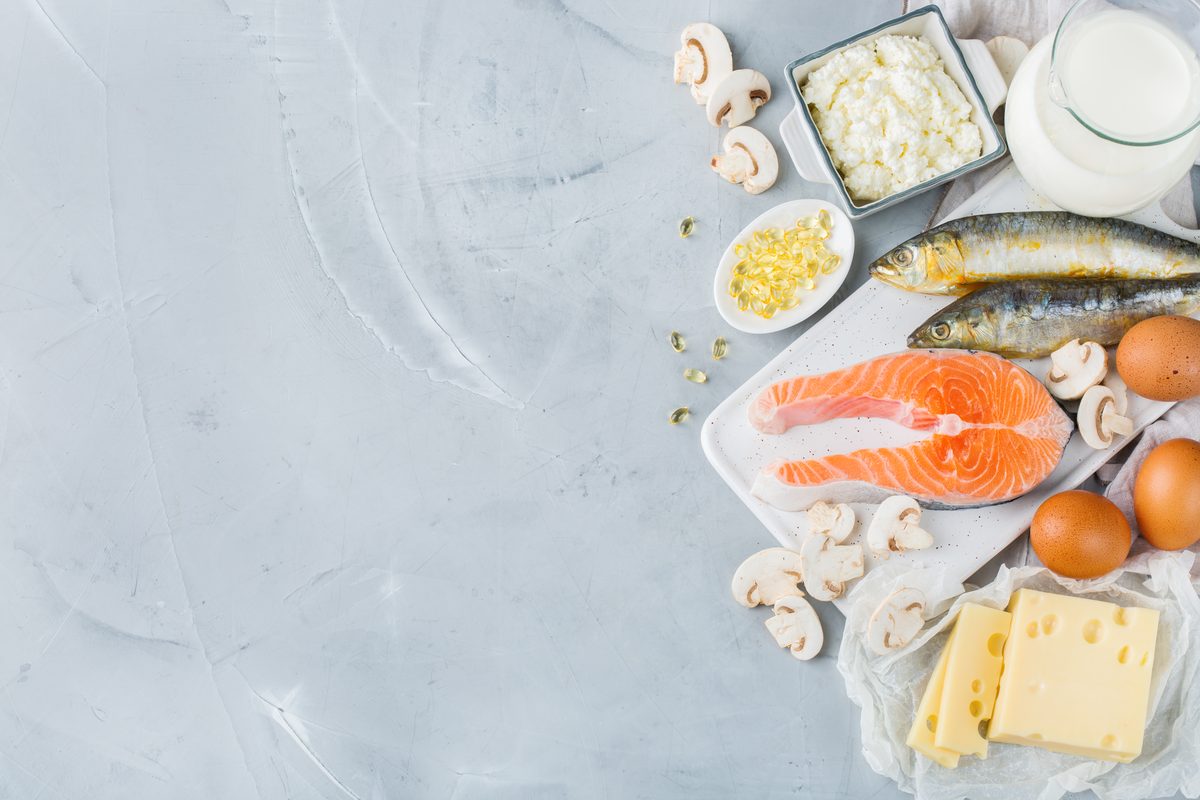
Your milk is your baby’s only source of iodine if they are exclusively breastfed, and iodine is essential for their thyroid hormones. The Anses reference rises to 200 µg a day. The steps are the same as during pregnancy: iodised salt in cooking (Ciqual gives 1,860 µg of iodine per 100 g of iodised salt, compared with 1.8 µg for non-iodised salt), sea fish and dairy products. A detailed list is on our page foods rich in iodine.
Calcium
Santé publique France advises 2 dairy products a day during breastfeeding as during pregnancy. If you do not eat any, other sources exist, but you need to combine them.
| Food (Ciqual) | Calcium per 100 g | Protein per 100 g | Iodine per 100 g |
|---|---|---|---|
| Comté | 907 mg | 27.8 g | 24.4 µg |
| Sardines in oil, tinned, drained | 333 mg | 23.3 g | 80.1 µg |
| Almond with skin | 260 mg | 18.8 g | not quantified |
| Raw kale | 254 mg | 2.92 g | not measured |
| Plain 0% fat fromage blanc | 150 mg | 7.34 g | 33 µg |
| Plain yoghurt | 137 mg | 3.83 g | 38 µg |
| Semi-skimmed milk | 121 mg | 3.46 g | 23.9 µg |
| White beans, boiled | 120 mg | 6.75 g | not quantified |
| Calcium-rich mineral water (Hépar type) | 54.9 mg | 0 g | 0 µg |
To complete the picture, our guide foods rich in calcium ranks the best sources.
Vitamin D
The reference remains at 15 µg a day. It comes mainly from the sun (Santé publique France cites 15 to 30 minutes a day, face and arms uncovered, outside midday to 4 pm) and from oily fish. For you, a supplement is something to discuss with your doctor, especially in winter. See our vitamin D guide.
Caffeine, alcohol, tobacco, soya: what to limit or avoid
Caffeine passes into the milk. The Santé publique France breastfeeding guide advises not exceeding three cups of coffee a day: beyond that, your child may show « transient hyperexcitability ». For its part, EFSA concludes that single intakes and habitual consumption of up to 200 mg of caffeine a day in breastfeeding women pose no safety concern for the infant. Remember tea, cola drinks and energy drinks, which also contain it. Amounts per drink are in how much coffee a day.
Alcohol passes into the milk and then into the baby’s body. As a precaution, Santé publique France recommends avoiding all alcoholic drinks while breastfeeding, especially in the first few weeks. No alcohol helps your milk come in, contrary to a persistent belief about beer. If, after the first few weeks, you still choose to drink, the guide suggests limiting the risks: once or twice a week at most, no more than one drink, always just after a feed and as long as possible before the next.
Tobacco: it is preferable not to smoke, and breastfeeding can be an opportunity to quit with the help of a professional. If you smoke, that does not stop you breastfeeding: as little as possible, after the feed, and always outdoors. Cannabis is not recommended.
Soya: Santé publique France recommends continuing not to consume soya foods or drinks, or supplements based on soya extracts, while breastfeeding, because of phytoestrogens. The same advice applies to products enriched with plant sterols.
Medicines and herbal products: no self-medication, including with over-the-counter or plant-based products. Always ask your doctor, midwife or pharmacist.
Should you avoid certain foods for the baby’s sake?
No, as a general rule. The Santé publique France guide is clear: unless a doctor advises otherwise, no dietary precaution is needed to prevent your child from becoming allergic. A baby is sometimes bothered by a food their mother has eaten, but these cases are rare. Cutting out cabbages, garlic, onion or spices on principle therefore has no basis. If you notice repeated discomfort after a specific food, talk to the midwife or paediatrician before making a series of exclusions.
The taste of your milk varies with what you eat. That is rather a good thing: Santé publique France stresses that these varied flavours will help your child accept a variety of foods later. When the time comes, our guide to introducing solid foods takes over.
Good news too: listeriosis and toxoplasmosis are not transmitted through breastfeeding. So you can go back to raw-milk cheeses, smoked salmon or sushi. The advice on alcohol, soya and certain fish, however, still applies.
Losing your pregnancy weight while breastfeeding
Santé publique France is unambiguous: all weight-loss diets are contraindicated during breastfeeding. Returning to your pre-pregnancy weight is gradual, and the breastfeeding guide speaks of a period ranging from a few months to a year.
Does breastfeeding really help you lose weight? The studies are less clear-cut than people say. A systematic review (Neville et al., International Journal of Obesity, 2014) covering 45 studies observes that the majority of the weight studies (27, or 63%) find little or no link between breastfeeding and weight change; but four of the five studies judged to be of best quality show a favourable link. In a large Japanese cohort (more than 64,000 women, PLoS One, 2022), the weight retained at 6 months was on average 0.2 kg in women breastfeeding exclusively, compared with 0.8 kg in the others. The effect does exist, but it is modest and varies from woman to woman.
What helps most, according to Santé publique France: a varied diet, daily physical activity (walking can resume early, sport after the postnatal check-up and pelvic floor rehabilitation, 6 to 8 weeks after the birth) and less time sitting. For a lasting approach after weaning, read our guide losing weight healthily.
Vegetarian or vegan?
A vegetarian diet with dairy products and eggs can meet your needs if it is varied. A vegan diet, on the other hand, requires monitoring: the Santé publique France guide judges it dangerous during breastfeeding if it is not supervised, because it exposes both mother and child to shortfalls in vitamin B12, vitamin D, iron, iodine and calcium. Vitamin B12 is found only in animal products, and a supplement is then essential, to be arranged with your doctor. Our guide vitamin B12 and supplementation covers the subject in detail.
Getting organised with a newborn
The real challenge of breastfeeding is often time. A few practical tips:
- Cook ahead in late pregnancy or when someone can help you: soups, dhals and slow-cooked dishes freeze well. Our batch cooking guide gives the method.
- Set up a « feeding corner » with a bottle of water and a snack you can eat one-handed: a banana, a handful of nuts, a prepared slice of bread with a topping.
- Keep staples in the cupboards: tinned lentils and chickpeas, sardines, mackerel, rolled oats, brown rice, iodised salt.
- Accept help: Santé publique France reminds us that your partner and those around you are there to make daily life easier, shopping and meals included.
A typical day while breastfeeding
- Breakfast: banana and almond porridge made with milk, a kiwi, a large glass of water.
- Snack: wholemeal bread and Comté, an apple.
- Lunch: lentil and spinach dhal prepared the day before, rice, yoghurt.
- Afternoon snack: fromage blanc, a handful of walnuts, a few red berries.
- Dinner: salmon, quinoa and spinach, crudités, a piece of fruit.
Other complete dishes that are easy to reheat: lentil and vegetable soup, baked mustard mackerel, sardine and avocado toast or lentil, sweet potato and spinach curry. Snack ideas in our guide healthy snacks.
Common myths
- « You have to drink milk to make milk. » False. It is the baby’s suckling that keeps milk production going, Santé publique France points out. Cow’s milk is one source of calcium among others, not a stimulant of lactation.
- « Beer makes your milk come in. » False: no alcohol helps your milk come in, and alcohol passes into the milk.
- « If I eat badly, my milk will be poorer. » Santé publique France replies that your milk will always be nourishing enough. Some contents do vary with your diet, such as DHA: eating well serves your own health and reserves first.
- « Many women do not have enough milk. » It is the opposite: according to the Santé publique France guide, running short of milk is rare when the baby feeds often and effectively.
Precautions
See a doctor if you are losing weight very quickly, if you are very tired, if you had anaemia during pregnancy, if you follow a vegan or very restrictive diet, or if you have a history of an eating disorder. Postnatal depression is common: the 2021 French national perinatal survey (Enquête nationale périnatale) found it in 16.7% of women two months after giving birth. Do not hesitate to talk to your doctor or midwife about it.

Frequently asked questions
How long is it recommended to breastfeed?
Santé publique France recommends breastfeeding until the child is 6 months old, specifying that shorter breastfeeding is still beneficial. The WHO recommends exclusive breastfeeding for six months, then continuing up to 2 years or more alongside other foods.
How many coffees a day while breastfeeding?
No more than three cups a day according to Santé publique France. EFSA considers that consumption of up to 200 mg of caffeine a day poses no problem for the breastfed baby.
Can you have a glass of wine while breastfeeding?
The safest option is not to drink alcohol, especially in the first few weeks. If you choose to drink afterwards, Santé publique France advises once or twice a week at most, one glass, just after a feed.
Do you need to take supplements while breastfeeding?
Not routinely. A varied diet is enough in most cases. Vitamin B12 is essential on a vegan diet, and vitamin D is something to discuss with your doctor. Avoid soya supplements.
Can I eat raw-milk cheeses while breastfeeding?
Yes. Listeriosis and toxoplasmosis are not transmitted through breastfeeding, according to Santé publique France. The pregnancy precautions on these foods no longer apply.
This article is for information only and does not replace the advice of your doctor, your midwife, a lactation consultant or a dietitian.
Our sources
- Santé publique France. Le guide de l’allaitement maternel. Updated 2023.
- Santé publique France. De la grossesse à l’arrivée de bébé, avec sérénité. Manger Bouger booklet, 2026.
- Anses. Avis et rapport relatifs à l’actualisation des références nutritionnelles françaises en vitamines et minéraux (saisine 2018-SA-0238). March 2021.
- EFSA. Dietary Reference Values for nutrients, Summary report. EFSA supporting publication 2017:e15121.
- EFSA NDA Panel. Scientific Opinion on the safety of caffeine. EFSA Journal 2015;13(5):4102.
- Brenna JT, Varamini B, Jensen RG, et al. Docosahexaenoic and arachidonic acid concentrations in human breast milk worldwide. Am J Clin Nutr. 2007;85(6):1457-1464. PMID 17556680.
- Neville CE, McKinley MC, Holmes VA, Spence D, Woodside JV. The relationship between breastfeeding and postpartum weight change: a systematic review and critical evaluation. Int J Obes (Lond). 2014;38(4):577-590. PMID 23892523.
- Yamamoto M, Takami M, Misumi T, et al. Effects of breastfeeding on postpartum weight change in Japanese women: The Japan Environment and Children’s Study (JECS). PLoS One. 2022;17(5):e0268046. PMID 35507607.
- World Health Organization. Infant and young child feeding, fact sheet.
- Inserm, Santé publique France, DREES. Enquête nationale périnatale, résultats de l’édition 2021. 2022.
- Anses. Ciqual food composition table 2025.