Acid reflux and heartburn: what to eat

Do you have heartburn or acid coming back up? Here is what really works on the plate: smaller, less fatty meals, dinner eaten at least 3 hours before you lie down, and hunting down your trigger foods rather than a list of bans for everyone. If you are overweight, losing a few kilos remains the best-proven lever. This guide sorts out the advice validated by the learned societies (SNFGE in France, the American College of Gastroenterology in the United States) from the myths.
👉 Free tool: BMI calculator – calculate in 30 seconds, no sign-up.
Reflux in brief: what happens in your oesophagus
Gastro-oesophageal reflux (GORD) is when part of the contents of the stomach comes back up into the oesophagus. Normally, a muscular valve at the junction of the two, the lower oesophageal sphincter, prevents this. When this anti-reflux system fails, the acid liquid rises and irritates the lining of the oesophagus, which isn’t built to withstand it.
The typical symptom has a medical name: pyrosis. The SNFGE (the French gastroenterology society) describes it as a burning feeling that starts in the pit of the stomach and rises into the chest, higher or lower. Acid or bitter regurgitation is often added. Other signs are less obvious: chronic cough, hoarse voice, irritated throat, tooth erosion or disturbed sleep.
It is common. According to the French national health insurance (Assurance Maladie), at least 20% of adults have occasional reflux symptoms and 10% have them every day. In a large cohort of American nurses (Nurses’ Health Study, 10,545 women surveyed), 22% reported symptoms at least once a week.
Factors that promote reflux
The Assurance Maladie and the SNFGE cite the same main causes:
- a hiatus hernia, when part of the stomach pushes up through the diaphragm;
- excess pressure on the abdomen, linked to being overweight, obesity, tight clothing or straining because of constipation;
- pregnancy, because of anatomical changes;
- certain medicines (progesterone, some asthma or cardiovascular treatments);
- diet and lifestyle: meals that are too big or too fatty, a large dinner, alcohol, tobacco, chocolate, spices, a sedentary life;
- certain postures: lying on your back or leaning forward just after eating.
If you recognise yourself in several of these points, good news: most can be changed. Your doctor can prescribe a treatment, often a proton pump inhibitor (PPI), but lifestyle measures remain the foundation, with or without medication.
What science has really shown
A lot of advice circulates about reflux. Not all of it has the same level of evidence. In 2006, an American team reviewed 2,039 studies on lifestyle measures: only 16 had actually tested their effect on reflux. The conclusion: weight loss and raising the head of the bed are effective; for most food eliminations, evidence was lacking.
The American College of Gastroenterology (ACG) recommendation published in 2022 follows this hierarchy. Here is what it says, with the strength of each recommendation.
| Measure | What the ACG recommends (2022) | Level of evidence |
|---|---|---|
| Lose weight if overweight or obese | Recommended | Strong recommendation, moderate evidence |
| Don’t eat in the 2 to 3 hours before bed | Suggested | Conditional recommendation, low evidence |
| Raise the head of the bed if symptoms occur at night | Suggested | Conditional recommendation, low evidence |
| Avoid smoking | Suggested | Conditional recommendation, low evidence |
| Avoid your “trigger foods” | Suggested | Conditional recommendation, low evidence |
Weight: the number one lever
The link between weight and reflux is solid. In the Nurses’ Health Study, the higher the BMI, the more common frequent symptoms were, including in women of normal weight: moderate weight gain was enough to make reflux worse.
The reverse works too. In the Norwegian HUNT study, which followed 29,610 adults for about ten years, weight loss was associated with a drop in symptoms in proportion to the kilos lost. Among those who had lost more than 3.5 BMI points, the chances of their symptoms disappearing were almost doubled (odds ratio of 1.98) without regular treatment, and nearly four times higher (3.95) among those taking an anti-reflux treatment at least once a week. In other words, losing weight also makes treatment more effective.
The SNFGE explains it simply: excess weight increases the pressure in the abdomen, which pushes the stomach contents upwards. If you want to get started without an extreme diet, our guide to a balanced diet and the one on losing belly fat give you a gradual method. Waist circumference is a good indicator to track, since it is abdominal fat that presses on the stomach.
The combined effect of good habits
An analysis published in 2021 in JAMA Internal Medicine followed 42,955 women aged 42 to 62 for several years. The researchers selected five “anti-reflux” habits: a normal weight (BMI between 18.5 and 24.9), never having smoked, at least 30 minutes of moderate to vigorous physical activity a day, no more than 2 cups a day of coffee, tea or fizzy drinks, and a “prudent” type of diet (the 40% of participants with the best score on this dietary pattern). Women who had all five were half as likely to develop reflux symptoms (hazard ratio 0.50). According to the authors, 37% of cases could be avoided if everyone adopted these five habits.
This is an observational study, so it does not prove cause on its own. But it shows one useful thing: it isn’t a single food that counts, it’s the whole picture.
Foods to watch (and why)
The SNFGE publishes a very practical information sheet on diet for GORD. It distinguishes three mechanisms. Some foods relax the sphincter or slow stomach emptying (fats especially). Others directly irritate the oesophagus, which is already inflamed (acids, strong spices). Others still increase the volume or the gas in the stomach.
Fats, the prime suspect
Fats slow gastric emptying and increase the intensity of symptoms, according to the SNFGE. It singles out fried food, dishes in sauce, fatty meats, charcuterie, fatty cheeses and cream pastries. The aim is not to cut out all fat, but to avoid very high-fat meals.
To give you a concrete idea, here are a few simple swaps. The contents come from the Anses Ciqual table.
| Rather than… | Fat (g/100 g) | Try… | Fat (g/100 g) |
|---|---|---|---|
| Deep-fried chips | 11.9 | Boiled potatoes | 0.34 |
| Croissant | 22.1 | Baguette-type white bread | 1.4 |
| Dry sausage (saucisson sec) | 33.1 | Superior-quality cooked ham | 2.83 |
| Camembert | 22.5 | Plain yoghurt | 1.68 |
| Steamed salmon | 11.5 | Steamed cod | 0.95 |
| 70% dark chocolate | 46.3 | Apple compote | 0.2 |
Salmon deserves a clarification: it is an excellent fish for health, rich in omega-3. The SNFGE only advises avoiding oily fish in excess if you are sensitive. You don’t have to ban it: test a small portion, without sauce, at lunchtime rather than in the evening.
Irritating drinks and foods
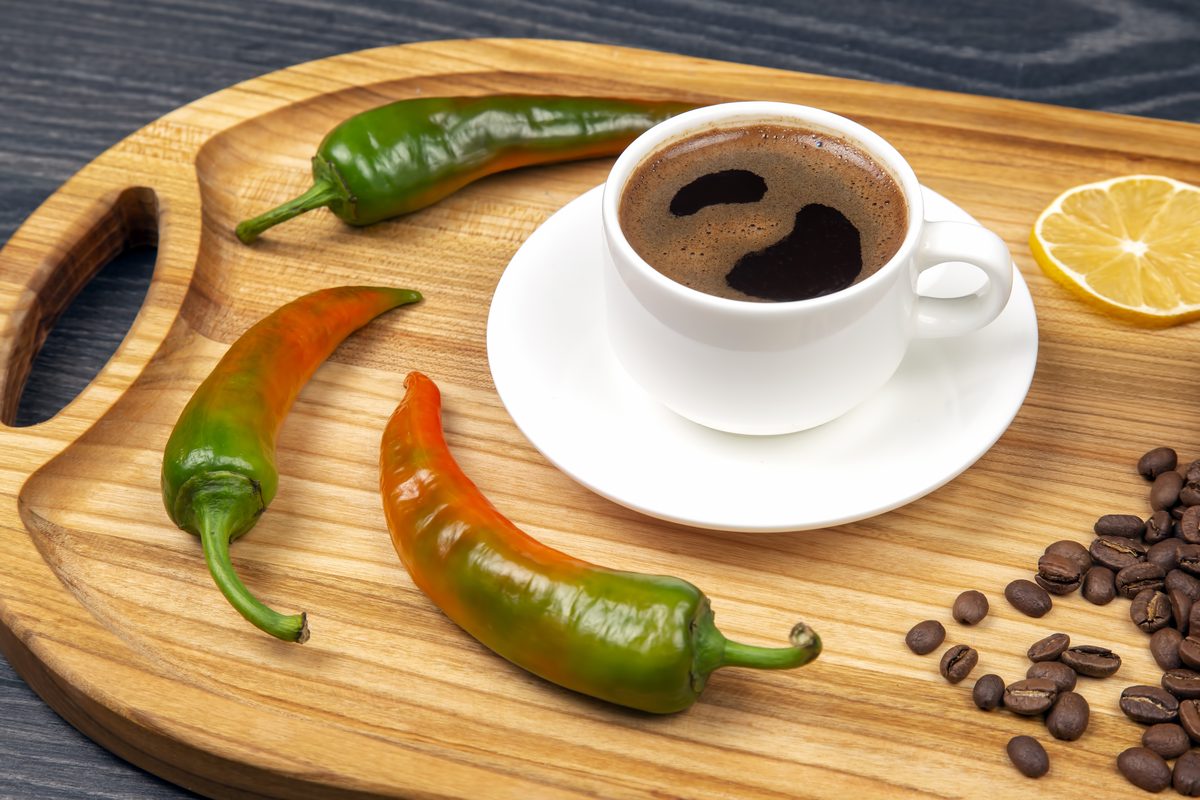
The SNFGE recommends reducing or avoiding coffee, alcohol, orange juice or tomato juice, vinegar and lemon, because they irritate the oesophagus and stomach. Its list of foods not to take in excess also includes citrus fruit, tomato, strong spices (chilli, hot mustard, pepper), sugary fizzy drinks and chocolate.
The case of coffee is interesting. A Korean meta-analysis of 15 case-control studies found no significant association between coffee and reflux (odds ratio 1.06). A more recent meta-analysis, covering 40 studies and 122,074 people, found reflux slightly more common among coffee drinkers (34.9% against 30.7%), with an effect judged to be of uncertain clinical importance. Translation: coffee is not a universal enemy. If your morning cup doesn’t bother you, there’s no need to go without. If it sets off your heartburn, cut down or switch to decaf and observe. Our guide to how much coffee a day reviews the quantities.
Mint: a suspect to test, not a certainty
Mint is often accused of relaxing the sphincter. The data are more nuanced. In a double-blind trial in healthy volunteers, spearmint changed neither sphincter pressure nor the number of reflux episodes, whether at a flavouring dose (0.5 mg) or a high dose (500 mg). However, the high dose slightly increased the symptoms felt. These results don’t necessarily apply to people who already have reflux, nor to peppermint as a herbal tea or essential oil. If a mint infusion gives you heartburn, listen to your body. We detail the precautions in our guide to peppermint: dangers and contraindications.
Volume and gas
An overfull stomach pushes on the sphincter. The SNFGE advises keeping volumes small, about 400 ml at the two main meals, and cutting back on bulky foods such as soup beyond that amount. It also cites certain vegetables that ferment (cabbage, sauerkraut, onion, leek, cauliflower, artichoke, radish, pepper), dried pulses and fresh bread as possible sources of discomfort. If you also have irritable bowel syndrome, excess gas often amplifies reflux symptoms: our guide to the low-FODMAP diet can then help you.
Foods that are generally well tolerated
The SNFGE sheet also lists what is allowed. In summary:
- Starchy foods: well-baked or toasted bread, rice, small pasta shapes, semolina, potatoes in reasonable amounts.
- Vegetables: carrot, chicory, courgette, green beans, aubergine, mushrooms, spinach, lettuce, broccoli, fennel.
- Protein: all meat and poultry, fish (apart from oily fish if you are sensitive), shellfish and seafood, without too many spices.
- Dairy products: yoghurts, hard cooked cheeses such as Emmental or Comté.
- Fruit: pear, apple, peach, banana, preferably between meals or as a compote at the end of a meal.
- Drinks: still water, weak tea or coffee.
For breakfast, an oat porridge often goes down well. Note, however: the SNFGE classes wholegrain cereals among the foods not to eat in excess, as they can weigh on the stomach of some people. Here again, it’s your tolerance that decides.
How to eat: the method matters as much as the menu
The SNFGE and the Assurance Maladie insist on how you eat, sometimes more than on what is on the plate.
- Take your time: 20 to 30 minutes per meal, seated, relaxed, chewing well. Chewing makes digestion easier and stops you swallowing too fast.
- Spread it out: several small meals are better than two big ones. Structuring your meals also prevents cravings.
- Lighten the cooking: poached, roasted, grilled, en papillote (baked in a parcel), boiled.
- Eat light in the evening, especially if your symptoms occur at night.
- Leave 3 hours between dinner and bedtime. The ACG, more cautious about the evidence, says 2 to 3 hours.
- Don’t bend over or nap just after the meal. Gardening and sport are best avoided at that time in case of severe reflux. A walk after the meal, on the other hand, aids digestion.
- Loosen your belt: clothes that are too tight promote reflux.
- Look after your bowel habits: drinking enough, eating cooked fibre and moving helps fight constipation, which increases abdominal pressure.
At night: position and pillow
Lying on your back promotes reflux, the SNFGE reminds us. Two measures have been tested.
Raising the head of the bed. A 2021 systematic review gathered five trials (228 patients). Four showed an improvement in symptoms, and one good-quality trial found a clinically important reduction at 6 weeks. In a randomised trial published in 2020, with a 20 cm elevation for 6 weeks, 69.2% of patients improved against 33.3% without elevation. Another study in 20 patients with night-time reflux also showed less acid exposure time and better sleep in 65% of them with a 20 cm wedge. A practical point: the trials used blocks placed under the feet at the head of the bed or a sloping cushion along the whole length of the torso.
Sleeping on your left side. In a small 1999 study of 10 patients with night-time reflux, lying on the right side was associated with more acid reflux, and the authors concluded that the left side was preferable. The 2006 review confirms that elevation and lying on the left side reduce acid exposure time. It’s simple to try.
Our guide to foods and sleep complements this advice for dinner.
A typical anti-reflux day
Here is an example of a day that follows the SNFGE guidelines. Adapt it to what you tolerate.
- Breakfast: toast, a little butter or hard cooked cheese, a plain yoghurt, a banana, a weak tea. Or an oat porridge if your stomach tolerates it.
- Lunch: grilled chicken breast, rice, green beans with raw olive oil, a homemade apple compote.
- Snack (if you are hungry): a pear or a few rusks.
- Dinner, at least 3 hours before bed: a white fish and vegetable parcel, steamed potatoes, or a small portion of courgette soup.
More ideas in our healthy recipes: favour those that are steamed, baked or cooked en papillote, such as steamed hake with vegetables or baked cod.
Keep a diary to find your triggers
The SNFGE stresses it: individuals are susceptible to certain foods. The Assurance Maladie advises identifying the foods that bring on your heartburn so you can eat less of them. The simplest method:
- For two weeks, note what you eat, the time, the quantity, and your symptoms (time, intensity from 1 to 5).
- Also note the context: meal eaten quickly, lying down afterwards, stress, tight clothing.
- Spot the associations that keep coming back. A food that sets it off every time is a good candidate to cut back.
- Cut back on just one suspect at a time, for one to two weeks, to see whether it changes anything.
This approach avoids needlessly cutting out useful foods such as citrus fruit, tomatoes or coffee. Stress can also amplify how you perceive symptoms: note it in your diary.
Common myths about reflux
“Milk soothes heartburn”
None of the recommendations consulted (SNFGE, ACG, Assurance Maladie) presents milk as a treatment for reflux. The SNFGE allows yoghurts and hard cooked cheeses, without making them a remedy. And whole milk provides fat, which slows stomach emptying.
“You must stop all acidic foods”
No. The 2006 review found no published evidence that food eliminations improve reflux, and the ACG only recommends eliminating your triggers, with a low level of evidence. Cutting out every acidic fruit impoverishes your diet with no guarantee of a result.
“Bicarbonate is the solution”
It isn’t dietary advice, and none of the recommendations consulted offers it as a long-term solution. If you need regular treatment, talk to your doctor or pharmacist.
“Digestive herbal teas always help”
Not peppermint, as we have seen. As for ginger, none of the recommendations consulted mentions it for reflux. If you take it, read our guide to ginger: dangers and precautions.
When to see a doctor without delay
The Assurance Maladie recommends seeing a doctor within the next few days if:
- your symptoms persist despite lifestyle measures and the treatment you have taken yourself;
- you are over 50 and the symptoms appeared recently;
- you have painful regurgitation, cough, traces of blood, or rapid weight loss.
It advises seeing a doctor the same day in the case of constant pain, or pain that feels like being squeezed in a vice, or major difficulty swallowing. The ACG cites the same alarm signs (difficulty swallowing, weight loss, bleeding, vomiting, anaemia), which justify a prompt endoscopy. Untreated reflux can, in the long run, lead to oesophagitis, narrowing of the oesophagus or Barrett’s oesophagus, the SNFGE reminds us.
Pregnancy promotes reflux, the Assurance Maladie reminds us: our guide to nutrition during pregnancy gives the appropriate guidelines, and any treatment must be approved by your doctor or midwife.

Frequently asked questions
How long should you wait between dinner and bedtime?
The SNFGE and the Assurance Maladie advise 3 hours. The ACG suggests avoiding eating in the 2 to 3 hours before bed. If you go to bed at 11 pm, aim to finish dinner by about 8 pm.
Is coffee off limits if you have reflux?
No. Meta-analyses show at best a weak link between coffee and reflux. The SNFGE advises cutting down because it can irritate. The simplest thing is to test: if your cup sets off heartburn, cut down or switch to decaf.
Is losing weight enough to make reflux disappear?
Not always, but it is the best-proven measure. In the HUNT study, a drop of more than 3.5 BMI points was associated with almost twice the chance of symptoms disappearing. The ACG makes it a strong recommendation.
What foods should you eat in the evening if you have reflux?
A light, low-fat meal: white fish or poultry, well-tolerated cooked vegetables (carrot, courgette, green beans), rice or steamed potatoes. Avoid fried food, dishes in sauce, charcuterie, alcohol and big portions.
Should you sleep on your left side?
It’s a simple thing to try. A small study showed more acid reflux when lying on the right side, and a review confirms the benefit of the left side. Combine it with raising the head of the bed if your symptoms occur at night.
Do fizzy drinks make reflux worse?
The SNFGE classes sugary sparkling waters among the drinks to avoid in excess and recommends still water in preference. They increase the volume of gas in the stomach.
This article is for information only and does not replace the advice of your doctor or a dietitian.
Our sources
- Katz PO, Dunbar KB, Schnoll-Sussman FH, Greer KB, Yadlapati R, Spechler SJ. ACG Clinical Guideline for the Diagnosis and Management of Gastroesophageal Reflux Disease. American Journal of Gastroenterology, 2022. PMID 34807007.
- Société nationale française de gastro-entérologie (SNFGE), Létard JC, Bruley des Varannes S, Costil V. Gastro-oesophageal reflux, dietary advice sheet (in French), 2017.
- Assurance Maladie (ameli.fr). Gastro-oesophageal reflux in adults: definition, symptoms and causes; what to do and when to see a doctor (in French).
- Kaltenbach T, Crockett S, Gerson LB. Are lifestyle measures effective in patients with gastroesophageal reflux disease? An evidence-based approach. Archives of Internal Medicine, 2006. PMID 16682569.
- Ness-Jensen E, Lindam A, Lagergren J, Hveem K. Weight loss and reduction in gastroesophageal reflux. A prospective population-based cohort study: the HUNT study. American Journal of Gastroenterology, 2013. PMID 23358462.
- Jacobson BC, Somers SC, Fuchs CS, Kelly CP, Camargo CA. Body-mass index and symptoms of gastroesophageal reflux in women. New England Journal of Medicine, 2006. PMID 16738270.
- Mehta RS, Nguyen LH, Ma W, Staller K, Song M, Chan AT. Association of Diet and Lifestyle With the Risk of Gastroesophageal Reflux Disease Symptoms in US Women. JAMA Internal Medicine, 2021. PMID 33393976.
- Kim J, Oh SW, Myung SK et al. Association between coffee intake and gastroesophageal reflux disease: a meta-analysis. Diseases of the Esophagus, 2014. PMID 23795898.
- Muftah M, McCarty TR, Hartnett D et al. Association of Coffee Intake With Risk of Gastroesophageal Reflux Disease and Complications: A Systematic Review and Meta-Analysis. Clinical and Translational Gastroenterology, 2026. PMID 41677121.
- Albarqouni L, Moynihan R, Clark J et al. Head of bed elevation to relieve gastroesophageal reflux symptoms: a systematic review. BMC Family Practice, 2021. PMID 33468060.
- Villamil Morales IM, Gallego Ospina DM, Otero Regino WA. Impact of head of bed elevation in symptoms of patients with gastroesophageal reflux disease: a randomized single-blind study (IBELGA). Gastroenterología y Hepatología, 2020. PMID 32229033.
- Khan BA, Sodhi JS, Zargar SA et al. Effect of bed head elevation during sleep in symptomatic patients of nocturnal gastroesophageal reflux. Journal of Gastroenterology and Hepatology, 2012. PMID 22098332.
- Khoury RM, Camacho-Lobato L, Katz PO, Mohiuddin MA, Castell DO. Influence of spontaneous sleep positions on nighttime recumbent reflux in patients with gastroesophageal reflux disease. American Journal of Gastroenterology, 1999. PMID 10445529.
- Anses. Ciqual food composition table (in French), 2025.