Group · Herbs & spices
Herbes de Provence
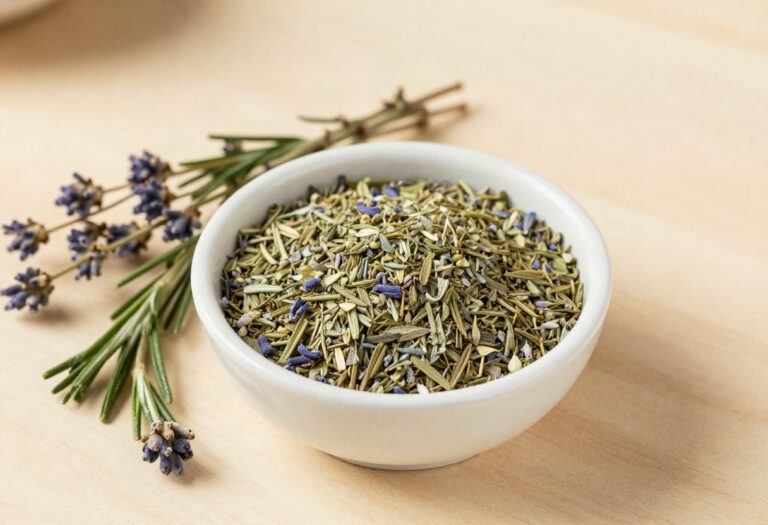
Herbes de Provence classically combine thyme, rosemary, oregano, savory and marjoram, dried and crumbled. The name is not a protected designation in itself: only the « Label Rouge » mark guarantees French origin and defined proportions, and the rest can come from anywhere.
On nutrition facts, the entry shows 283 kcal per 100 g, with a remarkable fibre content (40.1 g per 100 g), 11.5 g of protein and 7.2 g of fat. They also provide 1,860 mg of calcium and 1,970 mg of potassium per 100 g, values typical of dried herbs, where all the water has gone.
Macronutrient breakdown
Nutrition table per 100 g
| Calories | 283 kcal |
| Kilojoules | 1170 kJ |
| Protein | 11,5 g |
| Carbohydrate | 23,1 g |
| Fat | 7,2 g |
| Fibre | 40,1 g |
Micronutrients per 100 g
All measured nutrients, ranked by share of the daily reference intake.
- Iron69,8 mg499 %
- Manganese5,2 mg260 %
- Calcium1860 mg233 %
- Vitamin B61,58 mg113 %
- Copper1,06 mg106 %
- Potassium1970 mg99 %
- Magnesium304 mg81 %
- Vitamin C54 mg68 %
- Vitamin B9dietary folate equivalents274 µg
See the other 7 nutrients
- Zinc5,47 mg55 %
- Phosphorus297 mg42 %
- Vitamin B36,03 mg38 %
- Vitamin B10,33 mg30 %
- Vitamin B20,34 mg24 %
- Iodine15 µg10 %
- Selenium4,4 µg8 %
Anses Ciqual 2025. Source: Anses, 2025, Ciqual food composition table
Tips
Put these figures back in proportion. A level teaspoon weighs about 2 g: it provides 5.7 kcal, 0.8 g of fibre and 37 mg of calcium. Useful to know so you do not kid yourself: dried herbs are concentrated, but you do not eat amounts that count.
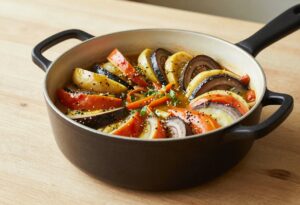
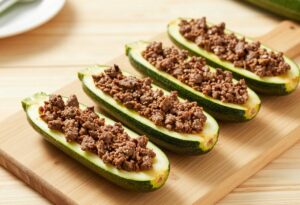
Their value is in replacing salt. On roasted vegetables, a grilled courgette or oven-baked tomatoes, a good pinch of herbs means you do not need to add salt. That is where they really weigh on the balance of a dish.
They stand up to heat, unlike fresh herbs. That is in fact how to use them: they release their essential oils during cooking. Add them at the start of cooking on a roast, in a ratatouille or a marinade, not at the end like fresh basil.
A drizzle of oil acts as a carrier. Their aromas are fat-soluble: mixed with a spoonful of olive oil before being spread, they flavour far better than when sprinkled dry on a moist food.
Storage. Two years on paper, one year in practice: beyond that, only the colour is left. An opaque jar away from the hob is better than a clear pot sitting above the cooker, where heat and light do their work.
Sources
Average nutrition values per 100 g, given for guidance (spices and condiments are eaten in small amounts; values vary by brand and preparation).