Group · Meat
Braised pork loin
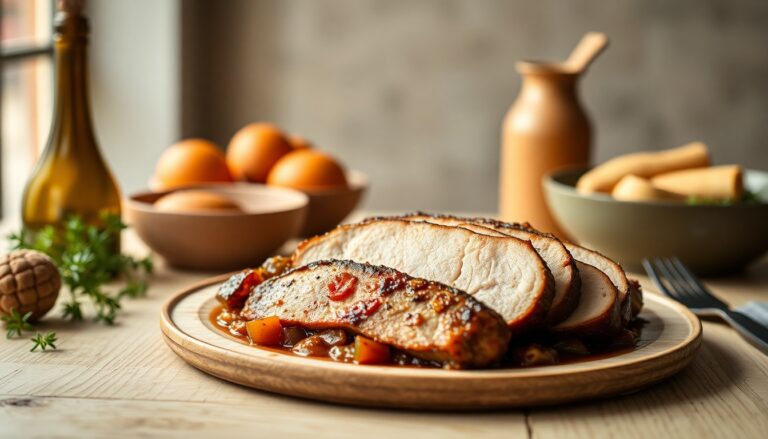
Braised pork loin is a choice cut from the back of the pig, cooked slowly in an aromatic liquid until tender and melting. Braising, which combines an initial searing with gentle cooking in a moist environment, keeps this relatively lean cut succulent. At around 239 kcal per 100 g, it provides a good amount of protein (27.23 g), no carbohydrate, and a moderate amount of fat (13.62 g). Versatile, pork loin suits everyday slow-cooked dishes as well as convivial meals. Well incorporated into a balanced diet rich in vegetables and starchy foods, it is a valuable source of high-quality animal protein.
Macronutrient breakdown
Nutrition table per 100 g
| Calories | 239 kcal |
| Kilojoules | 1000 kJ |
| Protein | 27,3 g |
| Fat | 13,7 g |
Micronutrients per 100 g
All measured nutrients, ranked by share of the daily reference intake.
- Selenium45,3 µg82 %
- Vitamin B10,63 mg57 %
- Vitamin B34,42 mg28 %
- Vitamin B60,37 mg26 %
- Phosphorus181 mg26 %
- Vitamin D1,2 µg24 %
- Zinc2,38 mg24 %
- Vitamin B120,54 µg22 %
See the other 11 nutrients
- Potassium374 mg19 %
- Vitamin B20,25 mg18 %
- Vitamin B50,65 mg11 %
- Copper0,08 mg8 %
- Iron1,07 mg8 %
- Magnesium19 mg5 %
- Calcium21 mg3 %
- Vitamin E0,24 mg2 %
- Vitamin C0,6 mg1 %
- Manganese0,01 mg1 %
- Vitamin A2 µg0 %
USDA FoodData Central (SR Legacy)
Tips
Braised pork loin easily finds its place on a balanced plate. A sensible portion is around 100 to 150 g of cooked meat, served with seasonal vegetables and a wholegrain starchy food for a complete, filling meal. Braising, which is close to gentle cooking, limits the need for added fat and keeps the meat juicy.
Preparation and pairing tips:
- Brown the loin in a pan first, then continue cooking with the lid on, with stock, white wine or aromatics (thyme, bay leaf, garlic, onion).
- Pair it with root vegetables (carrots, turnips, parsnips) or a vegetable purée to lighten the dish.
- For a lighter version, remove the visible fat and choose green vegetables as a side rather than a very rich sauce.
- Keep leftovers for 2 to 3 days in the fridge in an airtight container, or freeze them in portions.
Nutrition facts and benefits: with 27.23 g of protein per 100 g, pork loin provides essential amino acids that help maintain muscle mass. It also contains B vitamins (notably B1, B6, B12) and minerals such as zinc, iron and selenium. With no carbohydrate or fibre, it has a glycaemic index of zero, and it is worth combining with fibre-rich vegetables. To explore other cuts, you can compare it with roast pork or roast pork shoulder, and discover all the cuts in the Meat family.
For active people: braised pork loin is an excellent source of protein for muscle recovery after training. Include it in a post-workout meal with a source of carbohydrates (rice, sweet potato, quinoa) to help replenish energy stores. If you are looking for practical extras, these protein snack recipes can diversify your intake over the day.
Weight control: at 239 kcal per 100 g, braised loin remains reasonable in calorie density, especially if you keep the amount of added fat and the richness of the sauce under control. Vary your protein sources, control portions and keep an eye on the side dishes. To see how this food compares with others, check the food calorie table.