Group · Herbs & spices
Cinnamon powder
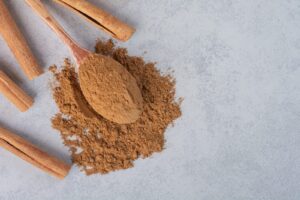
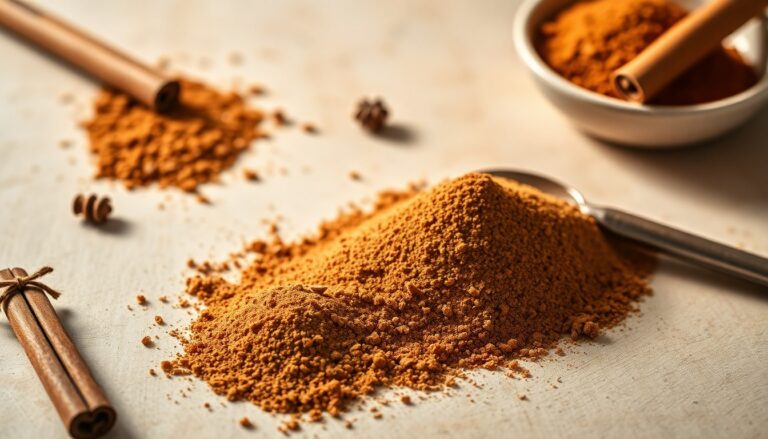
Cinnamon powder is a spice made by grinding the dried bark of the cinnamon tree. There are two main varieties: Ceylon cinnamon, fine and delicate, and Chinese cinnamon (or cassia), stronger and more full-bodied. This brown powder with its warm, sweet aroma flavours desserts, savoury dishes and drinks alike. In terms of nutrition facts, cinnamon provides around 243 kcal per 100 g, but as it is used in pinches, its real contribution is negligible. Very rich in fibre (over 53.1 g per 100 g), it also provides sought-after aromatic compounds. In a balanced diet, it is an ideal flavour ally for cutting added sugar while keeping things indulgent.
Macronutrient breakdown
Nutrition table per 100 g
| Calories | 243 kcal |
| Kilojoules | 1010 kJ |
| Protein | 4 g |
| Carbohydrate | 27,5 g |
| Fat | 1,3 g |
| Fibre | 53,1 g |
Micronutrients per 100 g
All measured nutrients, ranked by share of the daily reference intake.
- Manganese17,5 mg875 %
- Calcium1000 mg125 %
- Iron8,32 mg59 %
- Vitamin K131,2 µg42 %
- Copper0,34 mg34 %
- Potassium431 mg22 %
- Vitamin E2,32 mg19 %
- Zinc1,83 mg18 %
- Vitamin B9dietary folate equivalents6 µg
See the other 12 nutrients
- Magnesium60 mg16 %
- Vitamin B60,16 mg11 %
- Phosphorus64 mg9 %
- Vitamin B31,33 mg8 %
- Vitamin B50,36 mg6 %
- Selenium3,1 µg6 %
- Vitamin C3,8 mg5 %
- Vitamin B20,04 mg3 %
- Vitamin B10,02 mg2 %
- Vitamin A9,33 µg1 %
- Omega-6 LA0,06 g1 %
- Omega-3 ALA0,01 g0 %
Anses Ciqual 2025. Source: Anses, 2025, Ciqual food composition table
Tips
Cinnamon powder is used in small touches: a pinch is enough to transform a plain yoghurt, a porridge, a compote or a coffee. That is precisely its appeal for slimming: it adds a natural sweet note that lets you reduce added sugar in your recipes without giving up pleasure. Sprinkle it on cooked fruit, into pancake batter or into a smoothie, and you get a comforting flavour for very few calories.
- Typical portion: 1 to 3 g per preparation, or half a teaspoon. There is no need to overdo it, especially with the more concentrated cassia.
- Storage: in an airtight jar, away from light and damp. The powder quickly loses its aroma: buy it in small quantities and replace it every year.
- Savoury uses: tagines, curries, slow-cooked meat dishes, roasted vegetables (squash, carrot, sweet potato).
Nutritionally, cinnamon is remarkable above all for its high fibre content and its aromatic compounds. Like all spices, it is not eaten in large amounts, so its carbohydrate or protein contribution is trivial across a whole recipe. It is above all a smart flavour enhancer for anyone watching their figure.
For active people, cinnamon is handy for flavouring a snack or a bite to eat without raising the calorie total. Add it to a post-workout fromage frais, a bowl of oats before exercise, or a shaker to break the monotony. If you are looking for tasty, balanced ideas, take a look at these protein snack recipes, where it fits in perfectly.
As for flavour pairings, cinnamon goes wonderfully with other warming spices. You can combine it with nutmeg powder, cardamom powder or ginger powder to make a gingerbread-style mix. It also works with citrus zest and vanilla for lighter desserts.
To explore other flavours and enrich your dishes without unnecessary calories, discover the whole family of herbs and spices. Used in the right amounts, these spices are valuable allies of a successful balanced diet: they lift the taste, limit the use of salt and sugar, and make healthy cooking far more appetising day to day.
Cassia or Ceylon? Cassia cinnamon is rich in coumarin: around 2 g a day is enough for an adult to reach the tolerable dose. All our guidance: is cinnamon dangerous?