Group · Fruit
Dried lychee
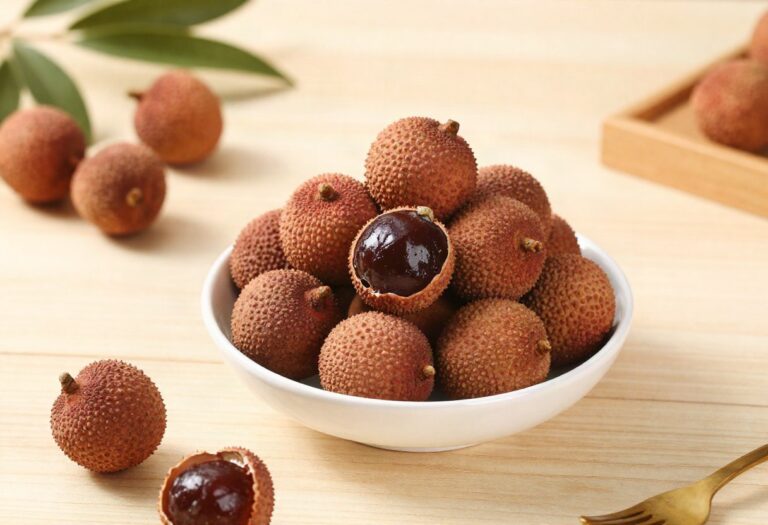
The dried lychee, sometimes called “lychee nut” because of its wrinkled, brown appearance, is the dehydrated version of the fresh lychee, that small, fleshy, fragrant fruit native to Asia. Once dried, its pulp becomes dark, concentrated and deliciously sweet, with a texture close to a raisin. Very popular in Chinese cooking, it is nibbled as it is, or added to infusions and desserts. Like all dried fruits, the dried lychee has concentrated nutrition facts: rich in natural carbohydrates and providing fibre, it delivers a good dose of energy. At 277 kcal per 100 g, it is a tasty snack best enjoyed in small amounts as part of a balanced diet.
Macronutrient breakdown
Nutrition table per 100 g
| Calories | 277 kcal |
| Kilojoules | 1159 kJ |
| Protein | 3,8 g |
| Carbohydrate | 70,7 g |
| Fat | 1,2 g |
| Fibre | 4,6 g |
Micronutrients per 100 g
All measured nutrients, ranked by share of the daily reference intake.
- Vitamin C183 mg229 %
- Copper0,63 mg63 %
- Potassium1110 mg56 %
- Vitamin B20,57 mg41 %
- Phosphorus181 mg26 %
- Vitamin B33,1 mg19 %
- Iron1,7 mg12 %
- Manganese0,23 mg12 %
See the other 8 nutrients
- Magnesium42 mg11 %
- Vitamin B60,09 mg6 %
- Calcium33 mg4 %
- Zinc0,28 mg3 %
- Vitamin E0,31 mg3 %
- Selenium1,3 µg2 %
- Vitamin K11,6 µg2 %
- Vitamin B10,01 mg1 %
USDA FoodData Central (SR Legacy)
Tips
Drying reduces the weight of the fruit and multiplies its energy density: 100 g of dried lychee provides about 277 kcal, 70.7 g of carbohydrate, 3.8 g of protein, 1.2 g of fat and 4.6 g of fibre. In other words, what tastes good is also concentrated in sugars. A reasonable portion is around 20 to 30 g, a small handful, especially if you are watching your weight.
How to eat dried lychee
- As it is, as a snack, for a sweet, fragrant touch.
- Rehydrated for a few minutes in hot water or tea, which softens its flesh and releases its floral aromas.
- In an infusion: it pleasantly flavours herbal teas and sweet broths.
- In a homemade mix with other dried fruits such as dried date or dried fig.
- Sliced over porridge, a yoghurt or an exotic fruit salad.
Storage: keep it in an airtight container, away from light and moisture. Properly stored, it keeps for several months without losing its softness. If you prefer the juicy, thirst-quenching version, turn instead to fresh lychee, which is far lower in calories.
Nutritional value and benefits. Dried lychee provides quickly available natural carbohydrates, a little fibre that helps digestive comfort, as well as minerals and vitamin C naturally present in the fruit (partly reduced by drying). Like other dried fruits, it offers dense energy in a small volume.
Tip for active people. Thanks to its richness in carbohydrates, dried lychee is a handy source of energy before a session or on an endurance outing, much like raisins. Slip a few pieces into your pocket or your homemade bar. After exercise, paired with a source of protein, it helps replenish your reserves. To go further on eating around training, see our guide to fitness nutrition.
Weight control. The glycaemic index of dried fruits is high and their energy density calls for moderation: it is easy to eat a lot without realising. Weigh your portion rather than eating straight from the bag. To compare its figures with other foods, take a look at the calorie table or explore the whole fruit family to vary your treats.