Group · Herbs & spices
Fresh spearmint
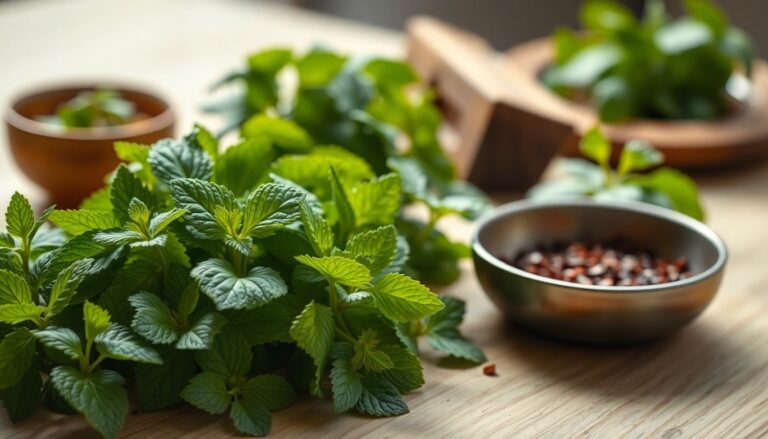
Fresh spearmint (Mentha spicata) is an essential aromatic herb, recognisable by its serrated leaves with a fresh, slightly sweet scent. Grown in gardens and in pots, it comes in several varieties (sweet mint, Moroccan mint, nanah) widely used in Mediterranean, Middle Eastern and North African cooking. With only 57.6 kcal per 100 g, it is very low in calories while being rich in fibre (7.4 g) and aromatic compounds. Used in small touches, it lifts dishes without adding to the calorie bill. It is the perfect ally of a balanced diet: it flavours infusions, salads, sauces and desserts, and brings a freshness enjoyed by food lovers and active people alike.
Macronutrient breakdown
Nutrition table per 100 g
| Calories | 58 kcal |
| Kilojoules | 240 kJ |
| Protein | 3,6 g |
| Carbohydrate | 5,3 g |
| Fat | 0,9 g |
| Fibre | 7,4 g |
Micronutrients per 100 g
All measured nutrients, ranked by share of the daily reference intake.
- Iron8,48 mg61 %
- Manganese1,15 mg58 %
- Vitamin C22,6 mg28 %
- Copper0,28 mg28 %
- Calcium221 mg28 %
- Potassium514 mg26 %
- Magnesium71,5 mg19 %
- Vitamin B20,22 mg16 %
- Vitamin B9dietary folate equivalents110 µg
See the other 8 nutrients
- Zinc1,1 mg11 %
- Vitamin B60,14 mg10 %
- Phosphorus66,5 mg10 %
- Vitamin B31,33 mg8 %
- Vitamin A61,7 µg8 %
- Vitamin B10,08 mg7 %
- Vitamin B50,29 mg5 %
- Selenium0,5 µg1 %
Anses Ciqual 2025. Source: Anses, 2025, Ciqual food composition table
Tips
Fresh spearmint is most often used raw, chopped just before serving to preserve its volatile aromas. A few leaves are enough: tabbouleh, tomato salad, Greek-style yoghurt, tzatziki, cold sauces, or even an alcohol-free mojito and flavoured waters. Served hot, it goes with peas, courgettes, lamb and many Middle Eastern dishes. As an infusion, it makes mint tea, best drunk lightly sweetened or unsweetened to stay on track with a slimming approach.
Storage: stand the stems in a glass of water in the fridge, like a bouquet, or wrap them in a damp cloth. You can also freeze the chopped leaves in ice cube trays with a little water. A dried version also exists if you prefer longer-lasting use.
In terms of nutrition facts, spearmint stands out for its very low calorie density, its richness in fibre and its plant pigments. Like many fresh herbs, it provides interesting compounds, as you can see in the herbs and spices family. Its glycaemic index is negligible and it contains almost no fat.
- Vitamins and minerals: it supplies small amounts of vitamin A, vitamin C and iron, worthwhile even in small portions.
- Digestive freshness: appreciated at the end of a meal, as a light infusion.
- Versatility: it pairs perfectly with coriander and fresh basil in world cuisines.
For active people: fresh spearmint is an advantage for flavouring your hydration waters, recovery smoothies and protein-rich fromage frais without calories. Add it to a fruit salad or a bowl of skyr for a fresh, light post-workout snack. It makes drinks more pleasant to sip, which can help you stay well hydrated during exercise. To go further on organising meals and snacks, see our guidelines on fitness nutrition.
Weight control: mint itself is a slimming asset because it adds taste without sugar or fat. The real point to watch is what goes with it: a very sweet mint tea or a sugary mojito will push the calories up. It is better to limit added sugar and enjoy the natural freshness of the herb. To build this kind of herb into your routine, draw on our advice on the balanced diet.
As a herbal tea or essential oil: precautions, reflux, children and pregnancy are covered in our guide peppermint: dangers and contraindications.