Group · Herbs & spices
Onion powder
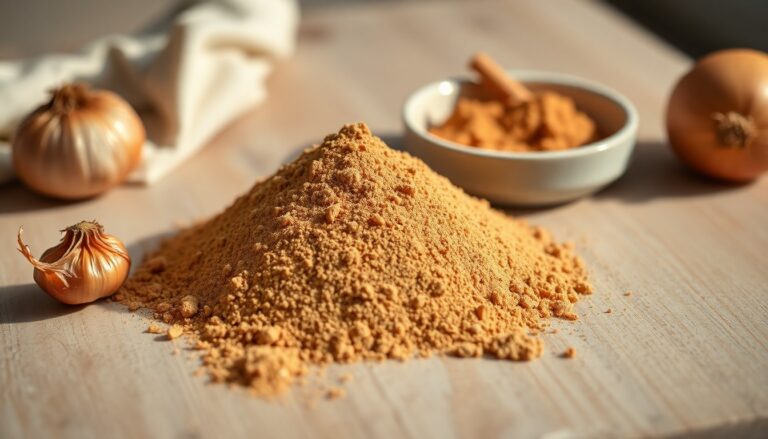
Onion powder is made by dehydrating and then grinding onions, giving a fine powder that is concentrated in aroma and very easy to measure. It comes in different textures: fine powder, semolina-like or granules, sometimes with a more or less toasted note depending on the drying. This spice fits into a multitude of savoury dishes, from marinades to sauces and dry blends. As for nutrition facts, it has 355 kcal per 100 g, but because it is eaten in very small amounts (a pinch to a teaspoon), its real contribution is minimal. Rich in fibre and concentrated in carbohydrate, it adds flavour without fat, an advantage for light, tasty cooking.
Macronutrient breakdown
Nutrition table per 100 g
| Calories | 355 kcal |
| Kilojoules | 1500 kJ |
| Protein | 9 g |
| Carbohydrate | 74,1 g |
| Fat | 0,5 g |
| Fibre | 9,2 g |
Micronutrients per 100 g
All measured nutrients, ranked by share of the daily reference intake.
- Vitamin B61,6 mg114 %
- Potassium1620 mg81 %
- Manganese1,39 mg70 %
- Vitamin B10,5 mg45 %
- Phosphorus303 mg43 %
- Copper0,42 mg42 %
- Vitamin C33 mg41 %
- Calcium257 mg32 %
- Vitamin B9dietary folate equivalents166 µg
See the other 9 nutrients
- Magnesium92 mg25 %
- Vitamin B51,38 mg23 %
- Zinc1,89 mg19 %
- Iron1,55 mg11 %
- Vitamin B20,1 mg7 %
- Vitamin B30,99 mg6 %
- Vitamin K13,8 µg5 %
- Vitamin E0,18 mg2 %
- Vitamin A0,92 µg0 %
Anses Ciqual 2025. Source: Anses, 2025, Ciqual food composition table
Tips
Onion powder is a time-saving ally: it replaces fresh onion when you do not feel like peeling or chopping, and it mixes instantly into liquids. Allow about 1 teaspoon of powder for one small fresh onion. Sprinkle it into your sauces, soups, vinaigrettes, meat or fish marinades, and your homemade spice blends.
- Ways to use it: add it at the end of cooking or into a warm liquid to release its aroma without burning it, because an overheated powder turns bitter.
- Pairings: it works wonderfully with garlic powder, paprika and black pepper to make a rub for grilling.
- Storage: keep it in an airtight jar, away from light and damp, to preserve its fragrance for several months.
Nutritionally, onion powder is concentrated: per 100 g, it provides around 74.1 g of carbohydrate, 8.95 g of protein and over 9.2 g of fibre. These figures look impressive, but remember that you rarely use more than a few grams per dish. The real calorie contribution in a recipe is therefore negligible, which makes it an ideal spice for lifting slimming dishes without adding too much fat or salt.
For active people, the appeal is mainly in the taste: seasoning healthy dishes generously (chicken breast, eggs, steamed vegetables, brown rice) helps make a cutting or bulking diet more enjoyable, without eating into your macros. Well-spiced lean meat always goes down better than bland meat. You can also flavour a protein omelette or a bowl of quinoa after training. To go further on balancing your plates, take a look at our guidelines on fitness nutrition.
On weight control, onion powder is not a calorie trap, as long as you check the versions sold in blends (onion salt, industrial seasonings), which can hide salt or additives. Favour a 100% onion powder. You can combine it with other herbs from the herbs and spices family, such as thyme, to multiply flavours with no calories. A simple, smart way to cook tasty food every day.