Group · Bread
Rye bread
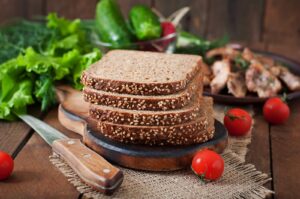
Rye bread is a rustic bread made from rye flour, a cereal known for its density and slightly tangy flavour. Its dense, compact crumb, often darker than that of wheat bread, makes it a classic on Nordic and Central European tables. It comes in several forms: pure rye, mixed with wheat, made with sourdough or enriched with seeds. At 260 kcal per 100 g, it provides complex carbohydrates, plant protein (9.06 g) and a good amount of fibre (4.5 g). Its nutritional value and a glycaemic index that is generally more moderate than that of white bread make it a valuable ally in a balanced, varied diet.
Macronutrient breakdown
Nutrition table per 100 g
| Calories | 260 kcal |
| Kilojoules | 1100 kJ |
| Protein | 9,1 g |
| Carbohydrate | 51,5 g |
| Fat | 1 g |
| Fibre | 4,5 g |
Micronutrients per 100 g
All measured nutrients, ranked by share of the daily reference intake.
- Manganese0,74 mg37 %
- Vitamin B949,3 µg25 %
- Phosphorus110 mg16 %
- Copper0,14 mg14 %
- Vitamin B10,11 mg10 %
- Zinc0,86 mg9 %
- Iron1,2 mg9 %
- Potassium170 mg9 %
See the other 9 nutrients
- Vitamin B50,44 mg7 %
- Magnesium27 mg7 %
- Calcium33 mg4 %
- Omega-6 LA0,3 g3 %
- Vitamin E0,26 mg2 %
- Total omega-30,05 g2 %
- Vitamin B30,28 mg2 %
- Omega-3 ALA0,03 g1 %
- Vitamin A0,21 µg0 %
Anses Ciqual 2025. Source: Anses, 2025, Ciqual food composition table
Tips
Rye bread lends itself to a thousand uses. At breakfast, one or two slices go perfectly with fresh cheese, butter or nut butter. At lunch, its sturdiness makes it an ideal base for savoury open sandwiches, smoked salmon or fish rillettes (a rough pâté-style spread). Its pronounced flavour goes well with seafood, which is why it is a great classic of Scandinavian cooking.
In terms of nutrition facts, its fibre contributes to fullness and regular digestion, while its complex carbohydrates release energy gradually. Its glycaemic index, often lower than that of white baguette, makes it an interesting option for spreading out your energy intake. It also contains minerals such as magnesium, potassium and plant-based iron.
- Guide portion: 40 to 60 g (1 to 2 slices), to adjust according to your activity and goals.
- Storage: its dense crumb keeps it soft for several days in a tea towel or a bread bin.
- Smart pairings: avocado, egg, crunchy vegetables, fresh cheese or hummus.
If you are watching your weight, keep its calorie density in mind: rye bread is nourishing, but it is mostly the toppings (butter, cold cuts, jam) that push up the total. Opt for light, protein-rich toppings to stay full for longer. To structure your meals, the balanced diet approach can help you manage your portions without frustration.
For active people, rye bread is a good choice of carbohydrate before endurance exercise, eaten 2 to 3 hours beforehand, thanks to its gradual energy release. As a recovery snack, pair it with a source of protein (egg, lean ham, fromage blanc) to replenish glycogen and support your muscles. You can explore more protein snack ideas to vary your snacking.
If you like rustic breads, also try pumpernickel bread, made with wholegrain rye, or sourdough bread with its slow fermentation. To compare what each variety offers, browse the bread family and choose the one that best suits your tastes and lifestyle. Take care, though, if you are sensitive: rye contains gluten.
If you have diabetes: the glycaemic index of breads ranges from 53 to 95 depending on the flour and grains. See the comparison in our guide which bread for people with diabetes.