Group · Fruit
Peach
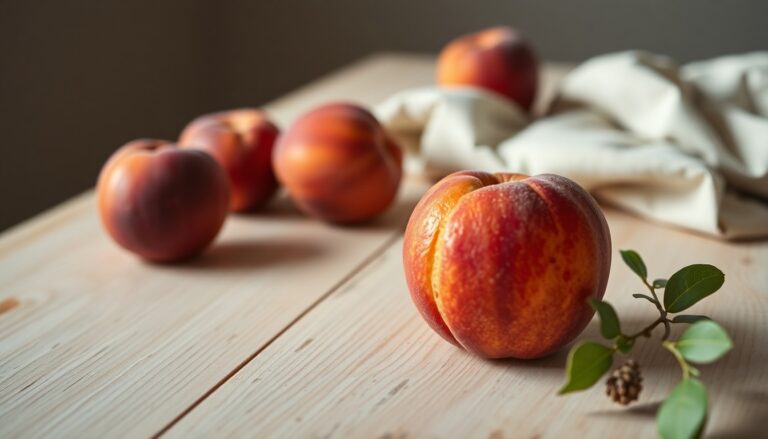
A symbol of summer, the peach is a fleshy, juicy fruit from the peach tree, loved for its sweet, fragrant flesh. There are several varieties: the soft yellow peach, the delicately flavoured white peach, the blood-red-fleshed vineyard peach, and the flat peach (paraguayo), which is handy to eat. With only 44.4 kcal per 100 g, it is low in calories while still being a treat. Rich in water, it provides fibre, vitamin C and antioxidants. Its natural sweetness makes it a healthy, refreshing dessert that fits easily into a balanced diet, whether you are watching your weight or simply enjoy seasonal fruit.
Macronutrient breakdown
Nutrition table per 100 g
| Calories | 44 kcal |
| Kilojoules | 189 kJ |
| Protein | 0,7 g |
| Carbohydrate | 9,8 g |
| Fat | 0,3 g |
| Fibre | 1,1 g |
Micronutrients per 100 g
All measured nutrients, ranked by share of the daily reference intake.
- Potassium184 mg9 %
- Copper0,06 mg6 %
- Vitamin C3,64 mg5 %
- Vitamin E0,43 mg4 %
- Vitamin B50,16 mg3 %
- Phosphorus17,3 mg2 %
- Manganese0,04 mg2 %
- Magnesium6,73 mg2 %
- Vitamin B9dietary folate equivalents11,5 µg
See the other 7 nutrients
- Vitamin B30,22 mg1 %
- Total omega-30,03 g1 %
- Vitamin A7,46 µg1 %
- Zinc0,09 mg1 %
- Vitamin B60,01 mg1 %
- Iron0,11 mg1 %
- Calcium4,1 mg1 %
Anses Ciqual 2025. Source: Anses, 2025, Ciqual food composition table
Tips
The peach is at its best from June to September, when fully ripe. Choose one that gives slightly under your finger, smells fragrant and has no soft spots. Keep it at room temperature to preserve its aroma, then in the fridge once it is properly ripe. Take it out a few minutes before eating, as cold masks its flavour.
In terms of nutrition facts, the peach is above all full of water (nearly 88%), which explains its low energy density. It provides fibre (about 1.03 g per 100 g) to support digestion, along with vitamin C, beta-carotene and potassium. Its carbohydrates (9.74 g) come from natural sugars with a moderate glycaemic index, making it a sensible snack if you are watching your weight.
In the kitchen, the peach has plenty of uses:
- raw, eaten plain or in a fruit salad with apricot and melon;
- poached in a light syrup, roasted in the oven with a drizzle of honey or grilled to go with white meat;
- blended into a smoothie, compote or coulis to spoon over a plain yoghurt.
To vary your summer treats, pair it with other sun-ripened fruits such as the nectarine, its smooth-skinned cousin, or the juicy plum. You will find plenty more ideas in the fruit family.
For active people, the peach is an ideal snack before or after exercise. Its fast-release sugars give an energy boost, while its potassium and high water content help with hydration and limit feelings of fatigue. For recovery, pair it with a source of protein (fromage blanc, Greek yoghurt) for a complete snack. You can also add it to a post-workout bowl or take inspiration from our high-protein snack recipes to combine it cleverly.
Weight control: fresh peach is a slimming ally thanks to its low calorie content and filling effect. Be wary, however, of processed versions such as peaches in syrup, which are much sweeter, or of tarts and jams. Choose the whole fruit rather than juice, which concentrates the sugars without the fibre. Two peaches a day fit easily into a balanced day, as a dessert or snack, with no guilt.
