Group · Starchy foods
Cheese tortellini
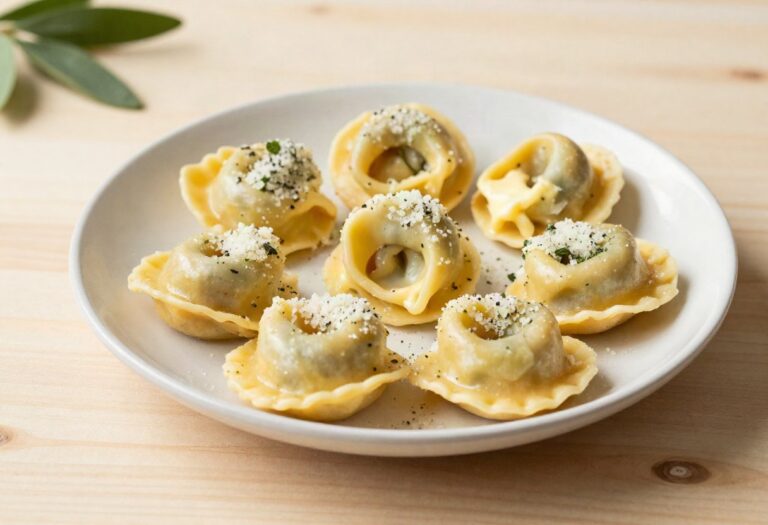
Cheese tortellini are small stuffed pasta of Italian origin, folded into a ring around a creamy filling of ricotta, Parmesan or a mixture of cheeses. Fresh or dried, sold in the chilled aisle or in a bag, they cook in a few minutes and are a popular choice for quick meals as well as relaxed dinners with friends.
Nutritionally, they provide around 268 kcal per 100 g, with 37.3 g of carbohydrate, 11.3 g of protein and 7.69 g of fat. This combination of starchy food and cheese makes for a nourishing, comforting dish. In a balanced diet, tortellini have their place as long as you take care over the portion and the accompaniment, favouring vegetables and a light sauce.
Macronutrient breakdown
Nutrition table per 100 g
| Calories | 268 kcal |
| Kilojoules | 1130 kJ |
| Protein | 11,3 g |
| Carbohydrate | 37,3 g |
| Fat | 7,7 g |
| Fibre | 2,3 g |
Micronutrients per 100 g
All measured nutrients, ranked by share of the daily reference intake.
- Vitamin B120,6 µg24 %
- Phosphorus165 mg24 %
- Calcium141 mg18 %
- Vitamin B20,13 mg9 %
- Vitamin B50,47 mg8 %
- Iron1 mg7 %
- Vitamin B10,07 mg6 %
- Omega-6 LA0,61 g6 %
See the other 7 nutrients
- Magnesium21,7 mg6 %
- Vitamin B911,4 µg6 %
- Potassium112 mg6 %
- Omega-3 ALA0,07 g4 %
- Total omega-30,08 g3 %
- Vitamin A25,1 µg3 %
- Vitamin B30,26 mg2 %
Anses Ciqual 2025. Source: Anses, 2025, Ciqual food composition table
Tips
To make the most of cheese tortellini without adding too many calories, aim for a portion of around 80 to 100 g of dried pasta per person, which makes a satisfying dish once cooked. Cooking is quick: a few minutes in well-salted, simmering water is enough for fresh tortellini, a little longer for dried. Keep an eye on the texture to keep the filling soft and the pasta al dente.
In terms of nutrition facts, this stuffed pasta combines the carbohydrate of durum wheat semolina with the protein of cheese. Their glycaemic index stays moderate if you pair them with fibre: add a sauté of courgettes, spinach or tomatoes to rebalance the dish. A vegetable ratatouille on the side adds colour, volume and fullness without too many calories.
Which pairings to choose?
- A homemade tomato sauce rather than a cream sauce, to limit fat;
- A drizzle of olive oil and fresh basil, in the spirit of the Cretan diet;
- A touch of grated Parmesan, used sparingly, to lift the flavour;
- A crunchy green salad to increase the fibre.
If you prefer hearty, simmered dishes, tortellini are similar to other dishes in the Starchy foods family, such as beef ravioli or spaghetti in sauce. You can compare their intakes using the calorie table to vary your menus with full knowledge of the facts.
Tip for active people: tortellini are a good source of carbohydrate to replenish glycogen stores after training. Eaten in the early evening after a session, with a portion of lean protein (poultry, fish) and vegetables, they support recovery. Before exercise, choose a moderate portion several hours beforehand to avoid heavy digestion. In bulking phases, they provide a practical and tasty energy boost.
Weight control: with a notable calorie density due to the cheese, moderation is still the rule if you are watching your figure. Avoid the very fatty versions, measure out the sauce and choose water rather than a sugary drink. Keep fresh tortellini in the fridge and eat them before the date shown. Enjoyed in sensible amounts with good accompaniments, they fit easily into a tasty, sensible diet.