Group · Starchy foods
Tortilla
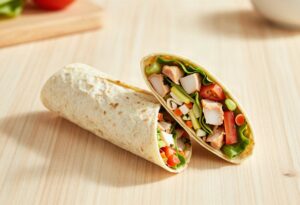
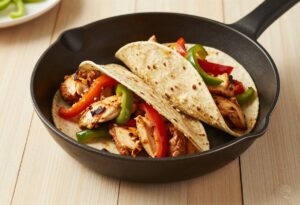
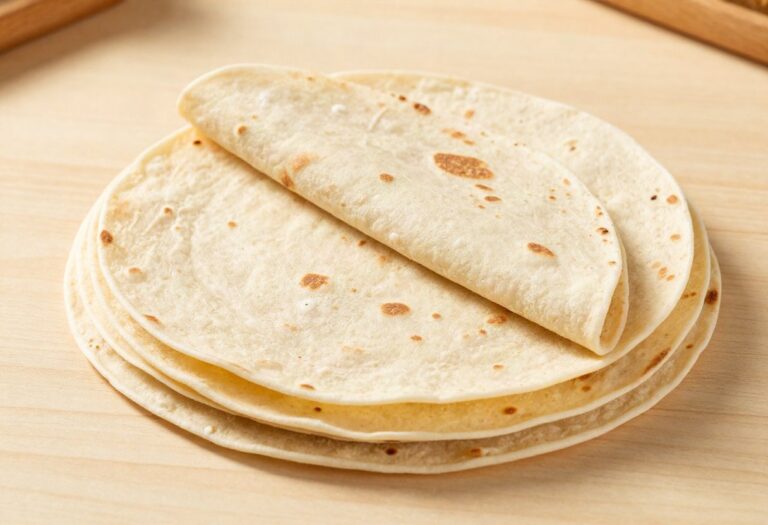
The tortilla is a thin flatbread of Mexican origin, traditionally made from corn flour or wheat flour. Soft and easy to roll, it is the base of many dishes: wraps, fajitas, burritos, quesadillas and rolled tacos. Nutritionally, the tortilla belongs to the family of starchy foods and provides around 316 kcal per 100 g, with nearly 58 g of carbohydrates, 6.67 g of protein, 5.57 g of fat and 3.57 g of fibre. It is therefore a practical source of energy, fairly rich in fibre when made with wholegrain cereals. Well chosen and well filled, it has a place in a balanced, varied diet.
Macronutrient breakdown
Nutrition table per 100 g
| Calories | 316 kcal |
| Kilojoules | 1330 kJ |
| Protein | 6,7 g |
| Carbohydrate | 58 g |
| Fat | 5,6 g |
| Fibre | 3,6 g |
Micronutrients per 100 g
All measured nutrients, ranked by share of the daily reference intake.
- Phosphorus280 mg40 %
- Manganese0,31 mg16 %
- Vitamin B924,5 µg12 %
- Omega-3 ALA0,21 g11 %
- Omega-6 LA0,96 g10 %
- Total omega-30,23 g9 %
- Copper0,09 mg9 %
- Vitamin E1,04 mg9 %
See the other 9 nutrients
- Vitamin B10,09 mg8 %
- Zinc0,63 mg6 %
- Potassium120 mg6 %
- Vitamin K14,49 µg6 %
- Iron0,81 mg6 %
- Magnesium20 mg5 %
- Vitamin B50,24 mg4 %
- Vitamin B60,04 mg3 %
- Calcium23 mg3 %
Anses Ciqual 2025. Source: Anses, 2025, Ciqual food composition table
Tips
The tortilla lends itself to a thousand preparations. For a balanced meal, go for a filling rich in vegetables, lean protein (chicken, turkey, tuna, egg, pulses) and a source of healthy fat (avocado, a drizzle of olive oil). A standard portion is one or two tortillas, equivalent to one serving of starchy food. Warm it for a few seconds in a dry frying pan or in the oven so that it stays soft without becoming brittle.
In terms of nutrition facts, go for versions made with corn flour or wholemeal flour, which are higher in fibre and keep you full for longer. The fibre (3.57 g per 100 g) contributes to digestive comfort and a better-controlled glycaemic index than very refined versions. If you are watching your gluten intake, note that corn tortillas are gluten-free, unlike wheat ones: you can read our guide to understanding gluten intolerance.
- Varieties: wheat tortilla (softer), corn tortilla (more distinctive, gluten-free), wholemeal or seeded versions.
- Storage: in a dry, airtight pack, or in the freezer; separate the tortillas with baking paper.
- Uses: cold wraps for the lunchbox, fajitas, baked quesadillas, homemade oven-baked chips.
For active people, the tortilla is an excellent base for a snack or pre-exercise meal thanks to its easily absorbed carbohydrates. Filled with protein after training, it helps recovery by combining energy and amino acids. Remember to vary with other starchy foods such as brown rice or quinoa, depending on your goals and the time of day.
For slimming, watch the calorie density of the fillings more than that of the tortilla itself: melted cheese, fatty sauces and cured meats quickly push the total up. Stick to light dressings, add plenty of raw vegetables and limit fried versions. Well put together, the tortilla can fit perfectly into a balanced meal. To compare energy values, take a look at the food calorie table and adjust your portions to your needs.