Group · Condiments & sauces
Vinegar
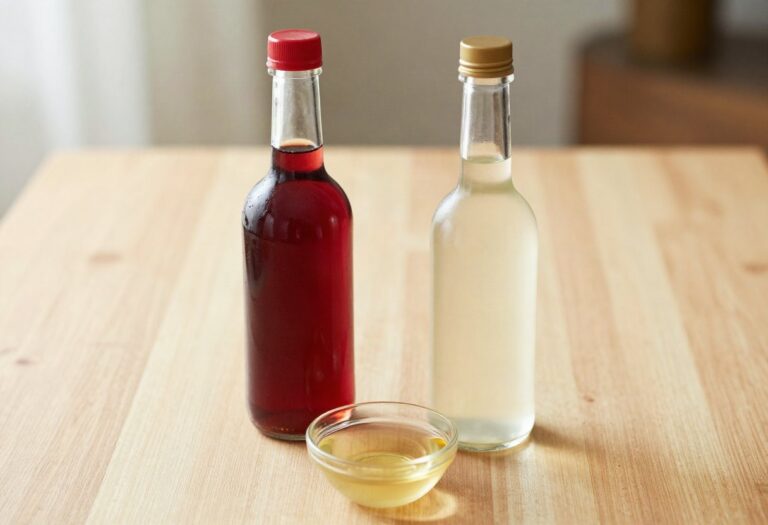
Vinegar is a liquid condiment made by the acetic fermentation of an alcoholic liquid (wine, cider, grain alcohol). There is a great variety: red wine or white wine vinegar, balsamic vinegar, cider vinegar, rice or sherry vinegar, each with its own acidity and aromas. Very low in calories, with just 22.5 kcal per 100 g, no fat or protein and almost no carbohydrate, it fits perfectly into a balanced diet and into a weight-loss approach. Its acidity lifts dishes, flavours marinades and gives structure to sauces. It is a flavour ally that lets you cut down on salt and fats while still waking up the flavours.
Macronutrient breakdown
Nutrition table per 100 g
| Calories | 23 kcal |
| Kilojoules | 97 kJ |
| Protein | 0,1 g |
| Carbohydrate | 1 g |
| Fat | 0,1 g |
Micronutrients per 100 g
All measured nutrients, ranked by share of the daily reference intake.
- Manganese0,05 mg3 %
- Iron0,24 mg2 %
- Potassium20,5 mg1 %
- Phosphorus6 mg1 %
- Copper0,01 mg1 %
- Calcium6 mg1 %
- Magnesium2,5 mg1 %
- Vitamin C0,5 mg1 %
See the other 2 nutrients
- Zinc0,02 mg0 %
- Selenium0,1 µg0 %
Anses Ciqual 2025. Source: Anses, 2025, Ciqual food composition table
Tips
Vinegar is a real Swiss army knife in the kitchen. A few spoonfuls are enough to dress a salad, deglaze a pan, tenderise meat or flavour a stock. As its nutritional values are very low (0.1 g of fat and about 0.95 g of carbohydrate per 100 g), it lets you liven up a dish without piling on the calories, unlike fatty sauces.
- Choosing by use: balsamic vinegar, milder and sweeter, brings out the best in tomatoes and strawberries; cider vinegar adds a fruity touch; wine vinegar remains the essential for vinaigrettes; rice vinegar suits Asian dishes.
- Well-judged vinaigrettes: mix it with a good-quality oil, mustard and herbs. Try comparing a homemade vinaigrette with a shop-bought vinaigrette: the homemade version lets you control the salt and fat.
- Marinades and cooking: the acidity of vinegar tenderises the fibres of meat and fish. A few drops at the end of cooking wake up a slow-cooked dish.
- Storage: its natural acidity makes it an excellent preservative, used for gherkins and pickles. Keep it away from light and it will last a very long time.
To cut down on salt, vinegar is an excellent lever: it intensifies the perception of flavours and lets you go lighter on table salt. It is a tip often recommended in approaches such as the DASH diet, which relies on less salty seasonings.
For active people: vinegar provides neither energy nor protein, so it never replaces a snack or a recovery meal. However, it is a valuable seasoning for making dishes rich in vegetables and lean protein tasty, without adding unnecessary calories. Ideal when cutting or following a balanced diet plan, it helps you vary flavours without sabotaging your nutrition plan.
Points to watch: beware of flavoured vinegars or balsamic glazes, sometimes enriched with sugar, which raises the carbohydrate content. Check the label if you are watching your sugar intake. Because of its acidity, take it in moderation if you have a sensitive stomach. To explore other low-calorie condiments, browse the condiments and sauces family. Used well, vinegar remains a first-rate ally for flavour and weight control.