Group · Condiments & sauces
Chilli sauce
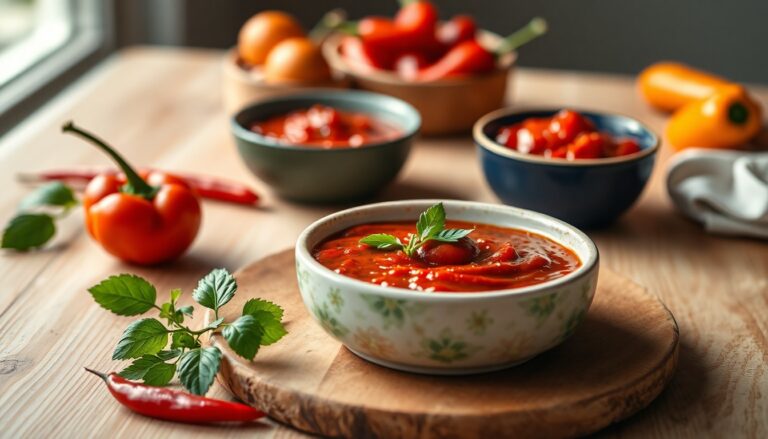
Chilli sauce is a spicy condiment of Mexican and Tex-Mex origin, made from tomatoes, chillies, garlic, onion, vinegar and spices. It comes in many versions: mild chilli sauce, hot, sweet in the sweet chilli style, or stronger in the fiery style. Versatile, it livens up meat, vegetables, tacos, burritos and grilled food without weighing down the plate. With around 92 kcal per 100 g, it is relatively light in fat (0.3 g) and provides useful fibre (2.4 g). Its nutrition facts make it a flavour ally for those watching their waistline, as long as you stay alert to the added sugar and salt in shop-bought recipes.
Macronutrient breakdown
Nutrition table per 100 g
| Calories | 92 kcal |
| Kilojoules | 384 kJ |
| Protein | 2,5 g |
| Carbohydrate | 19,8 g |
| Fat | 0,3 g |
| Fibre | 2,4 g |
Micronutrients per 100 g
All measured nutrients, ranked by share of the daily reference intake.
- Vitamin C16 mg20 %
- Potassium370 mg19 %
- Vitamin E1,92 mg16 %
- Copper0,13 mg13 %
- Vitamin B60,16 mg11 %
- Vitamin B31,6 mg10 %
- Vitamin B10,09 mg8 %
- Phosphorus52 mg7 %
See the other 11 nutrients
- Vitamin K15,2 µg7 %
- Iron0,8 mg6 %
- Vitamin B20,07 mg5 %
- Vitamin B99 µg5 %
- Vitamin A34 µg4 %
- Magnesium12 mg3 %
- Calcium20 mg3 %
- Selenium1,1 µg2 %
- Zinc0,16 mg2 %
- Omega-6 LA0,14 g1 %
- Omega-3 ALA0,01 g1 %
USDA FoodData Central (SR Legacy)
Tips
Chilli sauce is used in small touches: one tablespoon is enough to wake up a dish. It goes wonderfully with grilled food, chicken, kidney beans, quesadillas, rice or roasted vegetables. You can also work it into a marinade, add it to a wok or mix it with a little plain yoghurt for a milder dip. When it comes to cooking, it stands up well to heat and develops its aromas when simmered.
- Carbohydrates and glycaemic index: with nearly 19.79 g of carbohydrate per 100 g, the sweet version (sweet chilli) contains added sugar. Read the labels and favour homemade recipes to control the sugar.
- Fibre: its 2.4 g of fibre comes from the tomatoes and chillies, an asset for fullness.
- Almost no fat: unlike mayonnaise, chilli sauce is very low in fat, which makes it an interesting condiment for weight loss.
- Salt: watch the sodium content, which is sometimes high in shop-bought sauces.
To vary the pleasure and the spicy flavours, you can alternate with Tabasco or the fresher salsa sauce. If you want a less spicy tomato base, classic tomato sauce will do the job. You will find other condiments in the Condiments & Sauces family.
Tips for active people: chilli sauce is an excellent way to make meals rich in lean protein (chicken, turkey, white fish) tasty without adding empty calories. During a cutting or weight-loss period, it helps vary the flavours of an often monotonous balanced diet plan. For gaining mass, combine it with rice and beans for a meal dense in carbohydrates and fibre. Be careful, though: its very spicy side can upset digestion just before intense exercise, so it is best kept for meals away from training.
Storage: close the bottle tightly and keep it in the fridge after opening. A homemade sauce keeps for a few days in the fridge in an airtight jar. Eat chilli sauce in moderation: it is a condiment for pleasure, to be portioned so that you enjoy its aromatic benefits without too much sugar or salt.