Group · Starchy foods
Cooked rice noodles
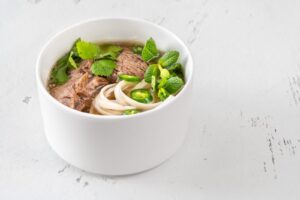
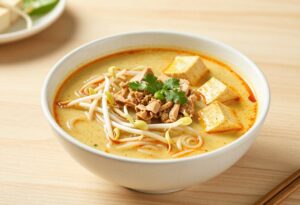
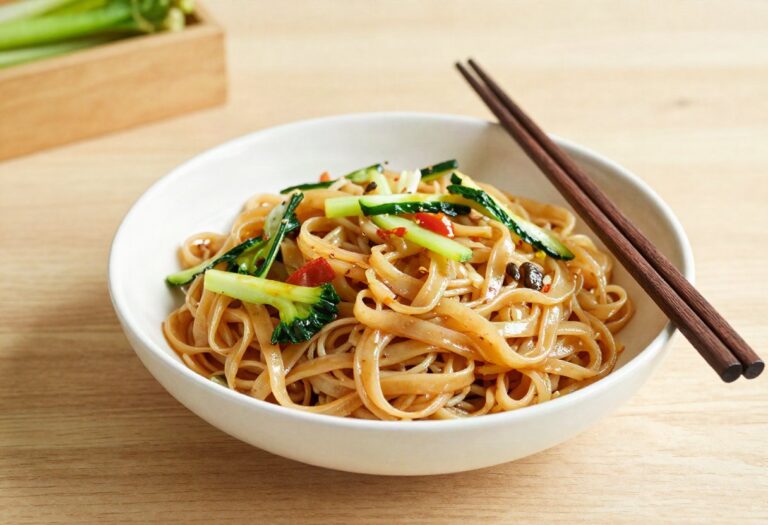
Cooked rice noodles are an emblematic starchy food of Asian cooking, made from rice flour and water. They come in different forms: wide ribbons for pad thai, thin vermicelli for pho soups or spring rolls. Naturally gluten-free, they appeal to anyone looking for an alternative to wheat pasta. At around 86.6 kcal per 100 g once cooked, they have a moderate calorie density and are very easy to digest. Their soft texture and neutral flavour make them a versatile base that goes as well with crunchy vegetables as with fragrant sauces. Well portioned, they easily find a place in a balanced diet.
Macronutrient breakdown
Nutrition table per 100 g
| Calories | 87 kcal |
| Kilojoules | 368 kJ |
| Protein | 1,5 g |
| Carbohydrate | 20,1 g |
| Fat | 0,2 g |
| Fibre | 1 g |
Micronutrients per 100 g
All measured nutrients, ranked by share of the daily reference intake.
- Vitamin B96,57 µg3 %
- Copper0,03 mg3 %
- Manganese0,05 mg3 %
- Phosphorus13 mg2 %
- Zinc0,15 mg2 %
- Total omega-30,03 g1 %
- Vitamin B50,05 mg1 %
- Calcium5,2 mg1 %
See the other 4 nutrients
- Iron0,08 mg1 %
- Magnesium1,3 mg0 %
- Vitamin E0,03 mg0 %
- Potassium2,2 mg0 %
Anses Ciqual 2025. Source: Anses, 2025, Ciqual food composition table
Tips
In terms of nutrition facts, cooked rice noodles provide 20.1 g of carbohydrate, 1.5 g of protein, 0.2 g of fat and 1 g of fibre per 100 g. They are above all a source of carbohydrate, with a rather high glycaemic index depending on cooking: to limit spikes, serve them al dente and pair them with foods rich in fibre and protein.
For cooking, the ideal is to leave them to soak in hot (not boiling) water for a few minutes, then rinse them to stop the cooking and stop them sticking. You can then stir-fry them quickly in a wok with a drizzle of oil, vegetables and a little soy sauce.
A few ideas for enjoying them well:
- Pair them with colourful vegetables (pepper, broccoli, carrot) for volume and fibre;
- Add a source of protein (chicken, prawns, tofu, egg) to balance the plate;
- Flavour with ginger, lemongrass, coriander, fish sauce or crushed peanuts;
- A reasonable cooked portion is around 150 to 200 g depending on your appetite and activity.
If you are watching your weight, keep in mind that these noodles are still a starchy food: it is the accompaniment and the quantity that make the difference. Avoid versions swimming in sweet sauce or fried, which are higher in calories. To compare their intake with other bases such as cooked white rice or Chinese noodles, the food calorie table is a good guide.
For active people, rice noodles are an excellent fuel: easy to digest, they replenish glycogen stores before or after exercise. Before a session, eat them 2 to 3 hours beforehand so that energy is available. After training, combine them with a source of protein to optimise muscle recovery. They fit perfectly into a bulking approach, by increasing portions, or a maintenance one, by staying measured.
You can also include them in your batch cooking sessions: prepare a large quantity of vegetables and protein, and add the freshly rehydrated noodles when serving. Finally, discover other options from the starchy foods family to vary your meals throughout the week.