Group · Starchy foods
Chinese noodles
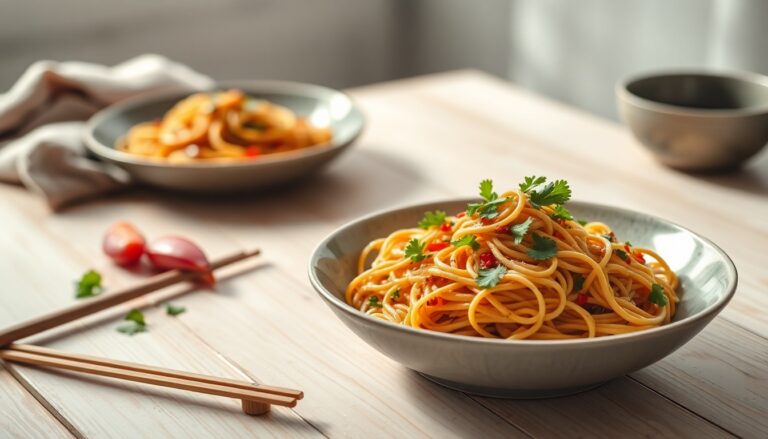
Chinese noodles are among the great classics of Asian cooking. Depending on the recipe, they are made with wheat flour, sometimes enriched with eggs, and can be fresh, dried or pre-cooked then fried, which explains the large differences in nutrition facts. They are found in soups, wok stir-fries, fried noodle dishes and steamed bowls. Nutritionally, these noodles mainly provide carbohydrate and, when fried, a notable share of fat that pushes up the calories. Rich in energy, they have a place in a balanced diet as long as you take care over the preparation method and portion size.
Macronutrient breakdown
Nutrition table per 100 g
| Calories | 371 kcal |
| Kilojoules | 1570 kJ |
| Protein | 13 g |
| Carbohydrate | 71 g |
| Fat | 3 g |
| Fibre | 4 g |
Tips
Chinese noodles provide around 371 kcal per 100 g dry, before cooking, with nearly 71 g of carbohydrate, 13 g of protein and 3 g of fat. On the plate the figure is much lower: noodles absorb water during cooking and weigh two to three times their dry weight. On the other hand, versions pre-cooked then fried at the factory are noticeably higher in fat. So remember to check the label and choose the versions you cook in water.
For a balanced meal, allow a portion of 60 to 80 g of dry noodles per person, the equivalent of a bowl once cooked. Pair them generously with crunchy vegetables (cabbage, soya bean sprouts, carrots, peppers) and a source of lean protein such as chicken, prawns or tofu. This trio lowers the overall glycaemic index of the dish and improves fullness.
- Cooking: choose boiling or a quick stir-fry in a wok with little oil rather than frying, to reduce fat intake.
- Seasoning: soy sauce, ginger, garlic and coriander lift the dish without unnecessary calories. Beware of the salt in the seasoning sachets of instant noodles.
- Storage: dried noodles keep for months in a dry place; fresh noodles keep in the fridge and freeze well.
If you are watching your weight, be aware that fried instant noodles are energy-dense and often high in sodium. It is better to treat them as an occasional pleasure and, day to day, to prefer more filling starchy foods such as brown rice, quinoa or cooked rice noodles. To vary your sources of carbohydrate, also explore the other options in the starchy foods family.
For active people, Chinese noodles are a useful carbohydrate reserve to replenish glycogen after intense training or before an endurance session. Choose a boiled version, pair it with protein for muscle recovery and hydrate properly. When bulking up, their energy density helps you reach your calorie needs; when cutting, watch the portion and the cooking method.
Finally, people sensitive to gluten should avoid wheat noodles and turn to rice- or buckwheat-based alternatives. Varied and easy to cook, Chinese noodles remain an asset in the kitchen when you control how they are prepared.