Group · Dairy
Edam
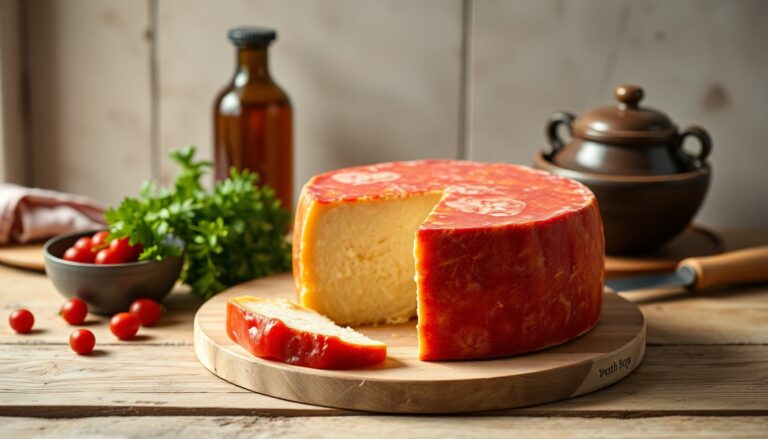
Edam is a semi-hard pressed-curd cheese from the Netherlands, recognisable by its ball shape covered in a thin red or yellow wax rind. Mild and slightly nutty in flavour, it comes in more or less matured versions, from young and soft to older, drier and stronger edam. With around 320 kcal per 100 g, nearly 25.2 g of protein and 24.4 g of fat, it is a rich, nourishing cheese that is naturally low in carbohydrates (1.43 g). An interesting source of calcium and good-quality protein, edam has its place in a balanced diet, as long as you respect the portions. Versatile, it is welcome both at the table and in the kitchen.
Macronutrient breakdown
Nutrition table per 100 g
| Calories | 320 kcal |
| Kilojoules | 1330 kJ |
| Protein | 25,2 g |
| Carbohydrate | 1,5 g |
| Fat | 24,4 g |
Micronutrients per 100 g
All measured nutrients, ranked by share of the daily reference intake.
- Calcium812 mg102 %
- Phosphorus536 mg77 %
- Vitamin B121,54 µg62 %
- Zinc3,09 mg31 %
- Vitamin A243 µg30 %
- Vitamin B20,39 mg28 %
- Iodine28,2 µg19 %
- Magnesium41,2 mg11 %
See the other 14 nutrients
- Vitamin D0,5 µg10 %
- Vitamin B916 µg8 %
- Omega-3 ALA0,12 g6 %
- Copper0,06 mg6 %
- Vitamin B60,08 mg5 %
- Potassium106 mg5 %
- Vitamin B50,28 mg5 %
- Vitamin B10,04 mg3 %
- Vitamin K12,3 µg3 %
- Omega-6 LA0,25 g3 %
- Vitamin E0,24 mg2 %
- Manganese0,02 mg1 %
- Iron0,12 mg1 %
- Vitamin B30,08 mg1 %
Anses Ciqual 2025. Source: Anses, 2025, Ciqual food composition table
Tips
Edam can be enjoyed in many ways: sliced on bread, cubed with drinks, grated for gratins or melted into a sauce. Its mildness appeals to children and adults alike. To enjoy its nutrition facts without overdoing it, aim for a portion of around 30 g, the equivalent of a small slice, which already provides calcium and about 25.2 g of protein per 100 g.
Varieties and storage: a distinction is made between young edam (mild, supple) and matured edam (firmer and more pronounced). Keep it in the fridge, wrapped in paper, and take it out 20 minutes before eating so it releases its aromas. It goes well with fruit (apple, grapes), walnuts and a little wholemeal bread.
Key nutrients: rich in complete protein, calcium and phosphorus, edam also contains salt and fat, including a share of saturated fatty acids. Its glycaemic index is very low thanks to its near-absence of carbohydrates. For variety, you can alternate it with gouda, its Dutch cousin, or Emmental, with its milder notes. Discover the whole dairy products family to put together a balanced cheeseboard.
Tip for active people: with nearly 25.2 g of protein per 100 g, edam is a practical option for topping up the day’s protein intake, particularly in a snack paired with fruit or dried fruit. For recovery after exercise, it combines well with a source of carbohydrates such as bread or a banana. If you are looking for more practical formats for training, protein snack ideas can complement this cheese.
Weight control: edam remains a high-calorie-density food because of its fat content. If you are watching your waistline, stick to small amounts and favour a lower-fat version as part of a balanced overall meal. To compare its calories with those of other cheeses, see the food calorie table. Well measured, edam brings its nutritional benefits, calcium and protein, without weighing down the plate. The key remains moderation and balance across the whole day.