Group · Meat
Minced ham
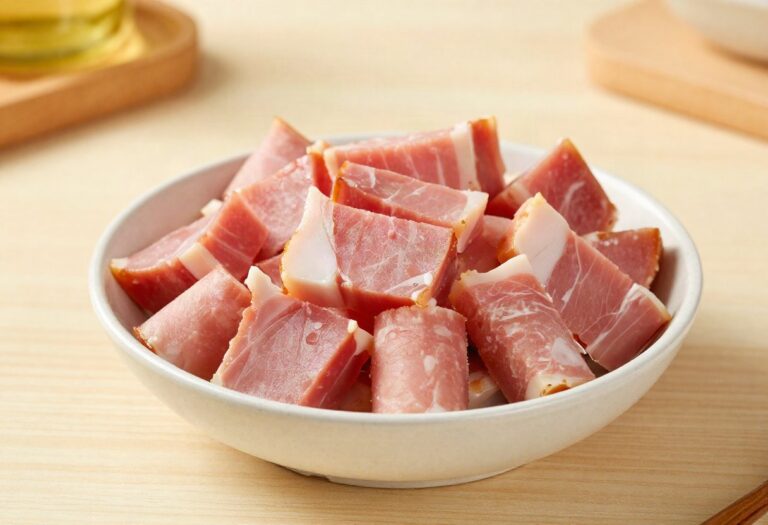
Minced ham is a pork preparation made by reducing ham to a fine, even texture, often seasoned and canned or sold in a tray. It is found in sandwiches, spreads, stuffings or simply spread on bread. Convenient and tasty, it is one of the charcuterie products in the meat family. Nutritionally, it provides 132 kcal per 100 g, with 18 g of protein, 1.58 g of carbohydrate and 5.88 g of fat. Its richness in protein makes it a useful source of amino acids, but its fat and salt content means it should be eaten in moderation as part of a balanced and varied diet.
Macronutrient breakdown
Nutrition table per 100 g
| Calories | 132 kcal |
| Kilojoules | 554 kJ |
| Protein | 18 g |
| Carbohydrate | 1,6 g |
| Fat | 5,9 g |
| Fibre | 0,5 g |
Tips
Minced ham is eaten cold, ready to use, which makes it a quick standby for a savoury breakfast, a brunch or a snack. You can spread it on wholemeal toast, mix it with a little soft cheese for an instant rillettes-style spread, or slip it into an omelette, a wrap or the filling of stuffed vegetables. A sensible portion is around 40 to 50 g, the equivalent of a few spoonfuls, to enjoy its protein without too much fat.
Nutritionally, this product has a high calorie density (132 kcal per 100 g) due to its 5.88 g of fat, including a share of saturated fat. It contains little carbohydrate and no fibre, but a notable amount of sodium added during manufacture. For weight control, it is better to treat it as an occasional treat and pair it with fibre-rich foods: raw vegetables, green salad, wholemeal bread. Remember to check the calorie values of foods to adjust your portions through the day.
For storage, keep minced ham in the fridge, well wrapped, and eat it quickly once the tray is open. Avoid leaving it at room temperature. If you are looking for leaner alternatives, charcuterie such as turkey ham or turkey breast offer more protein for less fat.
For active people: the 18 g of protein per 100 g contribute to the amino acid intake that helps maintain and repair muscle. As a snack, a small amount of minced ham on wholemeal bread provides a useful mix of protein and carbohydrate after moderate training. However, its fat content makes it a less ideal choice just before intense exercise, as it digests slowly. For optimal recovery, add a source of carbohydrates and drink plenty of fluids. If you are building your nutrition routine, our feature on nutrition for fitness gives useful guidelines.
You can vary with other products from the meat family according to your needs. In short, minced ham is tasty and rich in protein, to be included in moderation on a balanced plate and served with vegetables to feel fuller without increasing the overall calorie intake.