Group · Vegetables
Patty pan squash
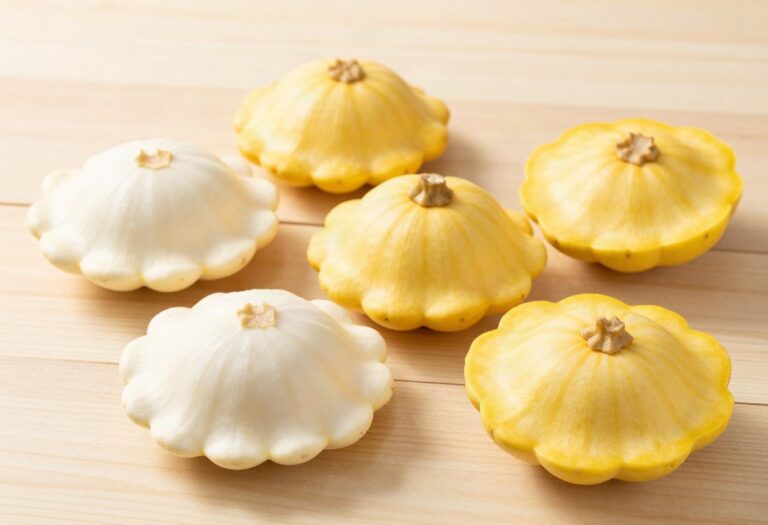
The patty pan squash is a summer squash with a flat, scalloped shape, sometimes nicknamed « custard squash » or « scallop squash ». Its skin can be white, yellow or green, and its firm flesh is like that of a courgette, only more delicate. Picked young, it can be eaten with its skin; when more mature, it is better peeled. With only 16 kcal per 100 g, it fits perfectly into a light, balanced diet. Rich in water and fibre and low in fat, patty pan squash provides a little carbohydrate (3.3 g) and plant protein. Versatile in the kitchen, it suits hot dishes as well as colourful seasonal plates.
Macronutrient breakdown
Nutrition table per 100 g
| Calories | 16 kcal |
| Kilojoules | 67 kJ |
| Protein | 1,1 g |
| Carbohydrate | 3,3 g |
| Fat | 0,2 g |
| Fibre | 1,9 g |
Micronutrients per 100 g
All measured nutrients, ranked by share of the daily reference intake.
- Vitamin C10,8 mg14 %
- Copper0,08 mg8 %
- Potassium140 mg7 %
- Manganese0,13 mg6 %
- Vitamin B60,09 mg6 %
- Magnesium19 mg5 %
- Vitamin K13,5 µg5 %
- Vitamin B10,05 mg5 %
See the other 10 nutrients
- Phosphorus28 mg4 %
- Vitamin B30,46 mg3 %
- Zinc0,24 mg2 %
- Iron0,33 mg2 %
- Calcium15 mg2 %
- Vitamin B20,03 mg2 %
- Vitamin B50,08 mg1 %
- Vitamin E0,12 mg1 %
- Vitamin A4 µg1 %
- Selenium0,2 µg0 %
USDA FoodData Central (SR Legacy)
Tips
The patty pan squash can be cooked in a thousand ways. Cut into wedges or cubes, it can be gently steamed, pan-fried, roasted in the oven or stuffed once hollowed out. Its delicate flavour, somewhere between courgette and artichoke, goes as well with white meat as with fish or cereals. To preserve its vitamins (especially vitamin C and the B group) and minerals such as potassium, choose short cooking. Gentle cooking is ideal to keep its nutritional qualities intact.
As for nutritional values, patty pan squash is a great ally for weight loss: low calorie density, plus plenty of water and fibre, which promote fullness and healthy digestion. Its glycaemic index is low, which is a good habit if you are watching your weight or your blood sugar. You can pair it with other summer vegetables such as courgette, tomato or pepper to make colourful, tasty sautés without excess calories.
For storage, keep the squash whole for a few days in the fridge salad drawer. Once cut, eat it quickly. You can also blanch and freeze it to enjoy out of season, as its main season runs from late summer to autumn.
- As a starter: in a light soup, blended with stock and a few herbs.
- As a main: stuffed with quinoa, vegetables and a little cheese.
- As a side: roasted in the oven with a drizzle of olive oil and herbs.
For active people: patty pan squash is not a big enough source of carbohydrate or protein to fuel exercise on its own. However, it is an excellent recovery vegetable: low in calories, hydrating and mineral-rich, it ideally completes a plate after training. Combine it with a protein source (eggs, fish, pulses) and starchy foods to replenish your reserves. To go further on balance on the plate, see our guide to fitness nutrition.
Patty pan squash belongs to the large family of vegetables, to include generously in your daily meals. Its benefits rest on its lightness and versatility: few traps on sugar or fat, as long as you go easy on the cooking oil and added cheese. Vary the ways you prepare it so you never get bored, and make the most of this seasonal vegetable.