Group · Meat
Roast rabbit
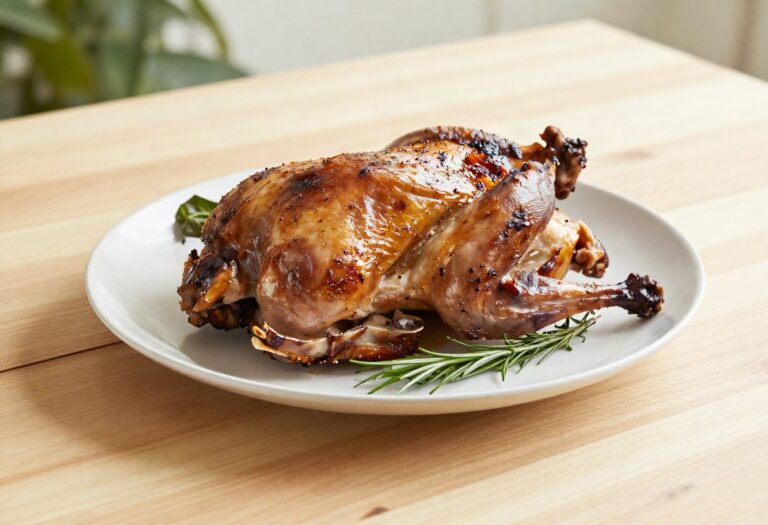
Roast rabbit is one of those white meats long appreciated in family cooking that deserve a place again in a balanced diet. Lean, fine-grained and delicate in taste, its meat suits both the oven and the casserole dish. At around 167 kcal per 100 g, roast rabbit has an interesting profile: nearly 20.5 g of protein, only 9.2 g of fat and no carbohydrate. It is therefore a good-quality source of protein, low in saturated fat compared with many red meats. Saddle, leg, shoulder or whole rabbit, each cut offers a different texture. Versatile and easy to digest, it suits many people, from athletes to those watching their waistline.
Macronutrient breakdown
Nutrition table per 100 g
| Calories | 167 kcal |
| Kilojoules | 697 kJ |
| Protein | 20,5 g |
| Carbohydrate | 0,5 g |
| Fat | 9,2 g |
Micronutrients per 100 g
All measured nutrients, ranked by share of the daily reference intake.
- Selenium73 µg133 %
- Vitamin B122,2 µg88 %
- Vitamin B39 mg56 %
- Phosphorus200 mg29 %
- Omega-6 LA1,87 g19 %
- Zinc1,79 mg18 %
- Potassium340 mg17 %
- Iron2,27 mg16 %
See the other 9 nutrients
- Vitamin B20,21 mg15 %
- Vitamin B60,13 mg9 %
- Vitamin B10,1 mg9 %
- Vitamin B50,5 mg8 %
- Omega-3 ALA0,15 g8 %
- Copper0,06 mg6 %
- Magnesium21,8 mg6 %
- Calcium13,5 mg2 %
- Manganese0,02 mg1 %
Anses Ciqual 2025. Source: Anses, 2025, Ciqual food composition table
Tips
To enjoy the nutrition facts of roast rabbit without weighing down the plate, rely on well-controlled cooking. The oven remains ideal: brush lightly with oil, add thyme, rosemary, garlic and mustard, then let it cook gently to keep the meat tender. Avoid overly rich cream sauces, which push up the calories. A portion of 120 to 150 g more than covers the protein needs of a meal.
- Smart pairings: serve the rabbit with seasonal vegetables (courgettes, fennel, carrots) or pulses for a complete, filling meal.
- Storage: eat cooked rabbit within 2 to 3 days if kept in the fridge, or freeze it in individual portions.
- When to eat it: ideal at lunch or dinner, as its richness in protein helps you feel full.
Nutritionally, roast rabbit stands out for its high content of protein of high biological value and its very low carbohydrate content (zero glycaemic index). It provides B vitamins (notably B12), phosphorus, selenium and iron, all useful for the body. Its protein-to-fat ratio makes it a valuable ally if you are trying to lose weight or move to a balanced diet, as explained in our guide to achieving a balanced diet.
Tips for active people: with nearly 20.5 g of protein per 100 g, roast rabbit supports muscle building and recovery. After a session, pair it with a source of complex carbohydrates (brown rice, sweet potato) to replenish glycogen. Whether you are cutting or building muscle, its low fat density lets you manage your intake precisely. To vary your lean protein sources, you can alternate with chicken breast or roast turkey, which are just as good.
As for weight control, rabbit remains reasonable in calories as long as you limit added fat and rich side dishes. Choose gentle cooking that preserves nutrients, and compare its content with other meats using our food calorie table. To discover other cuts to include in your menus, explore the meat family and alternate your protein sources through the week.