Group · Pulses
Soybean sprouts
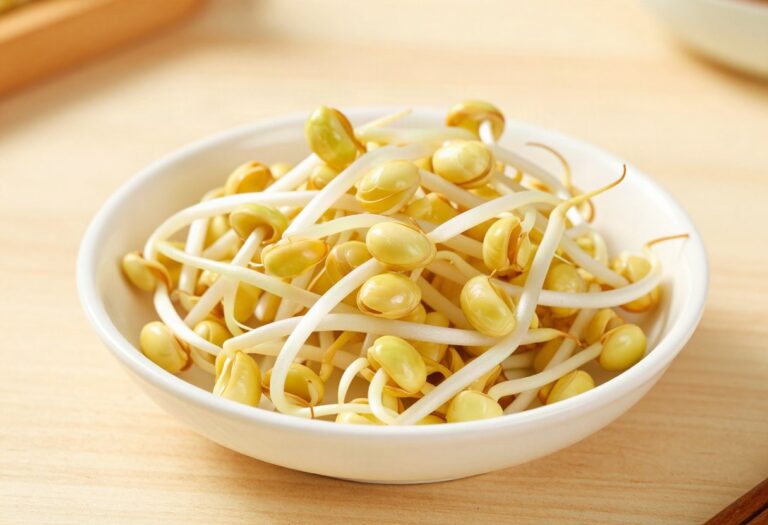
Soybean sprouts are young shoots grown from soybeans left to germinate in moist conditions. Crunchy and delicately vegetal, they belong to the pulse family and stand out for their good plant protein content. Per 100 g, they provide around 122 kcal, 13.09 g of protein, 8.47 g of carbohydrate, 6.7 g of fat and 1.1 g of fibre. These values come from the US USDA FoodData Central database, as this food is not listed in the Ciqual table. Be careful not to confuse them with mung bean sprouts, which are most often what is sold as « soya sprouts » in France: they are two different foods with different nutritional values. These true soybean sprouts suit salads as well as stir-fries. Tasty, they easily find a place in a balanced, varied diet.
Macronutrient breakdown
Nutrition table per 100 g
| Calories | 122 kcal |
| Kilojoules | 510 kJ |
| Protein | 13,1 g |
| Carbohydrate | 8,5 g |
| Fat | 6,7 g |
| Fibre | 1,1 g |
Micronutrients per 100 g
All measured nutrients, ranked by share of the daily reference intake.
- Vitamin B9172 µg86 %
- Copper0,43 mg43 %
- Manganese0,7 mg35 %
- Omega-6 LA3,34 g33 %
- Vitamin B10,34 mg31 %
- Potassium484 mg24 %
- Phosphorus164 mg23 %
- Omega-3 ALA0,45 g22 %
See the other 13 nutrients
- Magnesium72 mg19 %
- Vitamin C15,3 mg19 %
- Vitamin B50,93 mg15 %
- Iron2,1 mg15 %
- Vitamin B60,18 mg13 %
- Zinc1,17 mg12 %
- Vitamin B20,12 mg8 %
- Calcium67 mg8 %
- Vitamin B31,15 mg7 %
- Vitamin K12,1 µg3 %
- Selenium0,6 µg1 %
- Vitamin E0,1 mg1 %
- Vitamin A1 µg0 %
USDA FoodData Central (FDC 169284)
Tips
Versatile, soybean sprouts are best quickly seared in a wok to keep their crunch (it is better not to eat them raw). A portion of 50 to 80 g is enough to add texture and freshness to a dish. Avoid cooking them for too long: gentle cooking better preserves their firmness and nutrients. For storage, keep them in the fridge, well dried, and use them quickly as they are fragile.
Pairing ideas:
- in a salad with grated carrots, coriander and a light soy sauce;
- in a quick stir-fry with ginger, garlic and a drizzle of sesame oil;
- as a topping for bowls, nems or Asian soups;
- added at the end of cooking to fried rice or noodles.
In terms of nutrition facts, these sprouts offer plant protein that is interesting (13.09 g per 100 g) and moderate carbohydrate (8.47 g). Their calorie density (122 kcal per 100 g) remains reasonable, which makes them a handy ally if you are trying to lose weight: they bring volume and chewing without weighing down the plate. Simply watch out for the fatty or very salty sauces that often accompany stir-fried dishes. To compare their calories with other foods, you can check the food calorie table.
For active people: soybean sprouts round off a recovery plate nicely, alongside a carbohydrate source such as rice and another pulse. They contribute to the protein in a plant-based meal, but are not enough on their own to meet your needs after intense training. Combine them with tofu or lentils to improve the overall protein profile, and remember to vary with other pulses through the week.
You can also alternate with mung bean sprouts, very close in cooking, to diversify flavours and textures. More broadly, regularly including sprouts and pulses fits perfectly with eating a balanced diet. Their freshness, crunch and moderate calorie content make them an easy ingredient to slip into your day, whether you want to eat more plant-based, add colour to your plates or simply vary your nutritional benefits without complicating your life.