Group · Fish
Sardines in oil (tinned)
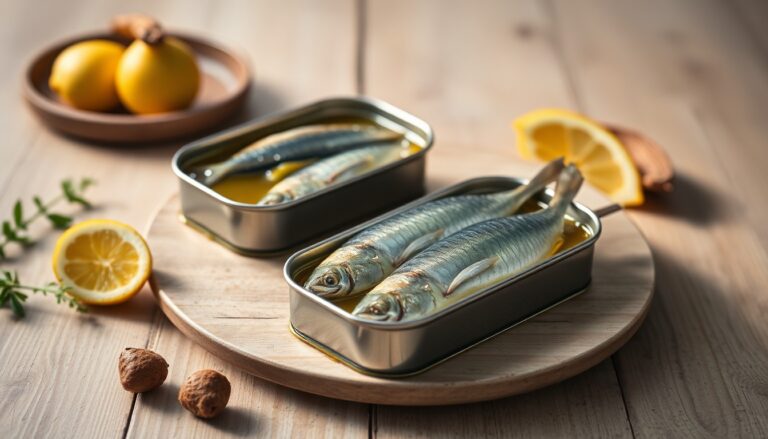
Sardines in oil are one of the most popular tinned fish, practical, tasty and economical at once. Made from small oily fish of the herring family, they are cooked and then packed in a tin with oil (olive, sunflower or rapeseed), which gives them a long shelf life. With around 217 kcal per 100 g, they stand out for their protein content (nearly 23.3 g) and lack of carbohydrates. Versatile, they can be dressed up on bread, in a salad or as homemade rillettes. Nutritionally, this is an oily fish that provides good fatty acids, minerals and vitamins, making it a useful ally in a balanced, varied diet.
Macronutrient breakdown
Nutrition table per 100 g
| Calories | 217 kcal |
| Kilojoules | 907 kJ |
| Protein | 23,3 g |
| Carbohydrate | 0,4 g |
| Fat | 13,7 g |
Micronutrients per 100 g
All measured nutrients, ranked by share of the daily reference intake.
- Vitamin B1213,6 µg544 %
- DHA1 g400 %
- EPA0,67 g268 %
- Vitamin D7,56 µg151 %
- Total omega-31,85 g74 %
- Selenium35 µg64 %
- Iodine80,1 µg53 %
- Vitamin B37,1 mg44 %
See the other 15 nutrients
- Phosphorus306 mg44 %
- Calcium333 mg42 %
- Vitamin B60,28 mg20 %
- Zinc1,89 mg19 %
- Potassium368 mg18 %
- Iron1,97 mg14 %
- Vitamin E1,44 mg12 %
- Vitamin B20,16 mg11 %
- Vitamin B50,68 mg11 %
- Magnesium38,5 mg10 %
- Omega-3 ALA0,18 g9 %
- Omega-6 LA0,9 g9 %
- Copper0,06 mg6 %
- Vitamin B910,7 µg5 %
- Vitamin A4,7 µg1 %
Anses Ciqual 2025. Source: Anses, 2025, Ciqual food composition table
Tips
Tinned sardines in oil are convenience in a nutshell. A typical tin of 100 to 120 g makes a suitable portion for a light meal or a starter. To limit the calories that come from the packing oil, drain the fillets well before eating them: that way you cut part of the fat while keeping most of the protein and minerals.
- Ideas for eating them: mashed on a slice of wholemeal bread with a squeeze of lemon, as rillettes mixed with soft cheese and chives, flaked over a green salad or stirred into fresh pasta livened up with tomatoes.
- Smart pairings: combine them with crunchy vegetables, raw vegetables or pulses for a filling, complete dish.
- Storage: unopened, the tin keeps for several months at room temperature; once opened, transfer the contents to a closed container and eat within 48 hours.
In terms of nutritional values, sardines are among the oily fish, alongside mackerel and herring. They provide omega-3 fatty acids, B vitamins and vitamin D, as well as minerals such as calcium (especially if you eat the small bones, which are perfectly edible), phosphorus, iron and selenium. Their glycaemic index is zero since they contain no carbohydrates, which makes them a useful food for keeping your appetite steady.
For active people: with nearly 23.3 g of protein per 100 g, sardines in oil support muscle recovery and the maintenance of lean mass. They slip easily into a post-workout meal, served with starchy foods to replenish glycogen stores. Their convenience makes them a handy option when travelling or as a savoury snack. To go further on daily protein intake, read our advice on fitness nutrition.
Weight control: the calorie density of sardines in oil (217 kcal/100 g) comes mainly from the packing oil. If you are watching your waistline, choose a well-drained version or occasionally opt for leaner fish such as cod. Also watch the salt content of tinned fish: vary your sources and limit added fat. Discover other fish rich in good fatty acids in our section on fish.