Group · Herbs & spices
Dill
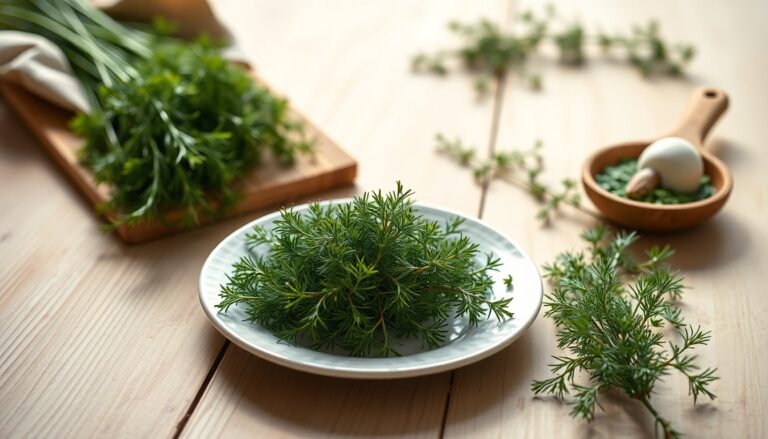
Dill is a fine, feathery aromatic herb belonging to the umbellifer family, like fennel or caraway. It is used in several forms: fresh dill, with delicate leaves, dried dill for flavouring all year round, and its more powerful seeds. Its aniseed, slightly lemony flavour makes it a must in Nordic, Slavic and Mediterranean cooking. In terms of nutrition facts, fresh dill provides around 48.2 kcal per 100 g, a very low calorie density given the small amounts used. It provides fibre and a little plant protein, and helps lift dishes without adding salt or fat. A valuable herb for light, tasty everyday cooking.
Macronutrient breakdown
Nutrition table per 100 g
| Calories | 48 kcal |
| Kilojoules | 202 kJ |
| Protein | 4 g |
| Carbohydrate | 3,9 g |
| Fat | 1,1 g |
| Fibre | 3,5 g |
Micronutrients per 100 g
All measured nutrients, ranked by share of the daily reference intake.
- Manganese2,7 mg135 %
- Vitamin C70 mg88 %
- Iron5,5 mg39 %
- Potassium647 mg32 %
- Vitamin B20,43 mg31 %
- Calcium202 mg25 %
- Copper0,22 mg22 %
- Vitamin B60,3 mg21 %
- Vitamin B9dietary folate equivalents116 µg
See the other 11 nutrients
- Zinc1,8 mg18 %
- Vitamin B10,19 mg17 %
- Vitamin B32,4 mg15 %
- Vitamin E1,7 mg14 %
- Magnesium28 mg7 %
- Phosphorus51,9 mg7 %
- Vitamin B50,3 mg5 %
- Selenium2,7 µg5 %
- Iodine3,9 µg3 %
- Omega-6 LA0,07 g1 %
- Omega-3 ALA0,01 g1 %
Anses Ciqual 2025. Source: Anses, 2025, Ciqual food composition table
Tips
Dill is eaten in modest quantities, which makes it an ideal ally for seasoning without weighing down your dishes. Like most aromatic herbs, its calories are negligible at the scale of a portion: a few sprigs are enough to transform a recipe. It is a valuable asset when slimming, because it lets you cut back on salt and fatty sauces while keeping the flavour.
How to eat dill. Prefer it fresh and add it at the end of cooking or raw, because its volatile aromas evaporate with heat. It goes wonderfully with:
- oily fish (salmon, herring, trout) and seafood;
- sauces made with yoghurt, fromage frais or cucumber (tzatziki);
- marinades, pickles and preserved vegetables;
- omelettes, steamed potatoes and fresh salads.
For storage, keep fresh dill in the fridge wrapped in a damp cloth, or freeze it chopped in an ice cube tray with a little water. Dried dill and the seeds keep best in an airtight jar, away from light.
In terms of nutrition facts, dill provides fibre (3.5 g per 100 g), plant protein (3.93 g) and interesting aromatic compounds. It fits naturally into a balanced diet and into recipes inspired by the Cretan diet, where fresh herbs have pride of place. You can also pair it with other aromatics from the herbs and spices family, such as fresh parsley or chives, to make fragrant blends.
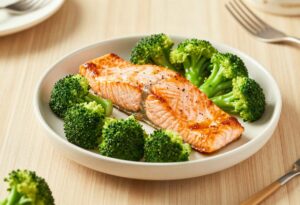
For active people: dill is not a source of energy in itself, but it helps make protein-rich meals tasty, such as a salmon fillet or a fromage frais snack. It is an excellent way to vary flavours without adding calories during a cutting phase or while watching your weight. Add it to your post-workout dishes to lift recovery meals without salt.
Points to note: eaten in large amounts as an essential oil or supplement, dill should be used with caution, particularly during pregnancy. In cooking, at usual portions, it is no problem for your waistline and remains a smart seasoning for light, tasty cooking.