Group · Cereals & grains
Rice cake
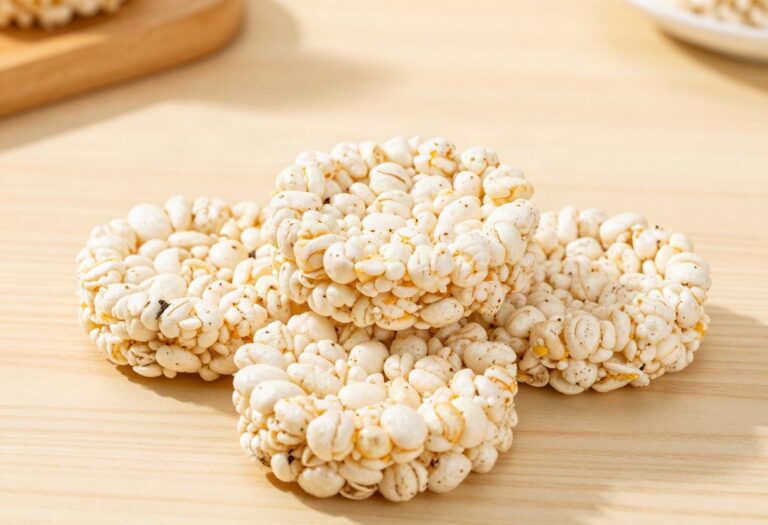
The rice cake is a small, light, crunchy disc made by puffing rice grains under heat and pressure. Very popular in the diet aisles, it comes in several versions: brown rice, white rice, plain, lightly salted or chocolate-coated. At around 381 kcal per 100 g, it stays light per cake because one weighs very little (about 8 to 10 g). Low in fat and with no added fat in its plain version, it provides quickly available carbohydrate and a little plant protein. Practical and neutral in taste, the rice cake easily fits into a balanced diet as a base for spreads or as a quick snack.
Macronutrient breakdown
Nutrition table per 100 g
| Calories | 381 kcal |
| Kilojoules | 1610 kJ |
| Protein | 8,9 g |
| Carbohydrate | 77,9 g |
| Fat | 3 g |
| Fibre | 3,4 g |
Micronutrients per 100 g
All measured nutrients, ranked by share of the daily reference intake.
- Manganese3,3 mg165 %
- Phosphorus314 mg45 %
- Copper0,37 mg37 %
- Magnesium134 mg36 %
- Zinc2,1 mg21 %
- Vitamin E2,26 mg19 %
- Potassium297 mg15 %
- Selenium5,5 µg10 %
See the other 8 nutrients
- Omega-6 LA0,93 g9 %
- Iron1,2 mg9 %
- Vitamin B50,48 mg8 %
- Vitamin B31,1 mg7 %
- Vitamin B60,04 mg3 %
- Vitamin B95,4 µg3 %
- Omega-3 ALA0,04 g2 %
- Calcium13,2 mg2 %
Anses Ciqual 2025. Source: Anses, 2025, Ciqual food composition table
Tips
The rice cake is above all a versatile base. Its airy texture and neutral taste make it ideal for a variety of toppings: almond butter, fresh cheese, hummus, mashed avocado, a poached egg or slices of banana. For a more filling snack, go for combinations rich in protein and healthy fats, to offset its fairly high glycaemic index. Eaten on its own, it is digested quickly and can bring hunger back, so it is better to pair it with something.
- Portion guide: 1 to 3 cakes depending on appetite and toppings, as a snack or at breakfast.
- Storage: away from moisture in an airtight pack to preserve the crunch.
- Varieties: prefer brown rice cakes, which are slightly richer in fibre, and limit chocolate-coated or very salty versions.
As for nutritional values, the rice cake mainly provides carbohydrate (about 77.9 g per 100 g), with 8.81 g of protein, 3 g of fat and 3.4 g of fibre. This richness in carbohydrate makes it a quick source of energy, useful for athletes. Before a session, one or two plain cakes give an easy-to-digest boost of fuel. After exercise, pair them with a source of protein to support recovery: you can top up with a post-workout shaker or a well-planned protein snack.
To vary your cereal-based snacks, explore other options in the same category such as corn cakes or oat-based flakes, which are richer in fibre and more filling. You will find all comparable products in the Cereals family, and you can check the content of other foods using the calorie table.
For weight control, keep in mind that the calorie density per 100 g looks high, but a cake weighs very little: the trap comes mainly from nibbling on several in a row and from sweet or fatty toppings. The rice cake remains a decent choice when trying to lose weight, as long as you combine it sensibly and watch the quantities. Like any puffed food, its value rests on the overall balance of the meal rather than on its isolated benefits.