Group · Starchy foods
Cooked white rice
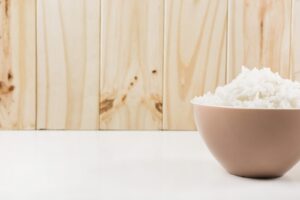
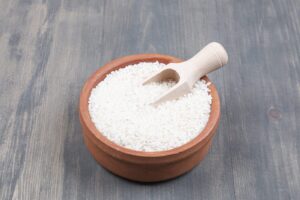
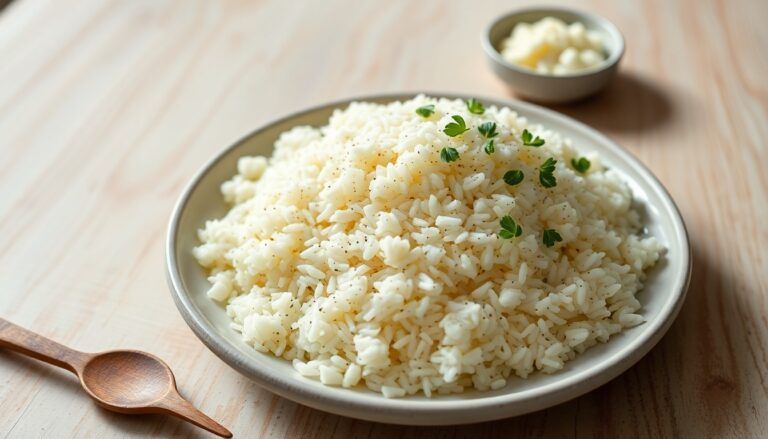
Cooked white rice is among the most widely eaten starchy foods in the world, an essential base of many cuisines, from Asia to the Mediterranean. Made from husked and polished rice, it comes in several varieties: long grain (basmati, Thai), short grain (arborio, sushi), fragrant rice and parboiled rice. Cooked in water or steamed, it becomes tender and neutral in taste, which makes it a versatile side. With around 155 kcal per 100 g, it mainly provides carbohydrate (33.2 g) with almost no fat. Naturally gluten-free, it fits easily into a balanced diet and is a convenient everyday source of energy.
Macronutrient breakdown
Nutrition table per 100 g
| Calories | 155 kcal |
| Kilojoules | 658 kJ |
| Protein | 3,4 g |
| Carbohydrate | 33,2 g |
| Fat | 0,7 g |
| Fibre | 1,4 g |
Micronutrients per 100 g
All measured nutrients, ranked by share of the daily reference intake.
- Manganese0,28 mg14 %
- Copper0,07 mg7 %
- Phosphorus36,7 mg5 %
- Vitamin B50,15 mg3 %
- Magnesium9,03 mg2 %
- Vitamin B30,37 mg2 %
- Omega-6 LA0,14 g1 %
- Vitamin B120,03 µg1 %
- Vitamin B9dietary folate equivalents9,9 µg
See the other 4 nutrients
- Potassium21,9 mg1 %
- Calcium6,3 mg1 %
- Omega-3 ALA0,01 g0 %
- Vitamin A1,25 µg0 %
Anses Ciqual 2025. Source: Anses, 2025, Ciqual food composition table
Tips
Cooked white rice is an excellent supplier of easily absorbed carbohydrate, perfect for replenishing energy stores. In terms of nutrition facts, there are 155 kcal, 33.2 g of carbohydrate, 3.31 g of protein, 0.7 g of fat and only 1.4 g of fibre per 100 g (cooked weight). Its low calorie density once cooked makes it compatible with weight loss, as long as you watch the portion and what goes with it.
- Portion guide: about 100 to 150 g cooked as a side, up to 200 g for an active person with high needs.
- Cooking: in water, by absorption or steamed. Avoid too much fat and choose gentle cooking to preserve the texture.
- Storage: in the fridge for 24 to 48 hours in an airtight container, cooled quickly.
- Pairings: vegetables, legumes, fish or poultry for a complete, filling dish.
White rice has a fairly high glycaemic index, especially short-grain varieties. To moderate it, combine it with fibre and protein, and consider the cooled version (the resistant starch that forms on cooling changes how it is digested). If you want more fibre and minerals, brown rice or quinoa are excellent alternatives. Wild rice also brings an interesting chewiness.
For active people, white rice is an ally of choice. Before long effort, it provides available energy without overloading digestion thanks to its low fibre content. After training, paired with a source of protein (chicken, eggs, fish), it supports glycogen replenishment and recovery. It is a great classic of mass-gaining phases, where it makes it easy to increase calorie intake. To optimise your fitness nutrition, combine it with vegetables and a portion of lean protein.
For weight control, rice stays reasonable as long as you measure the quantity and limit fatty sauces, butter or cheese, which push up the calorie total. Vary your starchy foods to diversify your intake: you will find more ideas in the starchy foods family. To compare the energy content of your everyday foods, see the food calorie table. Naturally gluten-free, white rice also suits people who need to avoid gluten, while remaining simple, inexpensive and easy to batch cook for the week.
If you have diabetes: the glycaemic index of rice ranges from 48 for parboiled rice to over 89 for jasmine rice. See the comparison in our guide to rice and diabetes.