Group · Sweet foods
Fruit jelly
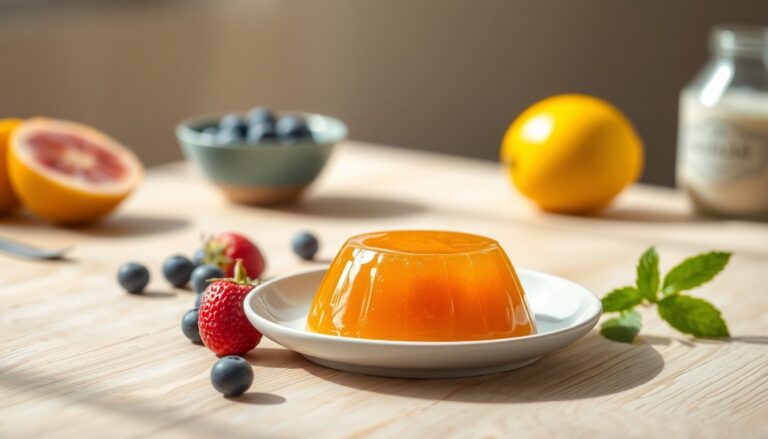
Fruit jelly is a sweet preparation made from the filtered juice of fruit, cooked with sugar and set using the pectin naturally present in fruit (apple, quince, redcurrant) or added. Unlike jam, it contains no pieces or skin: the result is a translucent, smooth and shiny texture. Quince, redcurrant, blackberry, grape or blackcurrant are among the most popular flavours. With around 252 kcal per 100 g and nearly 61.9 g of carbohydrate, fruit jelly is a sugary product with a high energy density, almost devoid of protein and fat. It has its place on the breakfast or teatime table, as an indulgent and measured touch within a balanced diet.
Macronutrient breakdown
Nutrition table per 100 g
| Calories | 252 kcal |
| Kilojoules | 1070 kJ |
| Protein | 0,1 g |
| Carbohydrate | 61,9 g |
| Fat | 0,1 g |
| Fibre | 1,3 g |
Tips
Fruit jelly is best enjoyed at breakfast, spread thinly on a slice of wholemeal bread, a rusk or a crêpe. A sensible portion is a teaspoon, around 15 to 20 g: enough to enjoy the flavour without running up the calorie bill. On nutrition facts, remember that it provides mostly simple carbohydrate (sugar makes up most of its 61.9 g of carbohydrate), which translates into a fairly high glycaemic index.
In the kitchen, jelly is very versatile. It is used to glaze a fruit tart, to give an apple tart a shiny finish, or to fill shortbread and biscuits. Redcurrant or quince jelly also goes very well with certain meats and cheeses. If you want an alternative with pieces, look at standard jam or reduced-sugar jam, useful when you are watching your carbohydrate intake.
Benefits and points to watch:
- Jelly keeps some of the aromas of the fruit, but cooking and filtering greatly reduce the fibre and vitamin content: it remains above all a sugary treat.
- Its richness in sugars calls for moderation, especially if you are aiming to lose weight or following a balanced diet plan.
- Favour jellies with a high percentage of fruit and few additives.
Tips for active people: thanks to its quickly absorbed carbohydrate, fruit jelly can give a small energy boost before a short effort or during a long outing, spread on bread. For recovery, pair it with a source of protein (fromage blanc, bread and egg, or a shaker) to replenish glycogen while supporting your muscles. For other tasty ideas that suit training, browse our protein snack recipes.
Storage: an unopened jar keeps for a long time away from light. Once opened, put it in the fridge and eat it within a few weeks, always using a clean spoon to avoid any contamination. To compare jelly with the other options in the sugary foods family, feel free to explore our dedicated pages and measure out your treats sensibly.