Group · Starchy foods
Wholewheat macaroni
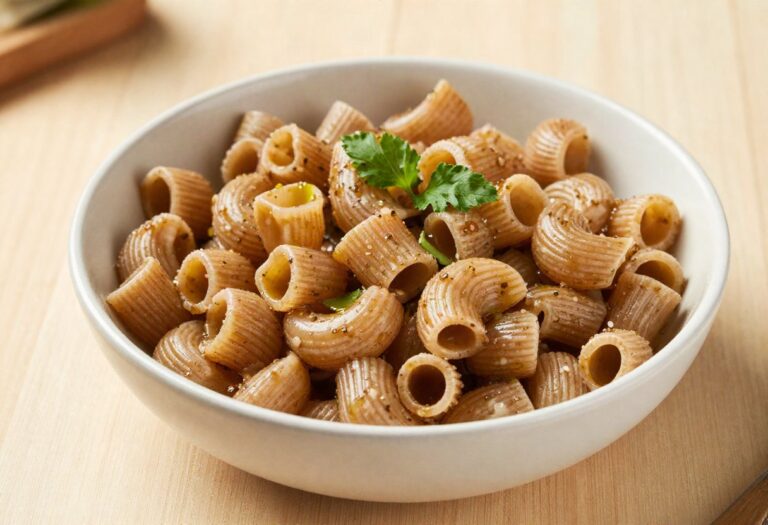
Wholewheat macaroni is a small tubular pasta made from wholegrain durum wheat, meaning it keeps the bran and germ of the grain. This gives it a darker colour, a slightly more rustic flavour and an interesting nutritional profile. Cousins of spaghetti and ordinary macaroni, they feature in bakes, pasta salads and slow-cooked dishes. Once cooked, they provide around 179 kcal per 100 g, with 31.3 g of carbohydrate, 7.88 g of protein, only 1.4 g of fat and 5.1 g of fibre. Thanks to their richness in fibre and a glycaemic index more moderate than white pasta, wholewheat macaroni naturally finds a place in a balanced, varied diet.
Macronutrient breakdown
Nutrition table per 100 g
| Calories | 179 kcal |
| Kilojoules | 758 kJ |
| Protein | 7,9 g |
| Carbohydrate | 31,3 g |
| Fat | 1,4 g |
| Fibre | 5,1 g |
Micronutrients per 100 g
All measured nutrients, ranked by share of the daily reference intake.
- Manganese1,2 mg60 %
- Copper0,27 mg27 %
- Phosphorus131 mg19 %
- Selenium9,9 µg18 %
- Zinc1,4 mg14 %
- Magnesium45,8 mg12 %
- Iron1,5 mg11 %
- Vitamin B10,1 mg9 %
See the other 11 nutrients
- Omega-6 LA0,61 g6 %
- Potassium98,7 mg5 %
- Calcium25,1 mg3 %
- Vitamin B60,04 mg3 %
- Omega-3 ALA0,05 g3 %
- Vitamin B50,16 mg3 %
- Vitamin B94,3 µg2 %
- Vitamin B30,23 mg1 %
- Vitamin E0,15 mg1 %
- Vitamin B120,02 µg1 %
- Vitamin A1,25 µg0 %
Anses Ciqual 2025. Source: Anses, 2025, Ciqual food composition table
Tips
To get the most from wholewheat macaroni, aim for a portion of 60 to 80 g raw (about 150 to 200 g cooked) depending on your appetite and activity level. Cooking is the key: opt for al dente in a large pan of boiling salted water. Slightly firm pasta keeps a lower glycaemic index, which promotes more gradual energy release and better fullness.
In terms of nutrition facts, wholewheat macaroni stands out for its fibre (5.1 g per 100 g cooked), useful for digestive comfort and the feeling of fullness. Their plant protein content (7.88 g) and low fat intake make them an interesting everyday starchy food. For a more complete meal, pair them with a source of protein (egg, chicken, pulses) and colourful vegetables.
- Tasty pairings: homemade tomato sauce, basil, grilled vegetables, a drizzle of olive oil and a little Parmesan.
- Lighter bake: a light white sauce and grated cheese in moderation to limit calorie density.
- Cold salad: ideal in summer with tuna, diced tomato and fresh herbs.
If you are active, wholewheat macaroni is an excellent reservoir of complex carbohydrates. Eaten at the meal before training (a few hours beforehand), it helps build your glycogen stores. During recovery, pair it with a portion of protein to optimise muscle rebuilding. To go further on the subject, discover our guidelines on nutrition for fitness.
You can vary things with other wholegrain starchy foods such as wholewheat spaghetti or explore gluten-free alternatives such as quinoa. Also see our whole starchy foods family to put together balanced plates and compare intakes.
For storage, keep dry macaroni in an airtight container away from moisture. Cooked, it keeps for 2 to 3 days in the fridge, perfect for batch cooking and meals prepared in advance.
Weight control: it is fatty sauces, too much cheese and overly generous portions that push up the calorie bill, not the pasta itself. Choose light accompaniments, keep control of quantities and compare the calories in foods to adjust your meals without frustration.