Gentle Cooking: Preserving Nutrients and Flavour

Tired of watching your vegetables lose flavour and vitamins every time you cook them? Gentle cooking, the ideal method for preserving the benefits and authentic flavours of food, is the answer. Find out how, with carefully controlled temperatures of between 60°C and 80°C, this technique limits nutrient losses, avoids the formation of harmful compounds (above 120°C) and brings out natural textures, with no added fat or excess salt. Learn to adapt the method to the equipment you already use (heavy-bottomed saucepan, oven, multicooker) for healthy, tasty dishes that also save energy.
👉 Free tool: Calorie needs: work it out in 30 seconds, no sign-up required.
- What is gentle cooking and why adopt it?
- The nutritional benefits of low-temperature cooking in detail
- The different gentle cooking techniques to master
- What equipment do you need for successful gentle cooking?
- Guide to cooking times and temperatures for each food
- Is gentle cooking possible with multicookers?
- Practical tips for getting all your gentle cooking right
What is gentle cooking and why adopt it?
Gentle cooking: a method that respects your food
Gentle cooking, also called low-temperature cooking, cooks food at between 60°C and 80°C. It makes use of the natural moisture in food, so there is no need to add water or fat. The water in the vegetables evaporates slightly and forms a “water seal” under the airtight lid, which guarantees even cooking with no loss of flavour. This method preserves vitamins (C, B9, E) and minerals, which are often broken down at higher temperatures. Fibre and enzymes stay intact, which helps digestion. Ideal for crisp vegetables, tender meat or moist fish, it turns cooking into a way of combining health and simplicity.
What gentle cooking offers your health and your taste buds
The benefits are many. First, nutrients are preserved: up to 90% of the vitamin C is retained, compared with 50% with conventional cooking. Antioxidants and minerals (potassium, magnesium) withstand moderate heat better. Next, authentic flavours come through fully, without being spoilt by overheating. You no longer need salt or fat to lift a dish. Textures improve too: vegetables that are tender yet crisp, juicy meat, delicate fish. Finally, this method limits the harmful compounds (acrylamide, hydrocarbons) produced above 120°C. Eco-friendly and economical, it uses little energy and suits beginners. An ideal way of cooking for a healthy diet that does not sacrifice pleasure. Imagine crisp carrots, a tender pork fillet or fragrant asparagus: it is all possible!
The nutritional benefits of low-temperature cooking in detail
Better retention of essential vitamins and minerals
High temperatures destroy nutrients. Gentle cooking, at 60 to 80°C, preserves these nutrients by staying below the critical thresholds. Vitamin C starts to break down from 60°C: leafy vegetables lose up to 40% of their vitamin C in boiling water, compared with a 15% loss when cooked at 70°C for 20 to 25 minutes. Brussels sprouts cooked at 75°C keep 80% of their vitamin C, compared with 50% if boiled at 100°C.
Specific examples:
- Vitamin C: lost at 60-75°C.
- Vitamins A and B: lost at 90-95°C.
- Fat-soluble vitamins (E, D, A, K): damaged at 110°C.
- Minerals: precipitate at 100°C, becoming impossible to absorb.
By staying below these thresholds, gentle cooking retains 80 to 90% of the original vitamins and minerals. Onions, which are rich in quercetin, keep their anti-inflammatory properties at a maximum of 80°C. Potatoes cooked at 70°C keep 85% of their potassium, compared with 60% at 100°C.
Avoiding the formation of unwanted compounds
Temperatures above 120°C turn fats into carcinogenic compounds such as acrolein. Vegetables heated beyond 140°C harden into indigestible cellulose. For example, potatoes fried at 170°C lose 50% of their digestible fibre and produce acrylamide, a compound suspected of causing cancer.
Gentle cooking limits the Maillard reaction, which is responsible for browning and for toxic compounds. At a maximum of 80°C, this reaction stays under control. For meat, cooking at 70°C preserves the protein without producing harmful substances. Green vegetables such as beans, cooked at 75°C, avoid chlorophyll breakdown and keep their colour and their iron content.
Naturally light and flavoursome cooking
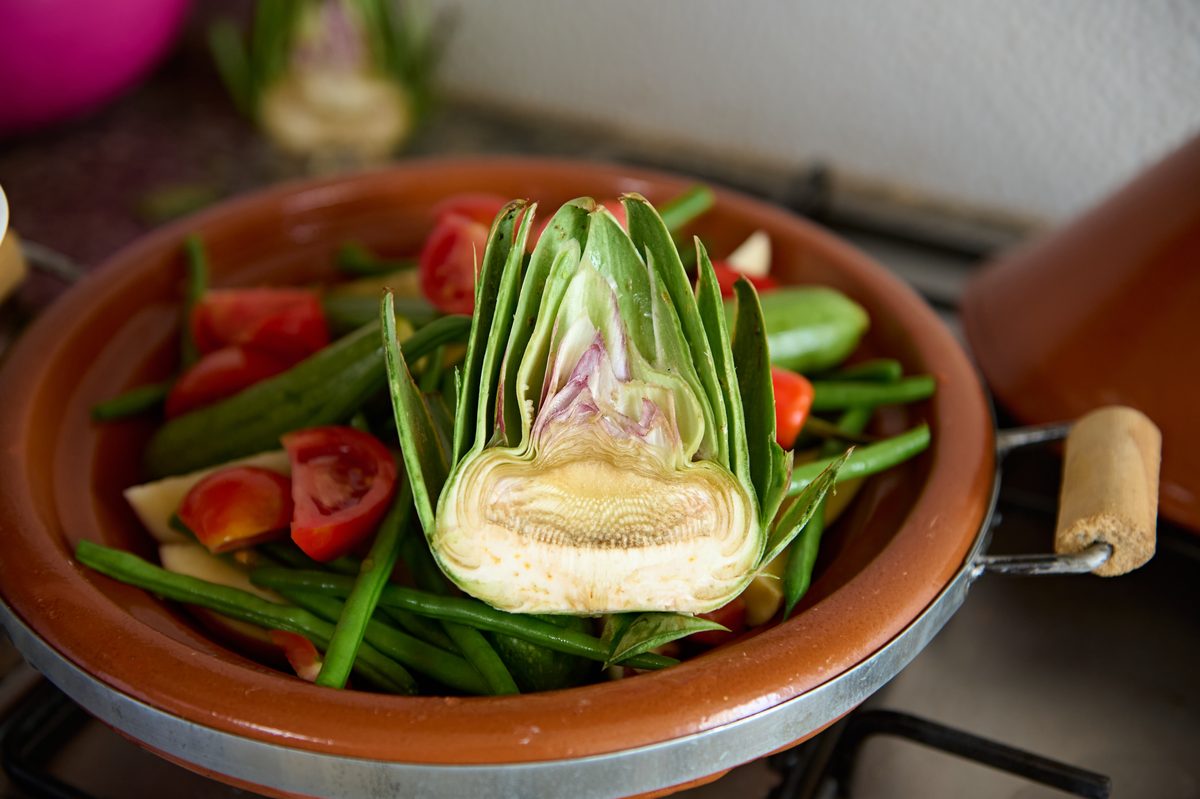
With no added fat, gentle cooking preserves natural flavours. Salt becomes unnecessary because the aromas are concentrated. A simple dish: green beans, cherry tomatoes, olive oil and fresh herbs cooked at 75°C for 40 minutes. The gentle steam draws out the aromas, so you need fewer condiments. White fish cooked in a parcel at 80°C with shallots and lemon keeps 90% of its B vitamins. As a side, spelt cooked in gentle steam with asparagus and basil makes a complete, balanced dish, with 80% of the vitamins preserved.
The different gentle cooking techniques to master
Sweating (cooking “à l’étouffée”): the basic principle
Sweating preserves nutrients and flavours thanks to moderate heat. Put the vegetables in a cold pan, fill it to three-quarters, then heat over a medium heat until it reaches 60°C. Turn the heat down and leave to cook with an airtight lid. A “water seal” forms, so there is no need to lift the lid. Never lift the lid. Suited to root vegetables (carrots, parsnips) and slow-cooked dishes, it uses the natural water in the food. Add fresh herbs (thyme, bay leaf) or spices (cumin, turmeric) at the end of cooking to lift the flavours. For starchy vegetables such as potatoes, add a spoonful of water to help them cook.
Gentle steaming: lightness and purity
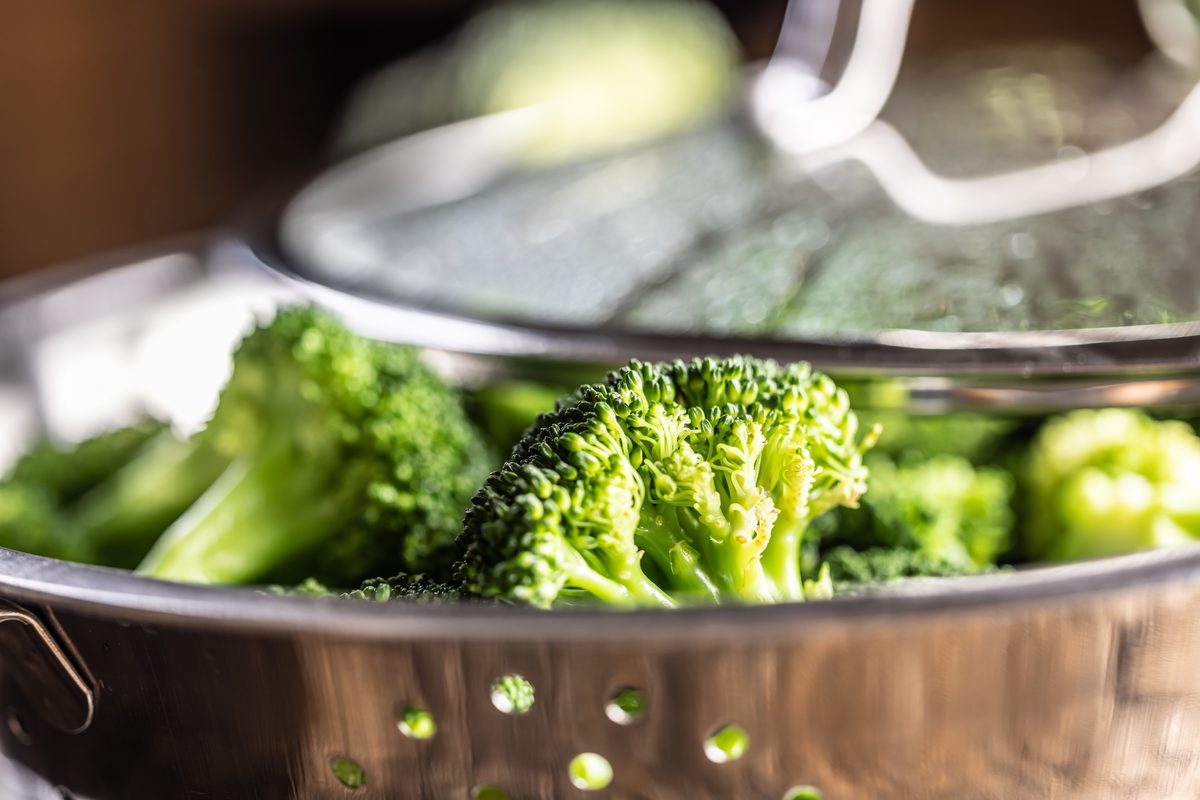
Gentle steaming, at 100°C at most, is different from pressure cooking. Add 3 to 4 cm of water to the bottom of the pan, bring to a simmer, place the food in a deep colander, cover and turn the heat down. Ideal for white fish (cod, sole), green vegetables (spinach, beans) and light cereals (quinoa, bulgur), it preserves colours and textures. Perfect for foods with a high water content, it avoids losses of vitamins C and B. For fish, add lemon and herbs to the colander. Use a deep colander that fits the diameter of your pan.
Low-temperature oven cooking
An oven at 80°C at most suits roasts and slow-cooked dishes. Use the fan setting and a sealed dish (a stainless steel casserole). Cooking times are 30% longer than with conventional cooking. A meat probe monitors the internal temperature of meat. A beef roast cooked at this temperature stays tender and juicy. After cooking, let the meat rest for 10 minutes so the juices redistribute. Dishes in sauce, such as a chicken tagine with apricots, benefit from this method with concentrated flavours. For root vegetables, put them in whole in an airtight dish with a drizzle of olive oil and some rosemary.
- Sweating: ideal for root vegetables and slow-cooked dishes. Uses the water in the food.
- Gentle steaming: perfect for green vegetables, fish and poultry. Preserves vitamins and crispness.
- Oven cooking: recommended for large cuts of meat and dishes in sauce.
- Bain-marie cooking: suited to delicate preparations such as custards or fish cooked in a parcel.
What equipment do you need for successful gentle cooking?
The 3 criteria for an effective gentle cooking pan
For successful gentle cooking, choosing the right cookware is crucial. Here is what to check before you buy.
- The material: 18/10 stainless steel is ideal. It is stable, non-reactive (it does not alter the taste), durable and free from chemical coatings. It resists corrosion and moderate temperatures (up to 650°C) while preventing metal from transferring into acidic dishes.
- The heat-diffusing base: a thick base (5 to 12 mm) is essential. It stores and spreads heat evenly, so you can turn off the heat and carry on cooking using the residual heat. Even heat distribution avoids hot spots and guarantees precise cooking.
- The lid: it must be heavy and airtight. Steam creates a “water seal” that seals the lid. You can check it has formed by turning the lid: it should turn freely. A poorly fitting lid means you have to add water or fat, which spoils flavours and nutrients.
Do you need a built-in thermometer?
A thermometer built into the lid makes it easier to control the temperature without lifting the lid. It shows when to turn the heat down (green zone, 60-80°C). However, it is not essential when you are starting out.
Here are the alternatives:
- Visual temperature-control vents: they release steam if the temperature goes above 85°C, signalling that you need to adjust the heat.
- A separate manual thermometer: less convenient but cheaper, for checking the core temperature of meat.
For beginners, a lid without a thermometer is enough. Models fitted with one are useful for delicate cooking such as fish. A simple test for airtightness: a drop of water slides down the cold sides, which guarantees even cooking with no loss of flavour.
Guide to cooking times and temperatures for each food
Understanding cooking temperatures so nothing is left to chance
Gentle cooking uses temperatures of between 60 and 80°C to preserve vitamins, minerals and flavours, such as vitamin C, which breaks down above 75°C. A beef roast takes 1h30 to 2h at 80°C, while a cod fillet needs 20 minutes at 65°C. The key is to keep the heat steady to avoid losing moisture.
Summary table of cooking by type of food
| Food category | Examples | Ideal temperature | Approximate cooking time |
|---|---|---|---|
| Vegetables with a high water content | Courgettes, mushrooms, chicory | 60-70°C | 20-45 min |
| Root vegetables/tubers | Carrots, potatoes, red kuri squash | 60-80°C | 25-45 min |
| Green vegetables | Green beans, leeks, asparagus, cauliflower | 60-70°C | 25-60 min |
| Tender meat (roast, fillet) | Beef, veal, pork | 70-80°C (after quick searing) | 1h30 to 2h for a roast |
| Poultry | Chicken breast, turkey | 70-80°C | 30-45 min |
| Fish (gentle steaming/parcel) | Salmon fillet, cod loin | 60-70°C | 15-25 min |
| Pulses (pre-soaked) | Lentils, chickpeas | 80-90°C | 1h to 1h30 |
Times vary with the size of the pieces and the appliance used. A whole courgette takes longer to cook than a thinly sliced one. Soaking beforehand speeds up the cooking of pulses. Test a piece: it should give way without effort. The aim is a tender texture while keeping the flavours: a chicken fillet at 70°C stays juicy, and a cauliflower at 65°C keeps its vegetable aromas. Keep the lid closed to hold in the steam and get the best results.
Is gentle cooking possible with multicookers?
Appliances such as the Cookeo or the Thermomix intrigue fans of gentle cooking. Can you really preserve nutrients and flavours with these machines?
Using the “simmer” modes on your Cookeo or Thermomix
The “simmer” modes on multicookers reach 90-100°C, close to traditional simmering but above the ideal range for gentle cooking (<80°C). These temperatures partly reduce the loss of vitamins A and B, but they do not preserve enzymes, which are sensitive at 45-50°C. Dedicated cookware, with a thick base and an airtight lid, gives better temperature stability. For tender meat, vegetables with a high water content or cereals, these machines remain a viable alternative, even if less is preserved.
Our tips for adapting your recipes to multicookers
- Choose the programme with the lowest temperature, often “simmer” (around 90°C).
- Reduce the amount of water by 20-30%, because the appliance is airtight and holds in moisture.
- Fill the bowl to two-thirds at most for even heat distribution.
- Increase the cooking time by 10-15% compared with the traditional method.
- With the Cookeo, use the manual “gentle cooking” mode with the lid open to regulate evaporation.
Examples of adapted recipes: sweated roasted carrots (20-40 min), a fragrant beef stew (2h45 with a Thermomix TM6), or spiced courgette purée. These dishes benefit from slow cooking for concentrated flavours, even though the higher temperatures limit full vitamin preservation. For delicate foods such as spinach or delicate fish, choose a heavy-bottomed frying pan with manual heat control.
Practical tips for getting all your gentle cooking right
Key steps before, during and after cooking
Wash the vegetables and cut them to an even size. Put them in a cold 18/10 stainless steel pan with a thick base. During cooking, keep the airtight lid closed: moisture and residual heat ensure optimal cooking without any intervention.
Add herbs and spices at the end of cooking to preserve their aromas. For meat, quick searing before gentle cooking boosts the flavours. Serve immediately, or reheat gently at the same temperature to keep the benefits.
The 5 golden rules of gentle cooking
- Choose suitable cookware: go for 18/10 stainless steel with a thick base (5 to 10 mm) and an airtight lid. Avoid aluminium and non-stick coatings.
- Control the temperature: keep it between 60°C and 90°C. Use a thermometer so you do not go above 85°C.
- Avoid fat and water: cook without adding either, except for 3-4 cm of water for gentle steaming.
- Keep the lid closed: lifting the lid disrupts the heat and damages nutrients.
- Be patient: times vary (e.g. 25-35 min for carrots), but very little supervision is needed.
Gentle cooking preserves vitamins, flavours and textures, for healthy, tasty meals with little effort.
Gentle cooking combines health, flavour and simplicity. By preserving vitamins, minerals and natural textures, it reinvents everyday cooking. It suits all kinds of cookware with minimal adjustments, and works with modern appliances as well as traditional methods, for healthy, tasty meals that save energy. An accessible approach to a balanced diet.
FAQ
How do you get gentle cooking just right?
Gentle cooking involves a few simple but essential steps. Start by washing your vegetables and cutting them to an even size so they cook uniformly. Put them in a cold container with an airtight lid, filled to three-quarters at most. Heat over a medium heat until it reaches about 60°C, then turn the heat down or switch it off to let the residual heat finish the job. Above all, do not lift the lid during cooking, so as to keep the “water seal” that holds in the steam. For meat, you can sear it quickly over a high heat before carrying on at a low temperature.
For vegetables cooked in gentle steam, add 3 to 4 cm of water to the bottom of a container, bring to a simmer, put the food in a deep colander and leave to cook covered over a reduced heat. This method preserves flavours, colours and nutrients.
What are the characteristics of gentle cooking?
Gentle cooking, also called low-temperature cooking, means cooking food at between 60°C and 80°C. It uses the natural moisture in the food, which cooks in its own vegetable water with no added fat or extra water. This technique preserves vitamins, minerals and trace elements while bringing out natural flavours.
A “water seal” forms between the lid and the pot, making the cooking airtight. It suits many foods: vegetables, tender meat, fish and even some desserts. It is a healthy method that saves energy, ideal for beginner and experienced cooks alike.
How do you apply gentle cooking in the oven?
For gentle oven cooking, preheat the oven to 80°C at most, ideally on the fan setting for even heat. Use a stainless steel dish with an airtight lid. Fill it with your ingredients, close it carefully and leave to cook. Cooking times are generally 30% longer than with conventional cooking.
Meat, roasts and dishes in sauce such as tagines are perfect for this method. A meat probe is recommended to check the internal temperature of meat. For the best results, use a stable oven, avoid opening the door too often and use containers suited to this slow cooking.
How do you steam gently without a special appliance?
You can perfectly well steam gently with basic kitchen equipment. Use a large pan with 3 to 4 cm of water in the bottom. Place a basket or colander over it, well above the water level. The aim is to cook the food in the steam given off by the simmering water, without it touching the water directly.
Green vegetables, fish and poultry cooked in a parcel work particularly well with this technique. For more controlled cooking, use an airtight lid and a gentle heat source. This preserves vitamins, colours and textures while limiting the need for added salt or fat.
Which appliances are recommended for gentle steaming?
For optimal gentle steaming, several appliances can suit your needs. Dedicated steamers are among the most practical, as they let you set the temperature precisely. Multicookers such as the Cookeo, with a gentle steam mode, also give good results. Conventional ovens with a steam or low-temperature function are also suitable, as long as you use a sealed container.
For fans of traditional cooking, an 18/10 stainless steel stockpot with a thick base and a heavy lid is ideal. Models with a built-in thermometer let you monitor the temperature without opening the lid, which improves accuracy. Finally, manual steamers remain an affordable and effective solution for gentle steaming.
What is the best appliance for healthy, controlled cooking?
For healthy cooking, the best appliances are those that give precise temperature control, ideally between 60°C and 80°C. Multicookers such as the Thermomix or the Cookeo, with a gentle steam mode, are among the best all-round solutions. These appliances combine gentle cooking, steaming and slow cooking, with programmes suited to each type of food.
For more traditional use, a stainless steel stockpot with a thick heat-diffusing base (5 to 12 mm) is recommended. This type of cookware spreads heat evenly and releases it slowly, which is ideal for controlling the cooking without constant supervision. In short, the choice depends on your habits and expectations, but always favour tools that allow temperature control and slow cooking.
What are the three most common cooking methods?
The three main cooking methods are gentle cooking, fast cooking and pressure cooking. Gentle cooking takes place at between 60°C and 80°C and preserves nutrients, and it suits vegetables, fish and tender meat. It uses the natural water in the food or gentle steam for slow, delicate cooking.
Fast cooking, at a higher temperature (above 100°C), suits dishes that need reducing or caramelising. Finally, pressure cooking, done in a pressure cooker, goes above 100°C thanks to the pressure, which greatly reduces cooking times but can damage some nutrients. Each method has its advantages depending on your culinary and nutritional goals.
What is the difference between gentle cooking and simmering in a Cookeo?
Gentle cooking is distinguished by its temperature, limited to 60-80°C, compared with around 90-100°C for simmering in a Cookeo. With gentle cooking the heat is more moderate, which preserves more of the vitamins C, A, B, E, D and K and the minerals, which are often destroyed above 100°C.
The Cookeo simmer mode is an automatic programme at a higher temperature, similar to conventional simmering. Although it is faster, it does not preserve nutrients as well as traditional gentle cooking. However, it remains a good alternative for those who want to simplify their cooking, as long as you adjust the recipes to keep temperatures down and retain as many nutritional benefits as possible.
What drawbacks can come with a steamer?
Although a steamer is a practical appliance, there are some drawbacks. The first concerns temperature accuracy: some models do not offer fine adjustment, which can make it hard to get ideal gentle cooking at 60°C to 80°C. Without precise control, you risk going over these thresholds and damaging nutrients.
Another point to consider is the limited capacity of some steamers, especially if you cook for several people. Finally, regular descaling is essential to prevent limescale building up, which could affect the quality of cooking. For everyday healthy use, choose a model with adjustable temperature and a large capacity.
Further reading
Food profiles: Carrot, Apple, Cod, Courgette, Asparagus, Green beans
Recipes to try: Provençal aioli (fish and vegetables), Oat flake and vegetable patties, Provençal pistou soup


