The PNNS: the French national nutrition and health programme
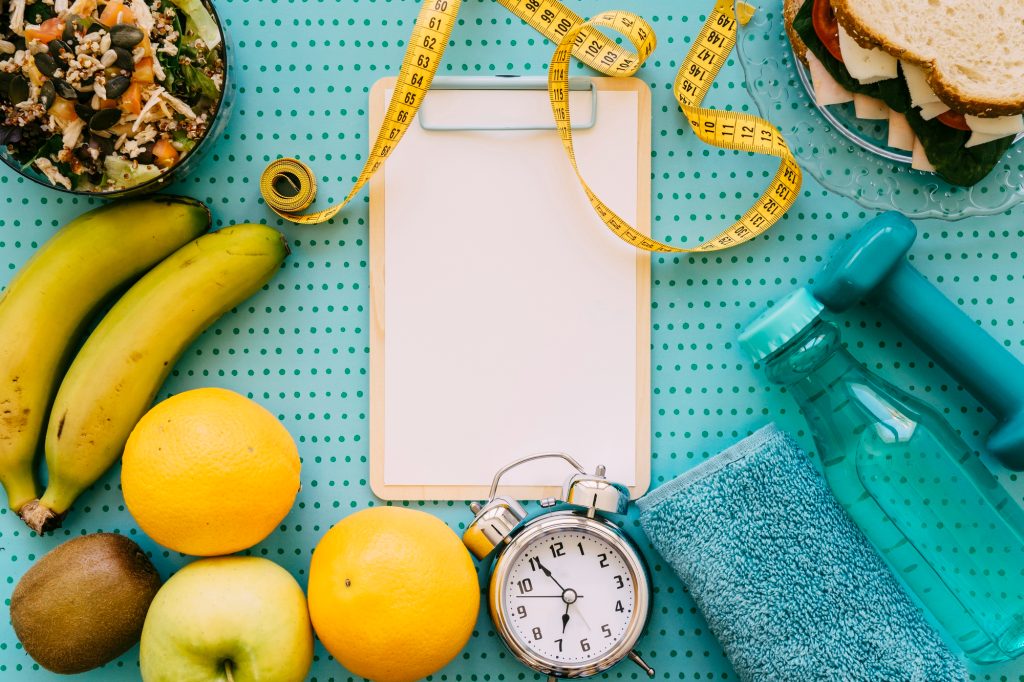
The Programme national nutrition santé (PNNS), France’s national nutrition and health programme, is the French government’s public nutrition policy. Launched in 2001, it aims to improve the health of the whole population by acting on diet, physical activity and sedentary behaviour. It was renewed in 2006, 2011 and 2019, and its fifth version, PNNS 5, was launched on 8 April 2026 for the period 2026-2030. For you, the PNNS mostly comes down to concrete guidelines (at least 5 portions of fruit and vegetables a day, pulses at least twice a week, no more than 500 g of meat other than poultry a week…), the Nutri-Score on packaging and the Manger Bouger website.
👉 Free tool: Calorie needs – work it out in 30 seconds, no sign-up.
This guide covers what the programme contains, the official guidelines currently in force for adults, how closely people in France follow them, and how to apply them without making life complicated.
The PNNS in brief
According to Manger Bouger, the programme’s public website, the general aim of the PNNS is « to improve the health of the whole population by acting on one of its major determinants: nutrition ». Here, nutrition covers three things: what you eat, physical activity and time spent sitting. Nutrition is recognised as a protective or risk factor for the most widespread diseases in France: cancers, cardiovascular disease, obesity, osteoporosis and type 2 diabetes.
The programme is more than a list of tips. It relies on a chain of expertise: Anses (the French food safety agency) lays the scientific groundwork (its report updating the guidelines dates from December 2016), the Haut Conseil de la santé publique (HCSP, the French High Council for Public Health) sets the objectives, and Santé publique France then words the messages for the general public and tests them on the population. Since 2007, some of the guidelines have also appeared on food advertising, as mandatory health messages such as « Pour votre santé, mangez au moins cinq fruits et légumes par jour » (« For your health, eat at least five fruit and vegetables a day »).
| Version | Launch year | Key points |
|---|---|---|
| PNNS 1 | 2001 | First official nutrition guidelines for the general public |
| PNNS 2 | 2006 | Programme renewed |
| PNNS 3 | 2011 | Programme renewed |
| PNNS 4 | 2019 (period 2019-2023) | New adult guidelines in 2019; programme ended at the end of 2024 with a review judged inconclusive |
| PNNS 5 | 2026 (period 2026-2030) | 3 priorities, 20 measures, aligned with the national strategy for food, nutrition and climate |
PNNS 5 (2026-2030): what changes
PNNS 5 sets out the government’s nutrition policy through to 2030. It builds on the national health strategy, the national strategy for food, nutrition and climate (SNANC 2025-2030) and the national sport and health strategy. Its ambition, according to Manger Bouger: to prevent chronic diseases better, improve everyone’s access to healthy, sustainable, high-quality food, and reduce social and regional inequalities in nutrition.
The three priorities
- Guarantee everyone access to sustainable nutrition environments that support health.
- Encourage healthy, sustainable eating behaviours.
- Turn everyday settings into places that promote health.
The numerical targets
| Area | Target for 2030 |
|---|---|
| Overweight and obesity in children and teenagers | 30% fall in prevalence, and 20% among those from disadvantaged families |
| Use of the Nutri-Score when shopping | 40% of French people (up from 33% today) |
| Processed products displaying the Nutri-Score | 75% of sales volume (up from 62%) |
| Breastfeeding | 85% of babies breastfed at birth, at least 75% exclusively breastfed |
| Organic products | 12% of consumption |
Some concrete measures
- Gradually reduce the sugar content of certain products aimed at children.
- Encourage supermarkets to remove sweets from checkouts.
- Protect children from advertising for products that do little for health.
- Regulate the nutritional quality of meals for children under 4.
- Evaluate the school breakfast scheme.
- Trial the Nutri-Score for three years in catering for institutions, restaurants and loose products.
- Support breastfeeding (maternity unit accreditation, help with returning to work) and strengthen the prevention of malnutrition in older people.
On that last point, our guide to malnutrition explains how to spot it early. As for PNNS 4, it has not yet been evaluated in detail: the results of the national Albane study, which will measure the population’s nutritional status, are not expected until 2027-2028.
The official food guidelines for adults
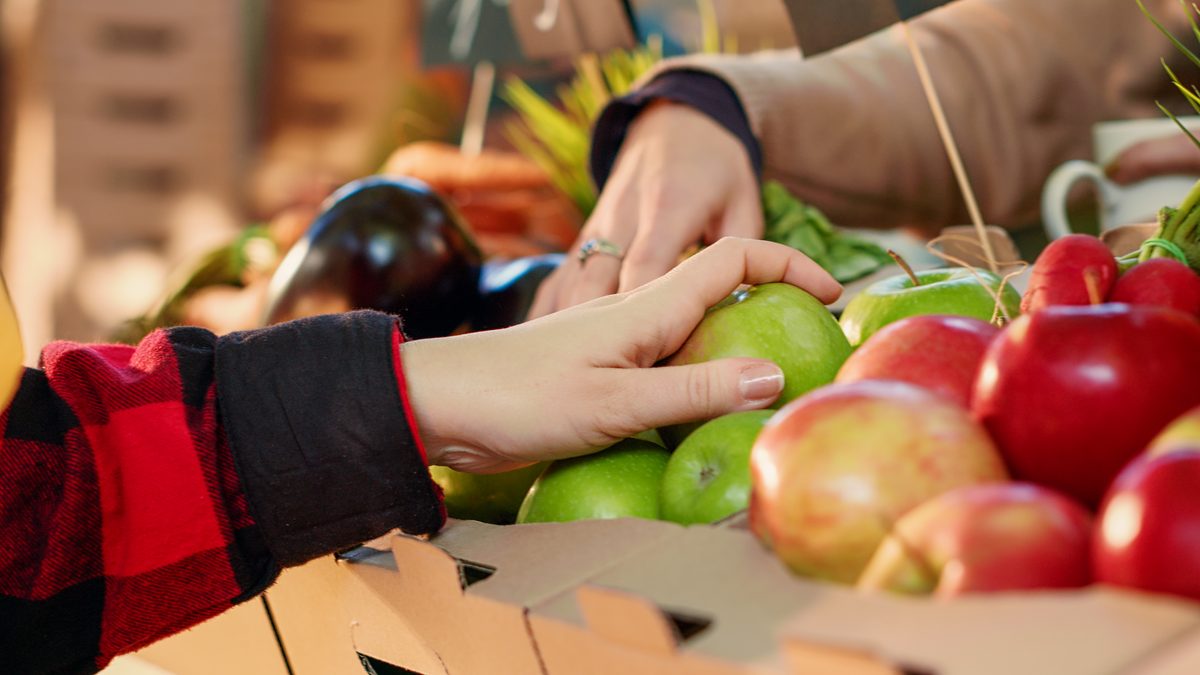
The guidelines currently in force date from 2019. Santé publique France drew them up from the work of Anses and the HCSP, at two levels: a simplified version, and a detailed version with quantities. Here is the detailed version.
| Food group | Main guideline | Good to know |
|---|---|---|
| Fruit and vegetables | At least 5 a day, for example 3 portions of vegetables and 2 of fruit | Fresh, frozen or tinned; no more than one glass of fruit juice a day; dried fruit only occasionally |
| Nuts | A small handful a day | Unsalted walnuts, hazelnuts, almonds, pistachios |
| Pulses | At least twice a week | Can replace meat, combined with a starchy food |
| Wholegrain starchy foods | At least 1 a day | Wholemeal or semi-wholemeal bread, pasta, rice |
| Fish | Twice a week, including 1 oily fish | Sardine, mackerel, herring, salmon; vary the species |
| Dairy products | 2 a day | Cream, butter and milk-based desserts do not count |
| Fats | Every day in small amounts | Favour rapeseed, walnut and olive oils |
| Meat (other than poultry) | 500 g a week at most | About 3 or 4 steaks; favour poultry |
| Charcuterie (cured and processed meats) | 150 g a week at most | About 3 slices of cooked ham |
| Drinks | Water is the only recommended drink | Sugary drinks, juices and sodas, even diet ones: no more than one glass a day |
| Alcohol | 2 drinks a day at most, and not every day | 10 standard drinks a week at most |
| Salt | Reduce | Taste before adding salt, prefer iodised salt |
To go further on some of the guidelines, our guides explain how much red meat to eat per week, how much fish to eat per week and how many nuts to eat per day.
The simplified version: increase, move towards, reduce
For those put off by numbers, Santé publique France also sorted the guidelines under three verbs, in a « small steps » spirit:
- Increase: fruit and vegetables, pulses, nuts, home cooking and physical activity.
- Move towards: wholegrain starchy foods, a mix of oily and lean fish, rapeseed, walnut and olive oils, sufficient but limited dairy consumption, seasonal, local and organic food.
- Reduce: alcohol, sugary products and drinks, salty products, charcuterie, meat other than poultry, products rated D and E on the Nutri-Score, and time spent sitting.
The general advice that goes with these guidelines is just as important: enjoy your food, favour home cooking, and pay attention to portion sizes. Above all, a balanced diet can be achieved over several days: one meal does not make a day, and one day does not make a week.
The physical activity and sedentary behaviour guidelines
The PNNS treats physical activity as a component of nutrition. For adults, Santé publique France recommends at least 30 minutes of dynamic physical activity a day, adding that « a little physical activity is already good, more is even better ». For extra benefits, it advises muscle-strengthening, flexibility and balance activities twice a week.
Sedentary behaviour has a guideline of its own, because it is a risk factor even in people who are active: do not sit for too long, and walk a little every 2 hours. Our guide to daily physical activity gives ideas for achieving this. The subject was also at the heart of the 2024 national cause campaign (a French government campaign) against inactivity.
Health messages on advertising
You have probably read these sentences at the bottom of an advert for a biscuit or a fizzy drink. They come straight from the PNNS. Since 2007, article L2133-1 of the French Public Health Code, which stems from the law of 9 August 2004 on public health policy, has required advertisers of manufactured food products to add a health message to their adverts. There are four:
- « For your health, take regular physical activity »;
- « For your health, eat at least five fruit and vegetables a day »;
- « For your health, avoid eating too much fat, sugar or salt »;
- « For your health, avoid snacking between meals ».
These messages repeat historic guidelines from the programme. The 2019 guidelines go further and are more precise, for example on pulses, nuts or charcuterie, which do not appear in these banners.
Alcohol: the situations where the safest option is zero
Beyond the guideline of 10 drinks a week at most, Santé publique France specifies that the safest option is not to drink alcohol when driving, handling tools or machinery, doing risky sport, taking certain medicines or living with certain illnesses. On each occasion, it advises drinking slowly, with food, and alternating with water.
Where do people in France stand?
Santé publique France’s Esteban study (2014-2016) measured the gap between what people eat and the guidelines. The figures show that there is still a long way to go.
| Indicator (adults) | Result |
|---|---|
| At least 5 fruit and vegetables a day | 28% of adults (13% of children) |
| No wholegrain cereal product or pulse over 3 survey days | 60% of adults (71% of children) |
| At least 25 g of fibre a day | 13% of adults (2% of children) |
| Fish twice a week | Only a quarter |
| Less than 6 g of salt a day | 22% of adults (40% of children) |
| Saturated fatty acids below 36% of fat intake | 17% of adults |
| Overweight or obesity (BMI ≥ 25) | 54% of men and 44% of women |
| Obesity (BMI ≥ 30) | 17% of adults |
Among children aged 6 to 17, Esteban estimated overweight (including obesity) at 17%, of which 4% was obesity, with higher prevalence where the parents had fewer qualifications. This social gradient is what PNNS 5 is trying to reduce.
Awareness of the guidelines is improving but remains uneven. According to Anses’s INCA 3 study (2017), 59% of adults knew the guideline on fruit and vegetables and 71% the one on physical activity, but only 36% knew the one on fish, 22% the one on dairy products and 7% the one on starchy foods.
The Nutri-Score, a tool of the programme
The Nutri-Score is often wrongly presented as a creation of PNNS 4. According to Santé publique France, it was introduced in France in 2017, based on the work of Professor Serge Hercberg and the expertise of Anses and the HCSP, and then built into the 2019 guidelines (« reduce products rated D and E »).
- What it measures: per 100 g or 100 ml of product, the elements to favour (fibre, protein, fruit and vegetables) and those to limit (energy, saturated fatty acids, sugars, salt, and sweeteners for drinks). The result is a letter from A to E.
- What it does not measure: additives, pesticides or the degree of processing. Unprocessed products such as fruit, vegetables or fresh fish are not covered, nor are alcoholic drinks.
- Its status: it remains optional; companies choose whether to display it. It is now used in seven European countries.
- How it is evolving: a revised algorithm, proposed in 2023 by the European scientific committee to align it better with recommendations, has been gradually applied in France since March 2025.
The right way to use it, according to Santé publique France: compare products from the same aisle (breakfast cereals range from A to E) or the same dish from different brands. Our guide to reading food labels complements this habit.
Applying the guidelines day to day
The guidelines translate fairly simply into meals. Here is one way to spread them across a week, without weighing anything:
- Every day: vegetables at lunch and dinner, two pieces of fruit, a wholegrain starchy food (wholemeal bread at breakfast, for example), two dairy products, a small handful of walnuts or almonds, and water as your drink.
- At least twice a week: a pulse-based dish, such as a red lentil curry or a chili sin carne.
- Twice a week: fish, including one oily fish, for example salmon, brown rice and broccoli.
- The rest of the time: poultry, eggs, and 3 or 4 portions of red meat at most per week.
The Fabrique à menus (menu builder) on the Manger Bouger site offers weekly menus built on these guidelines. For an overview of a balanced diet, our guide to eating a balanced diet covers these principles, and the one on dietary fibre helps you close the biggest gap among French people.
What about other ages?
The guidelines set out here are for adults. The PNNS also publishes specific recommendations for pregnant and breastfeeding women, children aged 0 to 3 (introducing solid foods), children and teenagers, and adults over 75. For alcohol, for example, the guideline is « zero » during pregnancy and for children and teenagers. Our guides to eating during pregnancy and introducing solid foods cover these situations in detail.
Common myths about the PNNS
- « 5 a day means 5 fruit and 5 vegetables. » No: it is 5 portions in total. Santé publique France found that a significant part of the population understood it as « 5 fruit + 5 vegetables ».
- « Fruit juice counts as a fruit. » Juices are very sugary and low in fibre: no more than one glass a day, and preferably a pressed whole fruit.
- « The more dairy products you eat, the better. » The guideline is 2 a day: « sufficient but limited » consumption.
- « The PNNS bans foods. » No food is banned; some are to be limited, and balance is judged over several days.
- « The Nutri-Score tells you whether a product is healthy. » It compares nutritional quality between similar products, without taking additives or processing into account.

Frequently asked questions
What is the PNNS?
The Programme national nutrition santé, launched in 2001, is France’s public policy for improving the population’s health through diet, physical activity and less sedentary behaviour.
Which PNNS is in force in 2026?
PNNS 5, launched on 8 April 2026 for the period 2026-2030, with 3 priorities and 20 measures. The adult food guidelines remain those of 2019.
How much meat per week according to the PNNS?
You should favour poultry and limit other meat to 500 g a week, or about 3 or 4 steaks, and charcuterie to 150 g a week.
Is the Nutri-Score mandatory?
No, displaying it remains voluntary. PNNS 5 aims for 75% of the sales volume of processed products to carry the logo by 2030.
What is PNNS 5’s target on obesity?
To cut the prevalence of overweight and obesity by 30% among children and teenagers, and by 20% among those from disadvantaged families.
This article is for information only and does not replace the advice of your doctor or a dietitian.
Our sources
- Manger Bouger (Santé publique France), Qu’est-ce que le PNNS ?, consulted in 2026.
- Santé publique France, Recommandations relatives à l’alimentation, à l’activité physique et à la sédentarité pour les adultes, état des connaissances, 2019.
- Vidal, Le cinquième programme national nutrition santé officiellement lancé, April 2026.
- Santé publique France, Les résultats de l’étude Esteban 2014-2015 (nutrition and nutritional status section).
- Anses, Étude individuelle nationale des consommations alimentaires 3 (INCA 3), rapport d’expertise collective, 2017.
- Santé publique France, Nutri-Score, thematic page, consulted in 2026.
- Anses, Actualisation des repères du PNNS : révisions des repères de consommations alimentaires, 2016.
Read also
Food profiles: Avocado, Walnut
Recipes to try: Chicken, avocado and walnut salad, Chicken, avocado and crudités wrap, Edamame, sweetcorn and avocado salad


