Children’s Nutrition: Balanced Introduction to Solids

Raising a child is a challenge in itself, but how do you find your way through the countless pieces of advice on children’s food? This guide, organised by age group (0-11 years), offers solutions to avoid common mistakes and support balanced growth. Find out about portion guides, foods to favour or limit, and tips for dealing with food neophobia or constipation. Learn how to introduce allergens, choose the right infant milks and set up a balanced mealtime routine. A key resource for building healthy, lasting habits without guilt.
👉 Free tool: Calorie needs – calculate in 30 seconds, no sign-up needed.
- Why is good nutrition so important for your child?
- Feeding from 0 to 6 months: the essentials
- Introducing solids: from 4-6 months to 1 year
- Feeding children aged 1 to 3: towards independence
- Feeding children aged 3 to 11: consolidating good habits
- Building a healthy relationship with food: the role of parents
- Diet and specific challenges: what to do about constipation or ADHD?
- Beyond the plate: the importance of daily physical activity
Why is good nutrition so important for your child?
A balanced diet is essential for children’s physical growth, cognitive development and immune system. From a very young age, eating habits shape their relationship with food in adulthood.
Parents are key role models. By eating healthily and staying physically active, they pass on positive behaviours. Involving your child in tasks such as shopping or preparing meals helps them discover the food groups, making it easier to accept new foods.
Children’s brains, which use 20% of their daily energy, depend on specific nutrients. Omega-3s (oily fish, walnuts) strengthen brain cells. The antioxidants in colourful fruit (blueberries, spinach) improve concentration. Iron (red meat, lentils) prevents mental fatigue. The choline in eggs supports brain development.
A varied diet strengthens immunity. Vitamin D (fortified milk, mushrooms) reduces the risk of infections. Zinc (seeds) activates the immune defences. Vitamin C (citrus fruit) improves iron absorption, limiting deficiencies. Regular hydration completes this natural barrier against illness.
Balanced meals (5 portions of fruit and vegetables a day) prevent deficiencies. One study indicates that 63-65% of teenagers’ calories come from family meals, underlining the impact of parents’ choices. Eating together strengthens emotional bonds and helps prevent eating disorders later on. Visual guides (a handful of wholegrain cereals, or the palm of the hand for protein) help you adjust portions to age, avoiding undernourishment or childhood obesity.
Feeding from 0 to 6 months: the essentials
Breast milk or infant formula is all a baby needs during the first six months of life. This crucial period calls for precise recommendations to ensure optimal growth and prevent deficiencies.
Breastfeeding: the optimal food
Breastfeeding is regarded as the nutritional gold standard for babies. Made up of 87% water, breast milk meets both nutritional and hydration needs.
- It contains antibodies and antimicrobial molecules that strengthen the immune defences
- It supports brain development thanks to its essential fatty acids
- It reduces the risk of digestive and respiratory infections
- It adapts to the baby’s needs thanks to its changing composition
- It strengthens the mother-child bond through the release of soothing hormones
The World Health Organization recommends exclusive breastfeeding for at least 6 months, with continued breastfeeding possible up to 2 years or more. For mothers, breastfeeding makes it easier to lose pregnancy weight and reduces the risk of certain cancers.
First infant formula: a regulated alternative
For babies who are not breastfed, first infant formulas offer a nutritionally complete solution. Their composition follows strict European regulations (Delegated Regulation 2016/127).
- They contain docosahexaenoic acid (DHA) at between 20 and 50 mg/100 kcal
- They are fortified with essential vitamins and minerals
- The protein can come from cow’s milk, goat’s milk or soya (on medical advice)
- They may include probiotics or prebiotics for digestive comfort
Specific formulas exist for particular needs (allergies, digestive problems). Consulting a paediatrician is recommended before using these specific products.
Hydration: particular attention needed
An exclusively breastfed baby generally does not need extra water before 6 months. Breast milk meets their fluid needs, and extra water can interfere with nutrient absorption.
For bottle-fed babies, the water used must be of a specific quality. It should have a dry residue below 500 mg/L, nitrates below 10 mg/L and sodium below 200 mg/L. The water should be boiled for babies under 4 months.
Introducing solids: from 4-6 months to 1 year
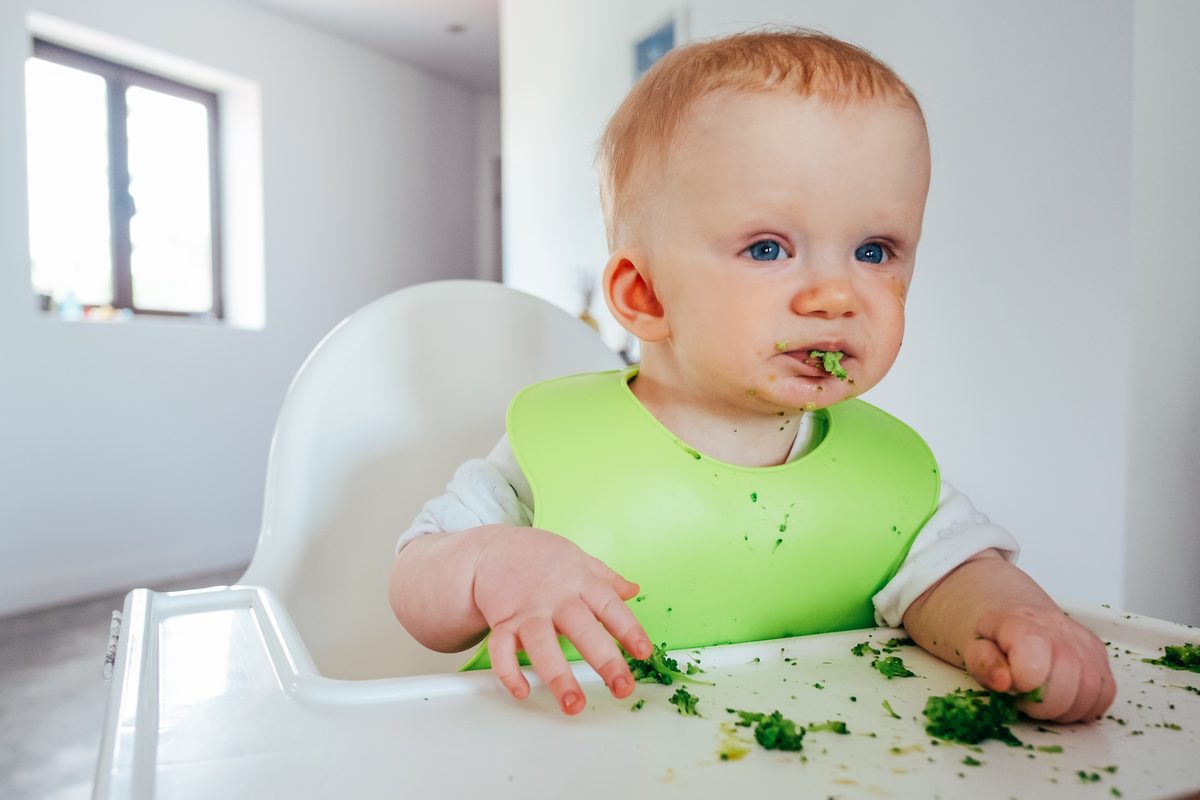
Introducing solid foods (known in France as diversification) begins between 4 and 6 months, during what is called the « tolerance window« . This ideal phase for introducing solids lets the digestive system adapt gradually. It also reduces the risk of food allergies. Before 4 months, digestive functions are immature. After 6 months, milk alone no longer covers all nutritional needs.
Textures progress gradually to support the development of oral motor skills. Very smooth purées (4-6 months) suit the sucking reflex. Foods mashed with a fork (6-9 months) prepare for chewing. Small, soft, melt-in-the-mouth pieces (9-12 months) develop the pincer grip and hand-to-mouth coordination. This progression follows the child’s neurological development.
Food safety is essential before 1 year. Avoid honey (risk of botulism), raw cow’s milk, and raw meat or fish. Cut hard, small, round foods (peanuts, grapes, cherry tomatoes) into quarters or serve them puréed to prevent choking. Fresh bread and sausages should be prepared in suitable pieces.
Here is a simplified timetable for introducing solids, in line with current recommendations:
| Age | Food groups to introduce | Examples | Recommended texture |
|---|---|---|---|
| From 4-6 months | Vegetables, then fruit | Carrot, courgette, green beans; apple, pear, banana | Very smooth purées |
| From 6-7 months | Meat, fish, eggs / Infant cereals with gluten | Chicken, turkey, pollock, cod; hard-boiled egg yolk; fine semolina | Smooth purées, foods mashed with a fork |
| From 8-9 months | Starchy foods / Dairy products | Fine pasta, rice, potato; plain yoghurt, fromage blanc (unsweetened) | Small, soft, melt-in-the-mouth pieces, mashed foods |
| From 10-12 months | Pulses / Adapted family meals | Puréed red lentils; small pieces of cooked vegetables, flaked fish | Tender pieces to chew |
The major allergens (egg, fish, peanut, gluten) should be introduced early, one at a time. This approach reduces the risk of allergy. Favour peanut as a powder or purée mixed into stewed fruit, well-cooked egg (yolk and white) twice a week, gluten gradually from 6 months, and well-cooked fish twice a week. Keep these foods in the diet regularly once they are well tolerated.
Milk (breast milk or formula) remains the main food until 1 year, covering most nutritional needs. Dairy products (yoghurt, fromage blanc) can be added in small amounts from 8-9 months, mixed with other foods. Avoid salt, sugar and spices to protect kidney development. Instead, add a spoonful of vegetable oil or butter to purées to provide the essential good fats.
Adapt foods to your child’s chewing abilities for their age. Include them in family meals to encourage natural learning about food. Your habits at this stage influence their future choices. A balanced introduction to solids prevents iron, zinc and vitamin deficiencies, supporting optimal growth and neurocognitive development. Involve them in discovering foods, but watch them at all times during meals for their safety.
Feeding children aged 1 to 3: towards independence
For children aged 1 to 3, feeding moves towards family meals. Dishes should be low in salt and sugar, with textures suited to the child’s chewing abilities. This period is key to establishing a balanced relationship with food.
The role of growing-up milk
Growing-up milk, useful after 1 year, is enriched with iron (30 times more than cow’s milk), DHA (a fatty acid for the brain) and vitamin D (for bones). 500 ml/day covers 80% of iron needs. It has less sodium and more zinc, which is essential for immunity. It is not compulsory if the diet is balanced with sources of iron (meat, pulses) and vitamin C (citrus fruit).
Portion guides
Quantities vary with appetite. Use these visual guides:
- Starchy foods: the size of a clenched fist.
- Meat/fish: the palm of the hand (without the fingers).
- Fats: the tip of the thumb.
These measures avoid excess or deficiency while respecting your child’s fullness.
Meal and snack structure
Plan 3 balanced meals (breakfast, lunch, dinner) and 1-2 healthy snacks (fruit, dairy). Favour fresh, homemade food, limiting ultra-processed dishes. For example, adapt family dishes for your child. Snacks can include plain yoghurt or fresh fruit.
Textures and gradual variety
At 1 year, a child can manage soft textures: cooked vegetables, ripe fruit, shredded meat. Avoid whole round foods (grapes) or hard ones (nuts) to prevent risks. Introducing solids starts from 6 months, with smooth then thicker purées, before pieces between 8 and 12 months.
Eating habits to cultivate
Involve your child in food choices so they discover foods. Respect their hunger and fullness signals. According to the WHO, limit inactive screen time to 1 hour/day for 2-4 year olds, encouraging physical activity. Family meals without screens reinforce these healthy routines.
Feeding children aged 3 to 11: consolidating good habits
Energy needs range from 1,100 kcal/day for a 3-year-old girl to 2,200 kcal/day for an 11-year-old boy, depending on physical activity (PAL 1.4 to 1.8). The ideal split is 45-50% carbohydrate, 15% protein and 35-40% fat. Fibre, eaten on average at 12.3g/day, is essential: favour wholegrain cereals, nuts (ground before age 6) and pulses (twice a week).
Breakfast should include slow carbohydrates (wholemeal bread, porridge oats), protein (yoghurt, milk) and a piece of fruit. This combination supports concentration through B vitamins, fullness through protein, and the immune system through antioxidants. One study shows that children who eat this kind of meal have 10% higher cognitive performance than children who skip it.
For school canteen meals, check the weekly menus so you can balance things out at home with varied vegetables (at least 3 colours a week) and lean protein (poultry, fish). The ideal snack combines bread (50g) with fruit (100-120g) or semi-skimmed milk (125ml). Limit shop-bought cakes (max twice a week) in favour of homemade recipes such as chocolate pudding or fruit clafoutis.
Water is the priority drink, with an average intake of 1.5L/day recommended. Fruit juices, even those labelled « 100% pure juice », contain up to 10g of sugar/100ml, exceeding the 60g/day advised for 4-7 year olds. Two thirds of children drink less than 1 litre of water a day, which affects their concentration and memory.
- To favour every day: fruit and vegetables (5 portions, including 3 of vegetables and 2 of fruit), dairy products (3 a day for 700-1200mg of calcium from milk, yoghurt, cheese), wholegrain starchy foods (bread, rice), pulses (twice a week), water. Nuts ground before age 6 provide essential fatty acids. Iron, found in lean meat and pulses, is critical for 7-10 year olds, who are at risk of deficiency.
- To limit strictly: sugary drinks (max 1 glass/day after age 11), ultra-processed products (Nutri-Score D/E), cured meats (150g/week), red meat (500g/week after age 11), processed cheeses high in salt. Fatty and sugary foods can affect gut development if eaten daily.
Involve your child in shopping and cooking from age 3: they can sort vegetables, spread soft cheese on wholemeal bread or arrange fruit on a skewer. These moments build their independence and openness to new flavours, while explaining the benefits of foods.
Respect their natural hunger rather than insisting « finish your plate ». A refused food can be reintroduced up to 10 times alongside others they like. A playful presentation (vegetables cut into geometric shapes, fruit cut into characters) stimulates curiosity. For example, a « cucumber boat » with red grapes as sails can tempt a reluctant child.
Daily physical activity (60 min/day) complements diet. Outdoor games (hide-and-seek, obstacle courses) or family activities (dancing, cycling) strengthen bones thanks to vitamin D made in the sun, while developing social skills through cooperative games.
Building a healthy relationship with food: the role of parents
Learning to listen to hunger and fullness
Children naturally know how much to eat. Trusting them builds their self-esteem and a healthy relationship with food.
The brain and stomach take 20 minutes to communicate. If your child eats too fast, they do not notice fullness. Encourage them to slow down, put their fork down and chew well.
Avoid distractions: television, tablets or toys draw their attention away. Distracted eating can lead them to eat more than they need.
Serving small portions is best. Offering seconds if your child is still hungry avoids pressure. Do not link dessert to a cleared plate. It could disrupt their ability to regulate their appetite.
Talk about sensations: ask whether they are a little hungry or very hungry before the meal. Occasionally, talk about their tummy so that they learn to recognise their signals.
Dealing with food neophobia and refusals
Food neophobia is a reluctance to try new foods, often between the ages of 2 and 6. 77% of children aged 2 to 10 experience it. It is a normal and temporary stage.
Never force a child to eat. Offer the food several times, up to 15 times. Change the shapes or textures: a vegetable as a purée, as sticks or as croquettes can spark their curiosity.
Involve them in shopping and cooking. This encourages sensory discovery. A child who grows a vegetable or prepares it is more likely to taste it.
- Involve your child in shopping and preparing meals
- Present food in a fun and appetising way
- Pair the new food with a food they already like
- Invite your child to choose a new vegetable or fruit at the market to taste together
Create a friendly atmosphere. Eat the refused foods in front of them with enthusiasm. A dish in the middle of the table, where everyone helps themselves, limits tension.
Play down the situation. Do not force, threaten or reward. Stay calm. Pressure interferes with listening to body signals.
Food is neither a reward nor a punishment
Using food as a reward or punishment creates an unhealthy relationship. A child might eat because of emotion, not hunger.
Offer non-food rewards: a family game, a story, a film. This values healthy activities without linking food to emotion.
Sweets can be allowed occasionally. Banning them completely encourages obsession. Offer them without making them a rare privilege.
Explain why fruit is better than sugary cereals. A child understands better when you link flavour with wellbeing. For example: « Fruit gives you energy to play for longer. »
Avoid phrases like « You’ll get dessert if you eat your vegetables ». This reinforces the idea that some foods deserve a reward. Aim for moderation and a balanced relationship with food.
Diet and specific challenges: what to do about constipation or ADHD?
Adapting the diet for constipation
Constipation affects 1 child in 10, often linked to a fibre intake below recommendations. Dietary fibre, by absorbing water, softens stools and stimulates transit. A 4-8 year old needs 25g of fibre/day, compared with 31g for a boy aged 9-13.
To help:
- Increase fibre sources: favour prunes (3g/100g), spinach (2g/100g), wholemeal bread (2g/slice), and oily fish (a source of omega-3s, which improve absorption).
- Encourage hydration: a 4-8 year old should drink 1.2L of water/day. A glass on an empty stomach stimulates transit.
- Encourage physical activity: 60 minutes of active play a day improves bowel motility.
Diet and attention deficit disorder (ADHD)
Diet does not cure ADHD, but a balanced diet can reduce peaks of impulsivity by 20%. Children with ADHD often have a blood omega-3 level 30% below average.
Good practice:
- Structure meals: fixed times stabilise levels of dopamine and noradrenaline, key neurotransmitters.
- Favour omega-3s: 300-500mg of EPA/day improves attention after 8 weeks. A portion of salmon (150g) provides 1.5g of omega-3.
- Watch the glycaemic index: low-GI foods (pulses, wholegrain cereals) avoid the energy spikes that worsen symptoms.
To avoid:
- The colourings E102 and E129, found in 70% of commercial sweets, increase restlessness.
- Sugary drinks: a 33cl can of fizzy drink contains 10 sugar cubes, triggering swings in concentration.
Magnesium or zinc supplements, alongside medical follow-up, can reduce impulsivity problems by 40%. Parents should always consult a paediatrician before making any dietary change specific to ADHD.
Beyond the plate: the importance of daily physical activity
A balanced diet and physical activity form an essential duo for children’s health. These two pillars prevent deficiencies and reinforce healthy habits.
Following the World Health Organization’s recommendations
Children should do at least 60 minutes of physical activity a day, at moderate to vigorous intensity. This WHO rule applies to all young people, including teenagers. Less activity increases the risk of a sedentary lifestyle or excess weight.
Turning movement into family fun
Here are some activities to build movement into the routine:
- Organise bike or scooter rides.
- Play at the park with obstacle courses (climbing, jumping, weaving).
- Dance together in the living room, with simple routines.
Setting limits on screen time to protect health
For 2-4 year olds, the WHO advises limiting screens to one hour a day. Beyond that, inactive time harms motor development and sleep. For older children, set limits on screen time (e.g. 2 hours for 5-12 year olds).
Making healthy choices a family habit
Habits formed as a family leave their mark on children. By alternating balanced meals with fun activities, you pass on keys to optimal health. This routine reduces the risk of deficiencies and supports harmonious growth.
A balanced diet and regular physical activity promote health and good habits. By offering healthy meals and limiting ultra-processed foods, parents give their children the foundations of lasting health. Involving your child in food choices and fun activities makes mealtimes educational and shared.
FAQ
What is the best diet for a child?
The ideal diet for a child is varied, balanced and suited to their growing needs. Every day it includes fruit and vegetables (at least 5 portions), dairy products for calcium, starchy foods for energy, lean protein (meat, fish, eggs, pulses) and small amounts of omega-3s (oily fish). It is important to strictly limit sugary drinks, sweets and ultra-processed foods. Parents should set an example by eating healthily and involving their child in shopping and preparing meals.
What is a balanced meal for a child?
A balanced meal for a child includes:
- A vegetable or a fruit (as a starter or side)
- A starchy food (pasta, rice, potato, wholemeal bread) in a suitable amount (the size of a clenched fist)
- A lean protein (white meat, fish, egg, pulses) in a suitable portion (the size of the palm of the hand)
- A dairy product (yoghurt, fromage blanc) for calcium
- A limited amount of fat (the tip of the thumb)
Ultra-processed foods and added sugars should be avoided.
How much should a child eat?
Quantities depend on the child’s age, weight and activity. In general, portions can be estimated visually: the size of a clenched fist for starchy foods, the palm of the hand for protein and the tip of the thumb for fats. It is important not to force your child to finish their plate and to let them listen to their hunger and fullness. Quantities can vary from one day to the next depending on the child’s appetite.
What foods should not be given before age 10?
Before age 10, certain foods should be avoided for safety and developmental reasons: small, hard, round foods (peanuts, hazelnuts, hard sweets, whole grapes) to prevent choking, honey before 1 year (risk of infant botulism), and a strict limit on ultra-processed foods high in salt, sugar and saturated fat. Supplements and restrictive diets should be avoided without medical advice.
What are the superfoods for children?
Foods that are particularly good for children include: oily fish (salmon, mackerel) rich in omega-3s for the brain, eggs for their complete nutritional profile, berries for antioxidants, pulses for protein and fibre, spinach for iron and calcium, dried fruit (prunes) for transit, and seeds (pumpkin) for zinc. All of these foods should be offered in a way that suits the child’s age.
How many eggs can a child eat per week?
Eggs are a nutritious food for children. As a general rule, a healthy child can eat up to 4 eggs a week, spread over different meals. They can be soft-boiled, hard-boiled, made into an omelette or mixed with other foods. It is best to vary protein sources and not exceed this amount, to avoid too much cholesterol.
What is the most balanced breakfast for a child?
The ideal breakfast for a child contains: a wholegrain cereal product (wholemeal bread, unsweetened cereals) for complex carbohydrates, a dairy product (plain yoghurt, milk) for calcium, and a piece of fruit or fresh fruit juice for vitamin C. Avoid sugary cereals and choose plain yoghurt with fresh fruit rather than flavoured yoghurt. A soft-boiled egg or scrambled eggs can replace the dairy product once or twice a week.
What should a child eat in the evening?
A child’s evening meal should be balanced but not too heavy. It can include: a vegetable (soup, purée, cooked), a starchy food (pasta, rice, potato), a lean protein (fish, chicken, pulses) and a dairy product for bedtime. Avoid spicy or fatty dishes before sleep. Warm milk or a yoghurt can be offered to help them fall asleep.
What are starchy foods?
Starchy foods are foods rich in complex carbohydrates, a source of energy for children. They include pasta, rice, potatoes, bread, wholegrain or refined cereals, infant cereals, pulses (lentils, beans) and cereals eaten as grains (wheat, oats, millet). They should take up about a quarter of the plate at each meal, with a portion suited to the size of the child’s fist.
Read also
Food pages: Egg, Wholemeal bread, Apple, Plain yoghurt, Grapes, Pasta
Recipes to try: Light quiche Lorraine, Light eggs Benedict, Salmon and leek quiche