Probiotics and the gut microbiota: the guide
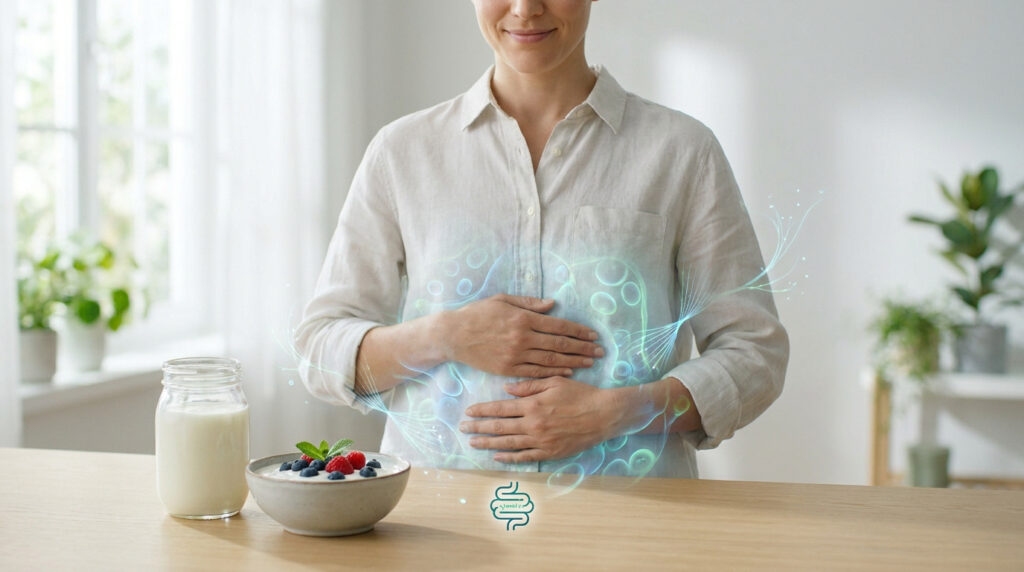
Our gut is home to billions of micro-organisms: the microbiota. Far from being mere passengers, these bacteria influence digestion, immunity, weight and even mood. The human digestive system hosts around 100 trillion micro-organisms, which together form a genuine organ in their own right. Yet an imbalance in this flora can promote obesity, diabetes or chronic inflammatory disorders.
This guide explains how the gut microbiota works and the role of probiotics in restoring your biological balance. We look at the most effective strains and the selection criteria to help you choose a supplement suited to your needs.
👉 Free tool: Calorie needs – calculate in 30 seconds, no sign-up.
- How the gut microbiota works and the role of probiotics
- 3 essential strain families for your balance
- How to choose an effective product for your needs
- Common uses and recommended length of courses
- Synergy between prebiotic fibre and natural probiotics
How the gut microbiota works and the role of probiotics
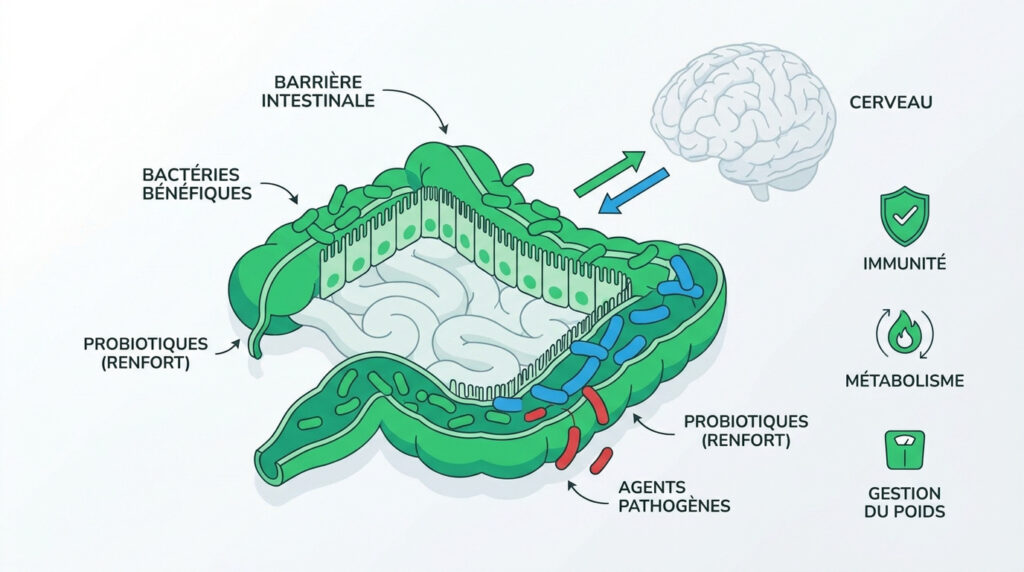
The gut microbiota is made up of 100 trillion micro-organisms essential to immunity and metabolism. Balance depends on the diversity of strains such as Lactobacillus and Bifidobacterium, whose presence strengthens the epithelial barrier. This ecosystem is essential because it carries out digestive, metabolic and immune functions that your body could not manage alone.
This bacterial richness is the foundation of your digestive vitality. Looking after it, through probiotics and fibre, is one of the keys to overall health.
Why microbial diversity matters for your health
Bacterial richness defines the quality of your flora. A wide variety of species ensures a robust digestive ecosystem. This helps it better withstand the external stresses it faces every day.
A depleted flora directly affects your overall metabolism. There is a real link with body weight management. A flora with little diversity often favours the storage of unwanted fat. Conversely, a wide diversity of these species guarantees your body’s resilience in the face of external stresses.
Looking after your gut actively contributes to overall health. It is a daily balance.
- Better digestion of fibre
- Synthesis of vitamins B and K
- Protection against pathogens
- Systemic inflammation
- Bowel transit problems
- Slowed metabolism
Biological mechanisms of the gut barrier
Bacteria physically reinforce your inner intestinal wall. They create a shield that limits the passage of toxins into the blood. This mechanical protection is vital for your body.
Good bacteria fight the pathogens around them. Beneficial strains occupy the available space in the gut. This mechanically prevents the growth of microbes that are harmful to you.
Your microbiota also secretes natural antimicrobial substances. These molecules target intruders precisely. They thus maintain biological order within your digestive system.
The microbiota’s impact on the gut-brain axis
There is a permanent two-way communication between your gut and your brain, called the gut-brain axis, via the vagus nerve. Your emotions directly influence your digestion every day. This constant dialogue remains complex but is essential to understand.
Gut bacteria produce a large share of your serotonin. Nearly 95% of this « happiness hormone » is made in your gut. Your flora therefore directly influences your psychological state.
Certain bacterial strains regulate blood cortisol levels. They act on how stressed you feel. A good flora thus improves your mood every day.
- 100 trillion micro-organisms in the digestive tract
- 70% of the immune system located in the gut
- 95% of serotonin made by gut bacteria
3 essential strain families for your balance
Beyond overall function, the effectiveness of a course depends on the precise choice of the micro-organisms used.

Probiotics vs prebiotics
- Probiotics are the good bacteria: they are found in fermented foods (yoghurt, kefir, sauerkraut, miso)
- Prebiotics are their food: specific fibres found in garlic, onion, leek, banana or pulses
Properties of Lactobacillus and Bifidobacterium bacteria
These two dominant genera occupy distinct areas. Lactobacillus act mainly in the small intestine. Bifidobacterium, by contrast, colonise the colon to keep transit moving smoothly.
Their presence directly promotes the absorption of essential nutrients. These bacteria notably help the uptake of magnesium and calcium. They turn your meals into energy that is actually available to your cells.
For your everyday comfort, these strains perform several functions:
- Targeted action on bloating
- Noticeable reduction in intestinal gas
- Improved stool consistency
- Support for digestive comfort after meals
You can find these micro-organisms in yoghurt, kefir, sauerkraut, kimchi, miso, tempeh or even kombucha.
What makes the yeast Saccharomyces boulardii special
This tropical yeast has unique characteristics. Unlike conventional strains, it is a microscopic fungus. Its action proves particularly robust and fast in your digestive tract.
Its great strength is its natural resistance to antibiotics. It is not destroyed by these medical treatments. It is therefore the ideal ally to protect your flora during heavy medication.
The yeast Saccharomyces boulardii is one of the best-studied strains for preventing antibiotic-associated diarrhoea. For gastroenteritis that has already set in, the 2020 Cochrane review considers the benefit of probiotics uncertain.
By stabilising the gut barrier, it limits the impact of pathogens. It thus helps to restore a functioning microbiota after a major disruption.
How to choose an effective product for your needs
Identifying the right strains is a first step, but manufacturing quality determines whether the bacteria survive to reach their target.
Checking the CFU count and traceability
CFU stands for colony-forming units. This figure shows the number of live bacteria. It guarantees the potency of the product at manufacture.
An effective course often needs between 10 and 30 billion CFU a day. Below that, the impact on the microbiota often remains negligible. Higher doses are used for specific needs.
Always check the traceability of the strains on the label. Reputable labels ensure the viability of the micro-organisms. It is an essential guarantee of safety.
Why gastro-resistant capsules and storage matter
The stomach destroys fragile bacteria because of its acidity. Gastro-resistant capsules ensure they arrive intact in the gut to do their job. It is a fundamental protection for effectiveness.
Some products need the fridge. Others use advanced freeze-drying to stay stable at room temperature without losing potency. Compare these storage methods carefully.
Powders or capsules, choose according to your personal comfort. What matters is picking a format that suits your daily routine.
A practical guide to decoding complicated labels
| Element | Importance | What to look for |
|---|---|---|
| Strain name | Precision of the effect | Genus, species and exact code |
| CFU count | Active potency | 10 to 30 billion a day |
| Additives | Purity of the product | No stearate or colourings |
| Expiry date | Guaranteed viability | Real survival up to the date |
A good label states the genus, species and specific strain. This precise naming is a sign of seriousness and complete transparency. It is essential for identifying real effectiveness.
Hunt down unnecessary additives such as magnesium stearate. A simple formula often guarantees better overall quality.
Common uses and recommended length of courses
Once you have chosen the ideal product, how you take it determines the success of your programme.
Antibiotics and bowel transit problems
When you are on antibiotics, it is often advised to leave a gap of about two hours before taking a bacterial probiotic, so that the medicine does not destroy the bacteria. That is logical, but no trial has compared the two approaches: follow the instructions for your product. For the yeast Saccharomyces boulardii, the question does not arise: antibiotics do not act on yeasts.
With a bacterial probiotic, follow the instructions, which often advise leaving a gap after the antibiotic dose. This is unnecessary with the yeast S. boulardii, which antibiotics do not destroy.
Bifidobacterium are excellent against intestinal gas. They reduce excessive fermentation and ease painful abdominal tension. Handle side effects calmly. Mild bloating may appear at the start; this is normal.
Ideal length and regularity for lasting results
An effective course generally lasts between three and four weeks. The body needs time to establish these new colonies. Take your supplement every day at the same time, preferably during or just before a meal: the only study that compared times of intake found better bacterial survival with a meal than on an empty stomach. Frequently forgetting a dose breaks the renewal cycle of your gut flora.
Regular transit and light digestion show that the supplement is working. It is a sign that your course is paying off.
Precautions for sensitive groups and the immunocompromised
People with weakened immune systems must be very careful. Introducing live bacteria can carry a rare but real risk of infection.
Risk of infection for people with weakened immune systems. A medical consultation is mandatory for long or intensive courses, or in case of pregnancy.
Supplementation is often beneficial for pregnant women. However, medical supervision remains essential to choose the right strains. Consult your GP before starting a long or intensive course.
Synergy between prebiotic fibre and natural probiotics
To get the most from supplements, it makes sense to also optimise your everyday nutritional foundations.
These are dietary fibres that humans cannot digest. They serve as the exclusive food of the good bacteria in your own gut microbiota.
The role of dietary fibre as bacterial fuel
Prebiotics are fibres that you do not digest directly. Instead, they serve as the exclusive food of the good bacteria in your own microbiota. This process supports their activity.
Eat garlic, onions and artichokes regularly. These vegetables contain plenty of inulin. They naturally boost the growth of populations of Bifidobacterium that are good for your health.
The golden rule comes down to one word: diversity. The more varied the plants you eat, the richer your microbiota. Aim for as many colours as possible, include fibre at every meal and a few fermented foods.
Ultra-processed products starve your bacteria. This lack of fibre harms your internal balance. Favour whole, unprocessed foods to maintain a vigorous, healthy gut ecosystem.
Supplements compared with natural sources
Kefir, kombucha or miso are excellent sources. They provide varied, live strains in a very natural way. These fermented foods enrich your bacterial diversity.
In the case of a medical condition, the concentration in foods is rarely enough. Intakes vary too much depending on how the food is made. Supplements then offer a precise, targeted therapeutic dose in CFU.
Combine a fibre-rich diet with a seasonal course. This guarantees a stable and effective intake.
- Natural synergy of fibre and bacteria
- Wide diversity of live strains
- Low cost day to day
- Uncertain bacterial dose
- Sensitivity to cooking
- Salt content sometimes high (miso)
Do you need probiotic supplements?
Probiotic courses can help in certain specific situations: after antibiotics, digestive problems. Ideally, consult a professional. But for everyday maintenance, your plate (fibre and fermented foods) remains the most effective and cheapest strategy.
Adopting a varied plant-rich diet helps to nourish your gut flora in the long term.
Maintaining a diverse gut microbiota strengthens your immunity and your mental balance via the gut-brain axis. For lasting results, opt for a three-month course with targeted strains such as Lactobacillus, always checking the CFU count on the label. Act now to transform your digestive vitality and protect your overall health in the long term.
Gut-friendly recipes
To feed your microbiota with pleasure, treat yourself to a miso soup, a skyr bowl or a fibre-rich lentil and spinach dahl. These recipes combine natural probiotics and prebiotic fibre for maximum effect.
💼 Careers & guidance: interested in this field professionally? Discover our career profiles: micronutritionist.
The special case of the yeast Saccharomyces boulardii: being a fungus, it is not destroyed by antibiotics, but it is by antifungals. Official dosage, timing and precautions: Ultra-Levure, what the leaflet says.
Morning, evening, on an empty stomach or with a meal? What the studies really show: probiotics, the right time to take them.
FAQ
What is the gut microbiota and why is it so important?
The gut microbiota is a community of 100 trillion micro-organisms, such as bacteria, fungi and viruses, living in your digestive system. Each person has a unique composition, similar to a fingerprint, which acts as an organ in its own right for your overall health.
This ecosystem is essential because it carries out digestive, metabolic and immune functions that your body could not manage alone. A wide diversity of these species guarantees your body’s resilience in the face of external stresses, whereas an imbalance is often associated with conditions such as obesity or diabetes.
How do probiotics act on our digestive system?
According to the WHO, probiotics are live micro-organisms that, when consumed in adequate amounts, confer real benefits. They work by physically strengthening the wall of your gut, forming a shield that limits the passage of toxins and pathogens into your blood.
These good bacteria compete with harmful microbes for space and secrete natural antimicrobial substances. Their presence promotes better nutrient absorption, regulates transit and reduces common discomforts such as bloating, gas or constipation.
Is there a link between gut flora and mental health?
There is a permanent two-way communication between your gut and your brain, called the gut-brain axis. Your microbiota influences the production of essential neurotransmitters, notably serotonin, nearly 95% of which is made in your gut by your bacteria.
By regulating cortisol levels, certain bacterial strains help modulate your response to stress and may improve your mood. Conversely, an imbalance in this flora can disrupt this dialogue and be implicated in anxiety disorders or episodes of depression.
Which probiotic strains are the most effective?
The genera Lactobacillus and Bifidobacterium are the most common and best documented. Lactobacillus act mainly in the small intestine, whereas Bifidobacterium mostly colonise the colon to provide optimal digestive comfort after meals.
The yeast Saccharomyces boulardii is also very useful because, unlike bacteria, it naturally resists antibiotics. It is one of the best-studied strains for preventing antibiotic-associated diarrhoea; for a stomach bug that has already set in, the 2020 Cochrane review considers the benefit uncertain.
How do you choose a probiotic supplement well?
To ensure a course is effective, you need to check the number of colony-forming units (CFU) on the label. A dose of between 10 and 30 billion CFU a day is generally needed to have a significant impact on your gut microbiota.
Favour gastro-resistant capsules, which protect the bacteria from stomach acid and let them arrive alive in your gut. Also make sure the label states the genus, species and specific strain precisely, while avoiding unnecessary additives such as artificial colourings.
What is the recommended length of a probiotic course?
The body needs time to establish new bacterial colonies in a lasting way. An effective course generally lasts between three and four weeks, taken regularly every day, preferably during or just before a meal.
If you are on antibiotics, follow the instructions for your bacterial probiotic, which often advise leaving a gap between doses; this is not necessary with the yeast S. boulardii.
What precautions should you take before starting?
Although beneficial, probiotics do not replace medical treatment and should be part of a healthy lifestyle. People with weakened immune systems must be particularly careful, because introducing live bacteria can pose a rare risk of infection in their situation.
For pregnant women, supplementation is often positive for the unborn child, but medical advice remains essential. It is always advisable to consult a healthcare professional to choose the strains best suited to your specific needs and avoid any contraindication.
What are the natural sources of probiotics?
You can find good bacteria in yoghurt, kefir, sauerkraut, kimchi, miso, tempeh or even kombucha. These fermented foods offer a wide diversity of live strains in a natural way.
How do you feed your microbiota well?
The golden rule comes down to one word: diversity. The more varied the plants you eat, the richer your microbiota. Aim for as many colours as possible, include fibre at every meal and a few fermented foods. Conversely, too much sugar and too many ultra-processed foods deplete it.