Group · Vegetables
Swiss chard
Swiss chard, also called chard or silverbeet, is a leafy vegetable from the same botanical family as beetroot. It is a plant with two vegetables in one: the fleshy stalk (or rib), white, yellow or red depending on the variety, and the green leaf, similar to spinach. They do not cook in the same way or in the same time, and they do not have the same composition. Versatile and inexpensive, chard can be cooked from spring to autumn.
On the nutrition side, this page uses the Ciqual entry for cooked stalks, without the leaf: 11.2 kcal per 100 g, with 2.5 g of fibre, 0.7 g of protein and 56 mg of calcium. It is one of the lowest-calorie vegetables in the whole database. The leaf, richer in carotenoids and vitamin K, is not counted here.
Macronutrient breakdown
Nutrition table per 100 g
| Calories | 11 kcal |
| Kilojoules | 46 kJ |
| Protein | 0,7 g |
| Carbohydrate | 1,3 g |
| Fat | 0,2 g |
| Fibre | 2,5 g |
Micronutrients per 100 g
All measured nutrients, ranked by share of the daily reference intake.
- Potassium240 mg12 %
- Manganese0,16 mg8 %
- Calcium56 mg7 %
- Magnesium18 mg5 %
- Copper0,04 mg4 %
- Vitamin E0,41 mg3 %
- Vitamin B50,17 mg3 %
- Iron0,35 mg3 %
- Vitamin B9dietary folate equivalents43,2 µg
See the other 5 nutrients
- Vitamin B60,02 mg2 %
- Phosphorus11 mg2 %
- Total omega-30,03 g1 %
- Vitamin A7,43 µg1 %
- Zinc0,08 mg1 %
Anses Ciqual 2025. Source: Anses, 2025, Ciqual food composition table
Tips
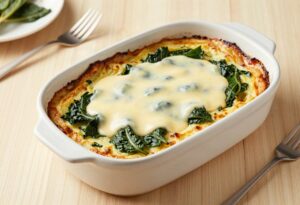
11 kcal and 2.5 g of fibre: the ratio is unbeatable. Few foods provide as much fibre for so little energy. In a gratin, a sauté or a tart, chard fills the plate and keeps you full, which is exactly what you want from a vegetable dish.
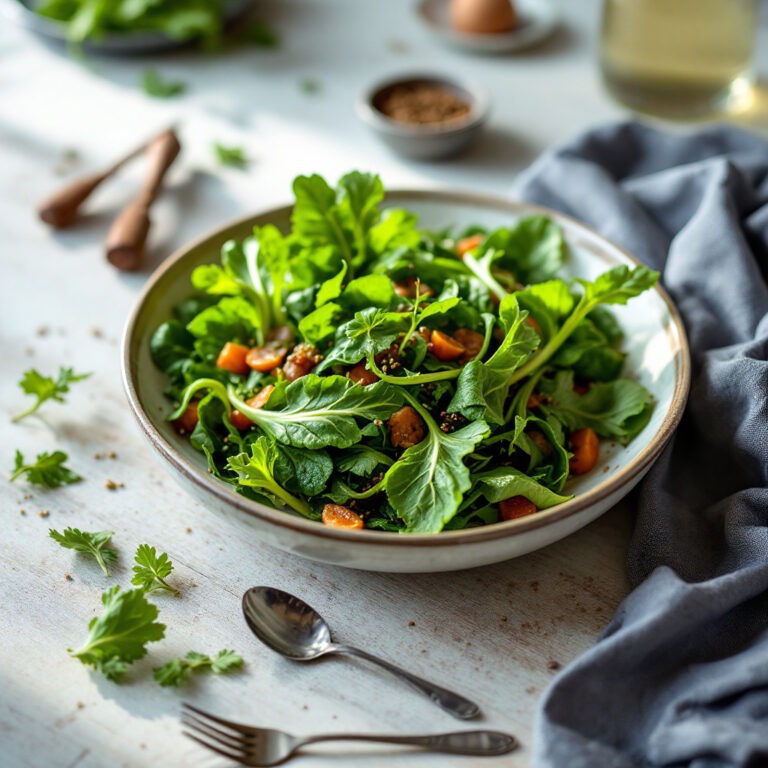
Never throw away the leaves. This is the most common mistake, and the most costly: the leaves are cooked like spinach, in two minutes, and are the richest part of the plant. Two vegetables for the price of one. Separate them from the stalks, which are best steamed, simmered or gratinéed. Young leaves can also be eaten raw, finely sliced in a salad, or sautéed with a drizzle of olive oil and garlic.
Remove the strings from the stalks. As with a stick of celery, a pass of the peeler over the rounded side removes the tough fibres. Five minutes of work that completely changes the final texture.
A squeeze of lemon when cooking. The stalks darken in air and in water. A little lemon in the cooking water keeps them white, without changing the taste.
Oxalates: worth knowing if you have kidney stones. Like spinach, chard leaf contains them. If you have a history of calcium oxalate stones, it is better to favour the stalks and vary with other green vegetables such as pak choi.
- Portion: allow 150 to 200 g per person as a side dish.
- Gentle cooking is preferred to preserve vitamins, as explained in our article on gentle cooking.
- Storage: a few days in the fridge, wrapped in a damp cloth; the leaves wilt quickly.
- Pairings: egg, ricotta, pine nuts, raisins, or worked into a savoury tart.
For athletes, chard is an excellent meal base, rich in micronutrients and low in calories, ideal when cutting or maintaining weight. It provides little protein (0.7 g) and carbohydrate, however: pair it with a protein source (fish, egg, pulses) and a starchy food to replenish glycogen after exercise. Its potassium contributes to fluid and mineral balance, useful when training makes you sweat.
For weight management, watch out above all for rich preparations: a gratin loaded with cream or cheese sends the calories climbing. Favour light cooking methods and controlled seasoning. For a quick comparison, take a look at the food calorie table. To vary your leafy vegetables, alternate with watercress or broccoli, which are just as low in calories.
Sources
Average nutrition values per 100 g, given as a guide only (they may vary by brand and preparation).