Group · Herbs & spices
Hot chilli pepper
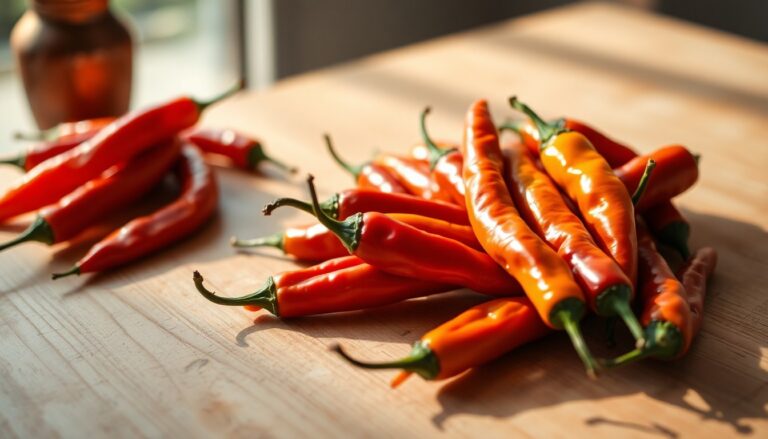
The hot chilli pepper is an essential condiment of spicy cuisines, from Mexico to Asia by way of Africa and the Caribbean. Coming from different varieties of Capsicum, it is sold fresh, dried, as flakes or as a sauce, with widely varying intensity depending on its capsaicin content, the molecule responsible for the sensation of heat. With only 37.4 kcal per 100 g, it is very low in calories while lifting dishes without any added salt or fat. Rich in flavour, it also provides fibre and vitamin C. Used in small amounts, the hot chilli pepper transforms an ordinary recipe into a fragrant, stimulating dish, perfect in a varied, tasty diet.
Macronutrient breakdown
Nutrition table per 100 g
| Calories | 37 kcal |
| Kilojoules | 158 kJ |
| Protein | 1,9 g |
| Carbohydrate | 5,8 g |
| Fat | 0,5 g |
| Fibre | 1,5 g |
Micronutrients per 100 g
All measured nutrients, ranked by share of the daily reference intake.
- Vitamin C144 mg180 %
- Vitamin B60,51 mg36 %
- Vitamin K114 µg19 %
- Potassium322 mg16 %
- Copper0,13 mg13 %
- Manganese0,19 mg10 %
- Vitamin B31,24 mg8 %
- Iron1,03 mg7 %
- Vitamin B9dietary folate equivalents23 µg
See the other 11 nutrients
- Vitamin B10,07 mg7 %
- Phosphorus43 mg6 %
- Vitamin B20,09 mg6 %
- Magnesium23 mg6 %
- Vitamin E0,69 mg6 %
- Vitamin A44,5 µg6 %
- Vitamin B50,2 mg3 %
- Zinc0,26 mg3 %
- Calcium14 mg2 %
- Omega-6 LA0,11 g1 %
- Omega-3 ALA0,01 g0 %
Anses Ciqual 2025. Source: Anses, 2025, Ciqual food composition table
Tips
The hot chilli pepper is used sparingly: a few slices or a small piece of flesh are enough to lift a whole dish. To control the intensity, remove the seeds and the white membranes, which hold the most capsaicin. You can add it at the start of cooking for a gentle, spreading heat, or raw at the last moment for a sharp bite. Always handle it with care and wash your hands well after cutting it.
Varieties and uses: jalapeño, habanero, bird’s eye, cayenne, Scotch bonnet… each variety has its own flavour profile and its own level on the Scoville scale. Fresh chilli keeps for a few days in the fridge, and for several months in the freezer. You can also find convenient forms such as dried chilli, chilli powder or cayenne pepper, which keep for a long time away from light.
Nutrition facts and benefits: with around 37.4 kcal per 100 g, 1.87 g of protein, 5.75 g of carbohydrate and 1.5 g of fibre, the hot chilli pepper is an ally of light seasoning. It contains vitamin C and antioxidant compounds. Since you eat only very small amounts, its real calorie contribution is negligible, so you can season guilt-free. To discover other low-calorie herbs and spices, explore the Herbs & Spices family or pair it with ginger and raw garlic for fragrant marinades.
Pairings and cooking: the hot chilli pepper goes with curries, tomato sauces, slow-cooked dishes, marinades, ceviche and stocks. It also lifts pulses, eggs and vegetable stir-fries. A touch of chilli can replace some of the salt, which is useful in a homemade curry.
Tip for active people: the hot chilli pepper makes cutting or balanced-diet meals, rich in lean protein and low in fat, taste good without adding to the calorie bill. Its intense flavour helps you enjoy simple dishes such as chicken, fish or brown rice. Avoid overdoing it before exercise, though, as it can upset digestion or irritate the stomach in sensitive people.
Points to watch: the burning sensation can be uncomfortable for the digestive system. Introduce it gradually, especially if you are not used to it, and adjust the amounts to individual taste. If you have a sensitive stomach, it is best to stay moderate.