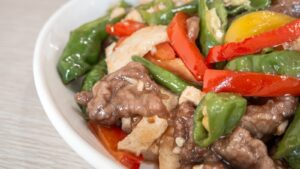
Group · Vegetables
Pepper
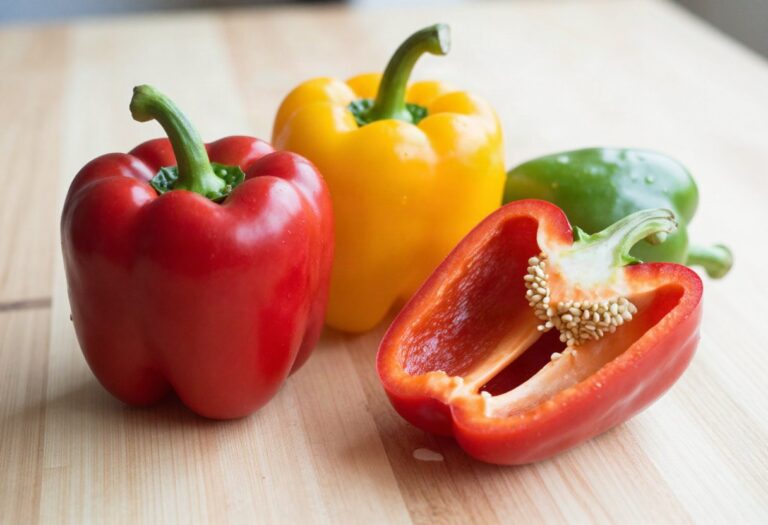
The pepper belongs to the nightshade family and comes in several colours: green, yellow, red and even orange depending on how ripe it is. Crunchy, juicy and slightly sweet once ripe, it suits raw salads as well as slow-cooked dishes. With only 22.6 kcal per 100 g, it is a low-calorie vegetable, rich in water and vitamin C, perfectly suited to a balanced diet. Its good fibre and antioxidant content make it a great ally for adding colour to your plate. Versatile and inexpensive, the pepper appeals to everyday cooks as well as to athletes watching their figure.
Macronutrient breakdown
Nutrition table per 100 g
| Calories | 23 kcal |
| Kilojoules | 95 kJ |
| Protein | 0,8 g |
| Carbohydrate | 3,5 g |
| Fat | 0,3 g |
| Fibre | 1,5 g |
Micronutrients per 100 g
All measured nutrients, ranked by share of the daily reference intake.
- Vitamin C121 mg151 %
- Vitamin B60,38 mg27 %
- Vitamin A70,5 µg9 %
- Potassium155 mg8 %
- Manganese0,1 mg5 %
- Vitamin B30,74 mg5 %
- Vitamin B10,04 mg4 %
- Phosphorus22,5 mg3 %
- Vitamin B9dietary folate equivalents40,7 µg
See the other 9 nutrients
- Magnesium11,9 mg3 %
- Vitamin B20,04 mg3 %
- Iron0,4 mg3 %
- Vitamin B50,12 mg2 %
- Zinc0,13 mg1 %
- Omega-3 ALA0,03 g1 %
- Calcium7,7 mg1 %
- Omega-6 LA0,09 g1 %
- Selenium0,1 µg0 %
Anses Ciqual 2025. Source: Anses, 2025, Ciqual food composition table
Tips
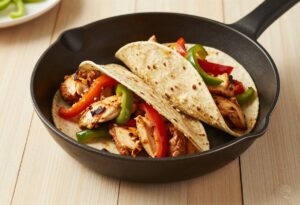
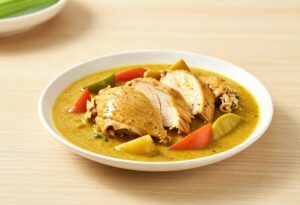
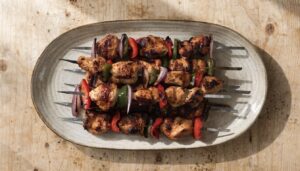
The pepper is best enjoyed raw to get the full benefit of its vitamin C and its crunch: cut into strips in a salad, in sticks to dip in a yoghurt sauce, or in colourful bowls. Cooked, it reveals a milder, sweeter flavour: grilled in the oven, pan-seared on a griddle, stuffed, simmered in ratatouille or used in a piperade. To preserve its nutritional values, choose gentle cooking, which limits the loss of vitamins.
As for nutrients, the pepper is an excellent source of vitamin C (red contains even more than green), provitamin A and antioxidant compounds such as carotenoids. Its fibre (1.5 g per 100 g) promotes fullness and healthy digestion. With a low glycaemic index and only 3.5 g of carbohydrate, it fits easily into a weight-loss plan or a balanced diet.
- Recommended portion: 80 to 150 g per meal, the equivalent of half a pepper to a whole one.
- Seasonality: from June to October, when it is most fragrant and cheapest.
- Storage: up to a week in the fridge; it also freezes very well once deseeded and cut.
- Pairings: tomato, courgette, onion, garlic and olive oil for a Mediterranean touch.
For active people, the pepper is useful as a light snack or a side after exercise: its richness in water helps hydration and its vitamin C supports the body during periods of intense training. Low in calories, it ideally complements a protein source and complex carbohydrate without weighing down the meal. You can include it in your batch cooking so you always have vegetables ready to eat.
The pepper goes wonderfully with other seasonal vegetables such as courgette or aubergine. Discover more ideas in the vegetables family. Point to watch: raw, some peppers can be hard to digest for sensitive stomachs; removing the thin skin after grilling them then improves digestibility. With its nutritional benefits and low calorie density, the pepper remains a vegetable to eat generously and without particular restraint.