Group · Seafood
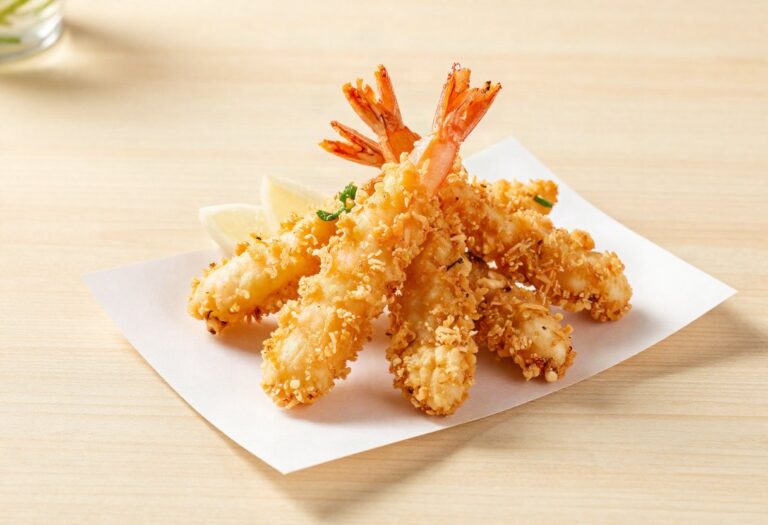
Breaded fried prawns
The breaded fried prawn is a fast-food dish much loved for its crunchy texture and tender flesh. It is a peeled prawn coated in breadcrumbs or batter, then deep-fried. You will find it frozen in supermarkets, as tempura in Asian restaurants, in seafood restaurants or as a nibble with drinks. At around 260 kcal per 100 g, it provides little protein (6.5 g), fat from the frying (10 g) and above all carbohydrate from the coating (35.5 g). Plain cooked prawns give 100 kcal and 22.5 g of protein: the coating and the frying completely change the profile. An indulgent food to enjoy occasionally rather than every day.
Macronutrient breakdown
Nutrition table per 100 g
| Calories | 260 kcal |
| Kilojoules | 1090 kJ |
| Protein | 6,5 g |
| Carbohydrate | 35,5 g |
| Fat | 10 g |
| Fibre | 1 g |
Micronutrients per 100 g
All measured nutrients, ranked by share of the daily reference intake.
- Selenium41,7 µg76 %
- EPA0,06 g24 %
- DHA0,05 g20 %
- Iodine22 µg15 %
- Calcium77 mg10 %
- Iron1 mg7 %
- Potassium102 mg5 %
- Zinc0,5 mg5 %
See the other 2 nutrients
- Magnesium18,1 mg5 %
- Total omega-30,11 g4 %
Anses Ciqual 2025. Source: Anses, 2025, Ciqual food composition table
Tips
Breaded fried prawns win people over with their crunch, but deep-frying concentrates the calories and the fat. To keep them in their proper place, here are some good habits.
- Reasonable portion: allow 5 to 7 prawns as a side, or 80 to 100 g (about ten) as a main course with vegetables. Keep them as an occasional food.
- Drain off the oil: place the prawns on kitchen paper to remove the excess oil and lighten the fat intake.
- Alternative cooking: in the oven or an air fryer, you keep the crunch with much less fat. Frozen versions are cooked straight from the freezer, without thawing, to preserve their texture.
- Smart pairings: serve them with a crunchy salad, brown rice or raw vegetables rather than chips, which would double the intake of frying fat.
As for sauces, mayonnaise quickly adds up. A little ketchup, a reduced-salt soy sauce or a homemade yoghurt and lemon sauce are lighter. To add flavour without unnecessary calories: a squeeze of lemon, fresh coriander, sesame seeds or a ginger marinade.
What the coating changes: prawns are naturally low in carbohydrate and rich in protein, iodine, selenium and vitamin B12. In the breaded, fried version, the breadcrumbs provide most of the carbohydrate (35.5 g, of which 11 g sugars), the salt rises to 1.9 g per 100 g and fibre is almost absent (1 g): hence the value of adding vegetables. To compare with other breaded products, the breaded fish fillet or fish fingers are at 194 kcal per 100 g, with almost twice as much protein.
For active people: with 6.5 g of protein per 100 g, this is a modest source, and the fatty coating slows digestion: not ideal before exercise. Keep it for a meal away from training, in moderate amounts. For a clean protein intake after your session, rely on less fatty sources or a protein snack, and find our guidelines on fitness nutrition.
Weight control: the combination of frying and coating pushes up the calorie density. If you are watching your weight, space out the occasions, control the portions and favour oven cooking. To vary things without overdoing it, explore the products in the seafood family, ideally steamed or grilled. Enjoyed in moderation, breaded fried prawns have their place in a balanced diet.