How much fish a week? Two portions, one of them oily fish
The short answer
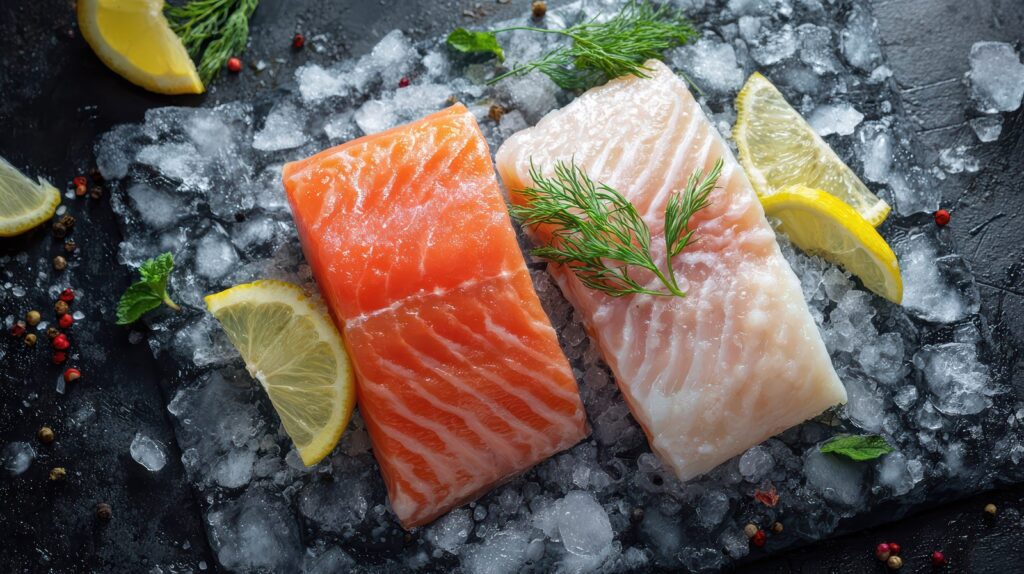
Two portions of fish a week, one of them oily fish: that is the Anses recommendation. Oily fish, sardine, mackerel, herring, salmon or trout, provides the long-chain omega-3 that is hard to find elsewhere. During pregnancy and before the age of three, you should also avoid swordfish, marlin, shark and lamprey, because of mercury.
The recommendation in detail
| Who for | What Anses advises |
|---|---|
| General population | 2 portions a week, 1 of them oily fish; vary the species and where they come from; eel only as an exception |
| Pregnant women, children under 3 | Same frequency, but avoid swordfish, marlin, siki, shark and lamprey; limit wild predatory fish (tuna, sea bass, sea bream, monkfish, halibut, pike, skate and so on); avoid raw, smoked or undercooked fish and raw shellfish |
| Breastfeeding women | Limit swordfish, marlin, shark and wild predatory fish |
Why oily fish
| Fish, 100 g | Omega-3 EPA + DHA | Days of the reference covered |
|---|---|---|
| Sardines in tomato sauce, tinned | 2,770 mg | 5.5 |
| Herring, grilled | 2,280 mg | 4.6 |
| Mackerel, cooked | 2,140 mg | 4.3 |
| Salmon, cooked | 2,020 mg | 4 |
| Cod, cooked | 260 mg | 0.5 |
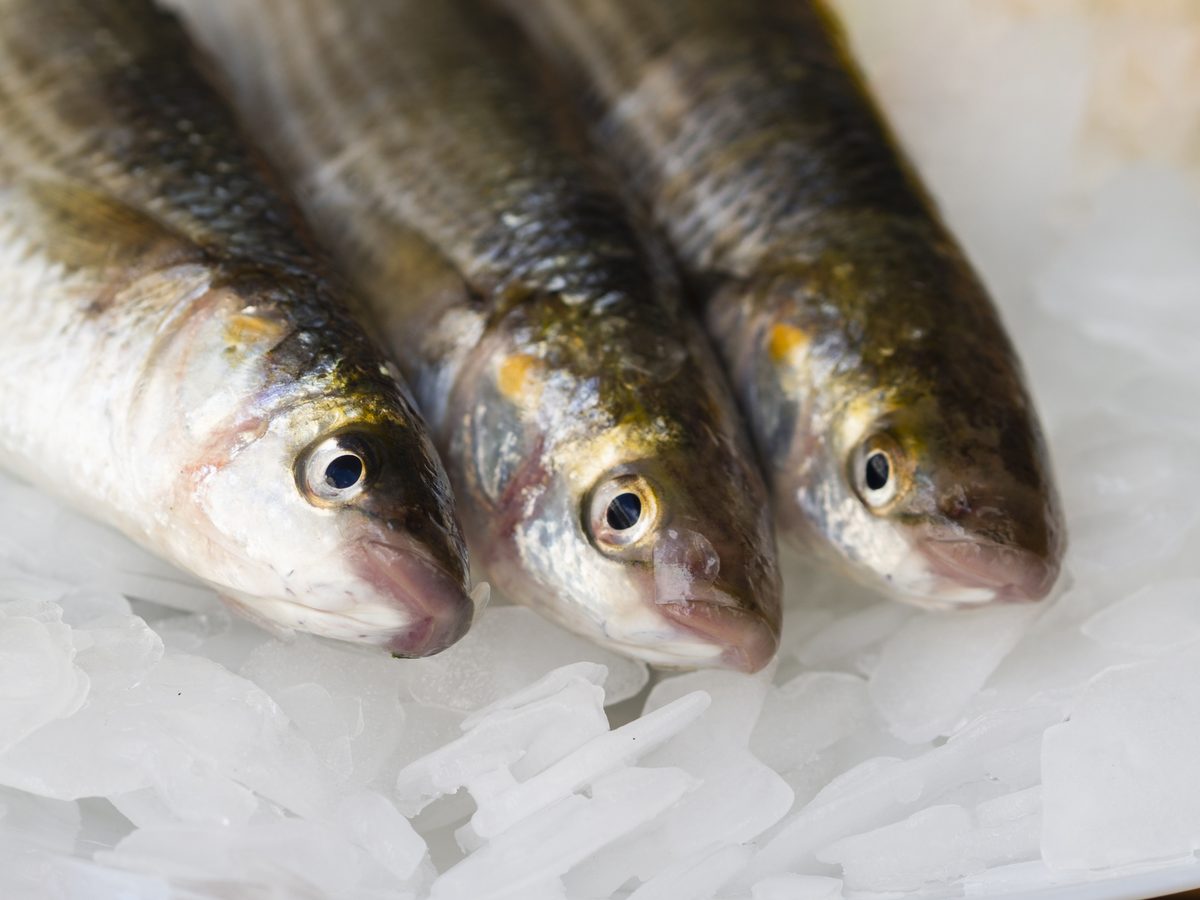
One portion of sardines and one portion of salmon in the week provide 4,790 mg of EPA and DHA, more than the 3,500 mg weekly reference. Two portions of cod provide only 520 mg. That is why the recommendation specifies « one of them oily fish »: white fish is an excellent source of protein, not of omega-3. The full ranking is in our guide to foods high in omega-3.
Varying to limit contaminants
Fish also accumulate contaminants, including methylmercury, especially large predators at the top of the food chain. That is the reason for the advice to vary the species and where they come from, and for the stricter limits for pregnancy and young children. Small oily fish, sardine, herring and mackerel, combine the advantages: rich in omega-3, easy to find tinned, and not on the list of predators to limit.
Raw fish: the 7-day rule
To eat raw fish at home, in sushi, tartare or ceviche, Anses advises gutting it quickly and then freezing it for 7 days in a domestic freezer before eating it. During pregnancy and before the age of three, raw fish and smoked fish should be avoided.
What fish provides beyond omega-3
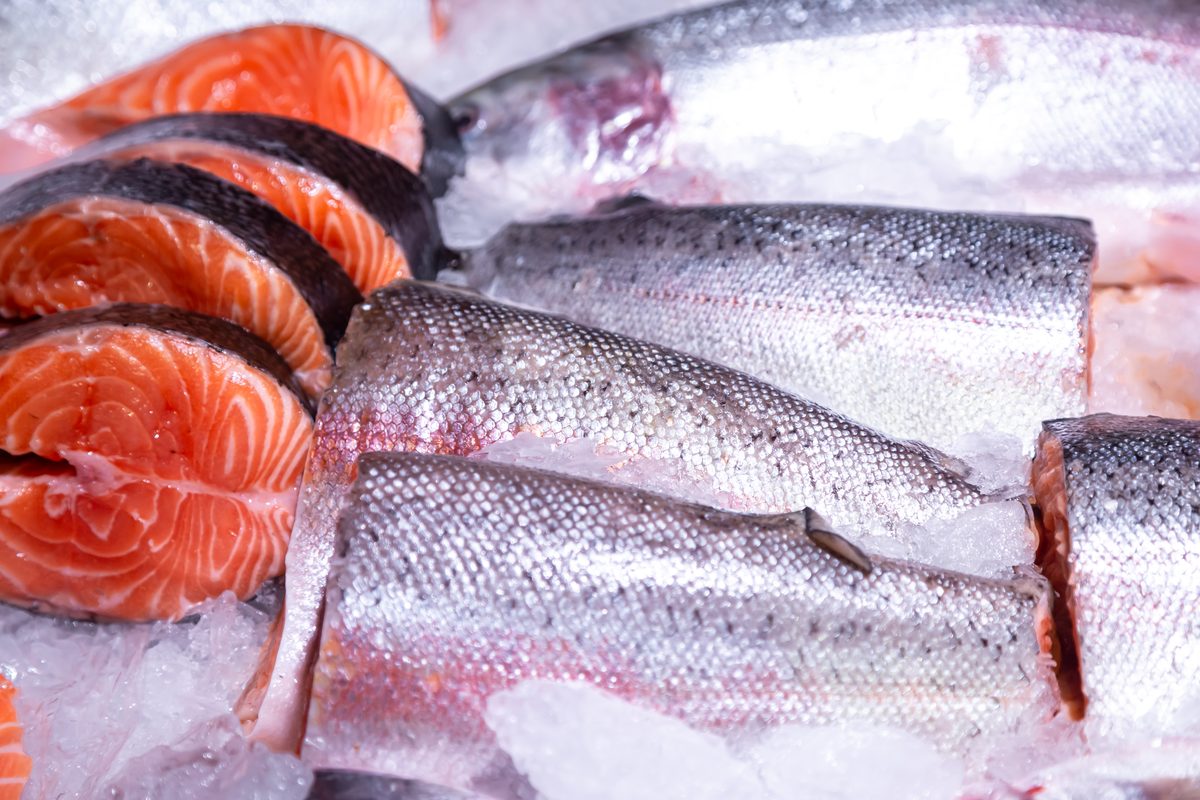
Fish is often reduced to its omega-3. It does, however, provide other nutrients that are hard to find elsewhere, and this is where lean fish regains the advantage:
| Per 100 g cooked | Vitamin D | Iodine | Selenium | Vitamin B12 | Calcium |
|---|---|---|---|---|---|
| Sardines in tomato sauce, tinned | 12.5 µg | 45 µg | 38 µg | 9.9 µg | 378 mg |
| Grilled herring | 10.8 µg | 48 µg | 46 µg | 14.1 µg | 77 mg |
| Steamed salmon | 8.7 µg | 17 µg | 19 µg | 3.1 µg | 9 mg |
| Baked mackerel | 7.7 µg | 46 µg | 52 µg | 19 µg | 13 mg |
| Tuna in brine, tinned | 5.1 µg | 16 µg | 305 µg | 2.5 µg | 6 mg |
| Baked cod | 1.2 µg | 130 µg | 22 µg | 1.5 µg | 18 mg |
| Cooked pollack | 0.7 µg | 150 µg | 22 µg | 0.9 µg | 19 mg |
The vitamin D in oily fish
A 100 g portion of sardines or herring provides 11 to 12.5 µg of vitamin D, close to the 15 µg daily reference. In its 2016 opinion, Anses also notes that meeting vitamin D needs is not achievable with the current food supply and eating habits: oily fish is one of the few dietary levers. The full ranking is in our guide to foods high in vitamin D.
The iodine in white fish
Cod and pollack, low in omega-3, are on the other hand among the best sources of iodine: 130 to 150 µg per 100 g, the equivalent of the daily reference. That is a good argument for alternating oily and lean fish, as the recommendation suggests. See our ranking of foods high in iodine.
The calcium in tinned sardines
Tinned sardines provide 333 to 378 mg of calcium per 100 g according to Ciqual, about three times more than 100 ml of semi-skimmed milk. Grilled sardine contains 130 mg, far less. This is an asset for those who eat few dairy products.
What the studies say
In its 2016 opinion on the PNNS guidelines, Anses took stock of the links between fish and chronic diseases:
- Cardiovascular disease: eating fish lowers the risk, with a level of evidence judged probable. Each additional weekly portion is associated with 6% lower coronary mortality, and two more portions a week with 4% fewer strokes.
- Dementia: Anses takes up the conclusion of an Australian report that fish is associated with a lower risk, with a probable level of evidence.
- Type 2 diabetes: results differ between countries and methods of preparation. Anses asks for further studies.
- Salted, smoked or high-temperature-cooked fish: it would be associated with a higher risk of prostate cancer, with a level of evidence only « limited but suggestive ».
Anses’s conclusion: average consumption of oily fish in France is insufficient and should increase, following the rule of two portions a week, one of them oily fish, varying the species and where they come from.
Mercury: the dose not to exceed
The reason for the precautions around large predators is methylmercury. In 2012 EFSA set a tolerable weekly intake of 1.3 µg per kilo of body weight, or about 78 µg a week for a person weighing 60 kg. In 2026, after examining a lower value proposed by a US agency, it confirmed that this intake remained valid, while considering that an update of its 2012 opinion might be justified.
The maximum mercury levels allowed in the European Union range from 0.3 to 1 mg per kilo depending on the species, as EFSA points out. An EFSA survey carried out in 2023 and 2024 in 29 European countries shows that fish consumption is increasing, but that awareness of contaminants remains low, and that national advice, slightly better known to pregnant women, changes habits little.
In practice, small oily fish, sardine, mackerel and herring, remain the best choice for combining omega-3 and limiting mercury. During pregnancy, the detail of which fish are allowed is in our guides on tinned tuna in pregnancy and sushi in pregnancy.
Fresh, frozen, tinned, breaded or smoked?
Santé publique France is clear on this: fish can be eaten in any form, fresh, frozen or tinned. Not all forms are equal, however:
| Per 100 g | Protein | EPA + DHA | Salt |
|---|---|---|---|
| Sardines in oil, tinned | 23.3 g | 1.67 g | 0.88 g |
| Mackerel in sauce, tinned | 18.8 g | 2.96 g | 0.92 g |
| Tuna in brine, tinned | 26.8 g | 1.07 g | 0.74 g |
| Smoked salmon | 22.2 g | 1.42 g | 2.86 g |
| Lightly smoked herring | 18.1 g | 1.05 g | 3.78 g |
| Breaded fish, fried | 11.9 g | 0.42 g | 0.84 g |
- Tinned fish, sardines and mackerel, is a practical, inexpensive way to get the week’s oily fish.
- Smoked fish counts, but it is very salty: 100 g of smoked salmon provides 2.9 g of salt, more than half of the WHO limit of 5 g a day. It should be avoided during pregnancy and before the age of three.
- Breaded fish contains half as much protein as plain fish, and little omega-3. It counts as a portion, but not as your oily fish.
More fish, always better?
The recommendation sets a minimum, not a maximum. The large meta-analyses suggest that the benefit does not keep increasing indefinitely:
- A 2018 meta-analysis pooled 14 cohorts and more than 911,000 participants. Each extra 20 g of fish a day was associated with 4% lower cardiovascular mortality. But in Western studies, the curve was more U-shaped, with a low point around 20 g a day, or about 140 g a week. The authors stress large differences between countries and call for attention to the type of fish and how it is prepared.
- In people with type 2 diabetes, a meta-analysis of 9 cohorts and 57,394 patients, published in 2021, found 14% lower mortality among the biggest consumers, with a plateau at around 2 to 3 portions a week. The authors suggest the benefit might partly come from fish replacing red meat and processed meat.
- For prostate cancer, a 2023 meta-analysis covering more than 1.2 million men found no link between fish and cancer risk, but lower mortality from this cancer among the biggest consumers. This qualifies the « limited but suggestive » association noted by Anses for salted, smoked or high-temperature-cooked fish, which concerns those methods of preparation.
These observational studies confirm the value of two portions a week, without justifying eating it at every meal. Variety remains the rule, for nutrients as for contaminants.
If you do not eat fish
Long-chain omega-3, EPA and DHA, are found almost only in seafood. Anses sets the requirement at 250 mg of DHA and 500 mg of EPA and DHA a day for adults. It also points out that plant omega-3, the alpha-linolenic acid in walnuts, rapeseed or flax, is converted to DHA by the body at a very low rate: it therefore does not replace fish.
If you are vegetarian or do not like fish, the subject is worth discussing with your doctor or a dietitian, especially during pregnancy and breastfeeding, when DHA needs matter for the baby’s development. Eggs, dairy products and pulses cover protein, but not these omega-3. The full picture is in our guide omega-3: roles, sources and supplementing properly.
Storing it properly
Anses gives a few simple rules for fresh fish and seafood:
- Carry it home in a cool bag.
- Gut it quickly, or ask the fishmonger to do so.
- Store it in the coldest part of the fridge, between 0 and 4 °C, and ideally eat it the same day, within 48 hours at the latest.
- Cook fresh fish right through.
- Eat raw shellfish and seafood within two hours of taking them out of the fridge, and only if they come from an authorised, controlled farming area.
For older people or those with weakened immune systems, Anses also advises avoiding raw or lightly cooked shellfish and peeled crustaceans sold cooked: it is better to cook crustaceans yourself.
Two portions in your week
A few recipes on the site to keep up the pace without thinking about it:
- Oily fish: baked mustard mackerel, grilled sardines with lemon, spaghetti with sardines and tomato or homemade mackerel rillettes made with a tin.
- Lean fish: baked cod or white fish and vegetable parcel.
Frequently asked questions
How many times a week should you eat fish?
Twice, one of them oily fish, according to Anses.
Which fish are oily fish?
Sardine, mackerel, herring, salmon and trout, as cited by Anses. Tinned, sardine and pilchard are among the richest in omega-3.
Which fish should you avoid during pregnancy?
Swordfish, marlin, siki, shark and lamprey. You should also limit wild predatory fish such as tuna, and avoid raw, smoked or undercooked fish.
Does tinned tuna count?
Yes as a portion of fish, but tuna is one of the wild predators to limit during pregnancy, and cooked tuna provides only 510 mg of omega-3 per 100 g according to Ciqual, five times less than tinned sardines.
Can you eat fish every day?
Anses sets no maximum for the general population, but advises varying the species and where they come from to limit exposure to contaminants.
Can you replace fish with walnuts or flax?
Not for long-chain omega-3. Anses points out that plant omega-3 is converted to DHA at a very low rate, and the DHA requirement is 250 mg a day for adults.
Fish and allergy: what to watch for?
Fish, crustaceans and molluscs are among the allergens in Annex II of European Regulation No 1169/2011: their presence must be flagged in the ingredients list, including in sauces, surimi and ready meals.
Does frozen or tinned fish count?
Yes. Santé publique France specifies that fish can be eaten fresh, frozen or tinned. Tinned sardines and mackerel are even among the richest in omega-3.
How long can you keep fresh fish in the fridge?
Anses advises eating it ideally on the day of purchase, or within 48 hours, stored between 0 and 4 °C.
Which fish provides the most vitamin D?
Oily fish: 12.5 µg per 100 g of sardines in tomato sauce and 10.8 µg for grilled herring according to Ciqual, against 1.2 µg for cod.
Does breaded fish count as fish?
As a portion of fish, yes, but it contains half as much protein as plain fish and little omega-3: it is not an oily fish.
Other guides on how much to eat
how many seeds a day, how many almonds a day, how much coffee a day, how much sugar a day, how much red meat a week, how much cheese a day, how many walnuts a day, how many eggs a day, how many bananas a day, how much water to drink a day, how much dark chocolate a day, how much rice per person, how much pasta per person.
Our sources
- Anses, Poissons et produits de la pêche, conseils de consommation, February 2016.
- Anses, update of recommended nutritional intakes for fatty acids, 2011.
- Table Ciqual 2025 (Anses), EPA and DHA.
- Anses, Actualisation des repères du PNNS : révision des repères de consommations alimentaires, opinion and report, December 2016.
- Santé publique France, Recommandations relatives à l’alimentation, à l’activité physique et à la sédentarité pour les adultes, 2019.
- EFSA, Statement on the findings presented in the Toxicological Profile for Mercury issued by the US ATSDR, EFSA Journal, 2026. PMID 42339055.
- EFSA, Frequency of consumption of different fish, crustacean and mollusc species contributing to methylmercury exposure and consumer awareness of national advice on their consumption, EFSA Journal, 2026. PMID 41696490.
- Anses, update of recommended nutritional intakes for fatty acids, 2011.
- Jayedi A et al. Fish consumption and risk of all-cause and cardiovascular mortality: a dose-response meta-analysis of prospective observational studies. Public Health Nutrition, 2018. PMID 29317009.
- Jayedi A et al. Fish consumption and the risk of cardiovascular disease and mortality in patients with type 2 diabetes: a dose-response meta-analysis of prospective cohort studies. Critical Reviews in Food Science and Nutrition, 2021. PMID 32410513.
- Eshaghian N et al. Fish consumption and risk of prostate cancer or its mortality: an updated systematic review and dose-response meta-analysis of prospective cohort studies. Frontiers in Nutrition, 2023. PMID 37593679.
- Regulation (EU) No 1169/2011, Annex II: allergens.
- WHO, guideline on sodium intake: less than 5 g of salt a day for adults.