How much dark chocolate a day? 10 to 20 g, and why
The short answer
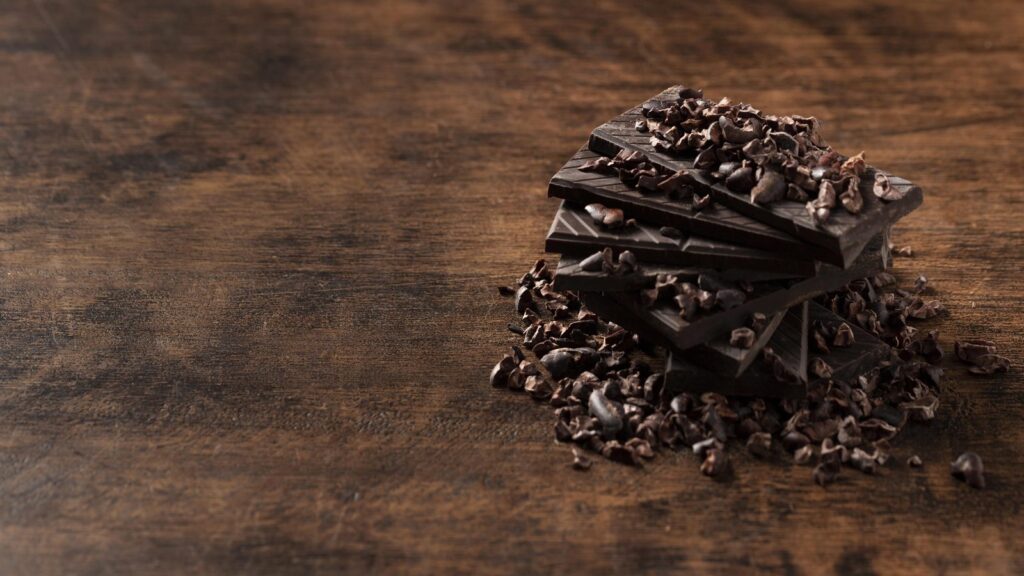
10 to 20 g of dark chocolate a day, which is two to four squares depending on the bar. There is no official guideline specific to chocolate: Manger Bouger (the French public health nutrition campaign) puts it among the sugary and fatty products to limit. This 10 to 20 g guideline comes from a simple calculation: 20 g of 70% dark chocolate gives 118 kcal and 3.6 g of sugars, and already provides 40 mg of magnesium and 2.2 mg of iron. Beyond 50 g a day, every day, chocolate weighs heavily on calories, saturated fat and, in the worst case, cadmium exposure.
Why there is no official figure
The PNNS (the French national nutrition and health programme) guidelines cover food groups: fruit and vegetables, starchy foods, dairy products, nuts. Chocolate has no guideline of its own. Santé publique France, through the PNNS, classes it with the fatty, sugary and salty products whose consumption should be limited, without giving a ceiling in grams.
The figure you find everywhere, “one or two squares”, is therefore not a recommendation from a health authority. Rather than repeating it as it stands, we did the calculation from three limits that are official:
- Sugar: the WHO recommends less than 10% of energy from free sugars, and ideally less than 5%, which is about 25 g a day for an adult on 2,000 kcal. 20 g of 70% chocolate uses 3.6 g of that, a seventh of the ideal budget.
- Saturated fat: the European labelling reference intake is 20 g a day. 20 g of 70% chocolate provides 5.7 g, nearly 30%.
- Cadmium: EFSA sets a tolerable weekly intake of 2.5 µg per kilo of body weight. We explain below why 20 g a day stays under this threshold even in the worst case for an adult.
At 20 g, all three limits are respected with room to spare. At 50 g a day, the margin disappears for saturated fat and shrinks markedly for cadmium.
How much does a square of chocolate weigh?
This is the real difficulty: a square does not weigh the same from one brand to another. The only reliable method is to divide the weight of the bar by its number of squares, counting them once.
| 100 g bar divided into | Weight of one square | Squares for 10 g | Squares for 20 g |
|---|---|---|---|
| 10 squares | 10 g | 1 | 2 |
| 20 squares | 5 g | 2 | 4 |
| 24 squares | about 4 g | 2 to 3 | 5 |
For 200 g bars or baking formats, the principle is the same. Discs and individually wrapped squares often show their unit weight on the label: that is the information to read first.
What a portion gives you
The figures below come from the Anses Ciqual 2025 table, the line “dark chocolate about 70% cocoa, eating chocolate, bar”, the same as that of our dark chocolate page.
| Amount | Calories | Sugars | Fibre | Magnesium | Iron | Saturated fat |
|---|---|---|---|---|---|---|
| 10 g | 59 kcal | 1.8 g | 1.3 g | 20 mg | 1.1 mg | 2.9 g |
| 20 g | 118 kcal | 3.6 g | 2.6 g | 40 mg | 2.2 mg | 5.7 g |
| 30 g | 177 kcal | 5.4 g | 3.8 g | 60 mg | 3.3 mg | 8.6 g |
| 50 g | 296 kcal | 9.0 g | 6.4 g | 100 mg | 5.5 mg | 14.4 g |
| 100 g, one bar | 591 kcal | 17.9 g | 12.8 g | 200 mg | 11 mg | 28.7 g |
Compared with the European labelling reference values (EU Regulation No 1169/2011), 20 g of 70% dark chocolate covers:
| Nutrient | 20 g provides | Reference value | Share covered |
|---|---|---|---|
| Copper | 0.32 mg | 1 mg | 32% |
| Manganese | 0.34 mg | 2 mg | 17% |
| Iron | 2.2 mg | 14 mg | 16% |
| Magnesium | 40 mg | 375 mg | 11% |
| Energy | 118 kcal | 2,000 kcal | 6% |
Dark chocolate is therefore above all a source of copper, a nutrient rarely talked about, followed by manganese, iron and magnesium. Two caveats are needed. The iron in cocoa is non-haem iron, less well absorbed than that from meat: our guide to foods rich in iron explains how to pair it with vitamin C. And for magnesium, chocolate remains a top-up: pulses, nuts and seeds and some mineral waters do better without the sugar, as our ranking of foods rich in magnesium shows.
The cocoa percentage changes everything
The word “dark” covers very different products. Between a 50% chocolate and a 70% chocolate, the sugar is more than halved and the magnesium doubled.
| 20 g of | Calories | Sugars | Fibre | Magnesium | Iron |
|---|---|---|---|---|---|
| 70% dark chocolate | 118 kcal | 3.6 g | 2.6 g | 40 mg | 2.2 mg |
| 50% dark chocolate | 104 kcal | 9.3 g | 1.7 g | 20 mg | 0.7 mg |
| Dark baking chocolate | 109 kcal | 8.3 g | 1.8 g | 26 mg | 0.9 mg |
| Milk chocolate | 110 kcal | 11.3 g | 0.6 g | 12 mg | 0.7 mg |
| White chocolate | 113 kcal | 11.2 g | 0.2 g | 5 mg | 0.04 mg |
Three practical takeaways:
- Calories barely change: from 104 to 118 kcal per 20 g. Switching from milk to dark chocolate does not make you lose weight, it is the sugar and minerals that change.
- Sugar is cut by a factor of three between milk chocolate and 70% dark, for the same weight.
- White chocolate contains no cocoa solids, only cocoa butter, the fatty part: it provides almost no minerals.
What about 85 or 90% chocolates? The Ciqual table has no dedicated line, so we do not give figures. The logic stays the same: more cocoa, less sugar, a little more fat. Read the label: the nutrition table is compulsory.
The case of “no added sugar” chocolate
Dark chocolate with no added sugar, made with sweeteners, is not lower in calories: 525 kcal per 100 g according to Ciqual, against 591 kcal for 70%. It replaces sugar with polyols, 28.9 g per 100 g, or 5.8 g in 20 g. Above 10% polyols, European regulations require the statement “excessive consumption may produce laxative effects”. Our guide to maltitol covers this point in detail. For most people, a 70% or higher dark chocolate in small quantities is a better choice.
What can really be said about flavanols
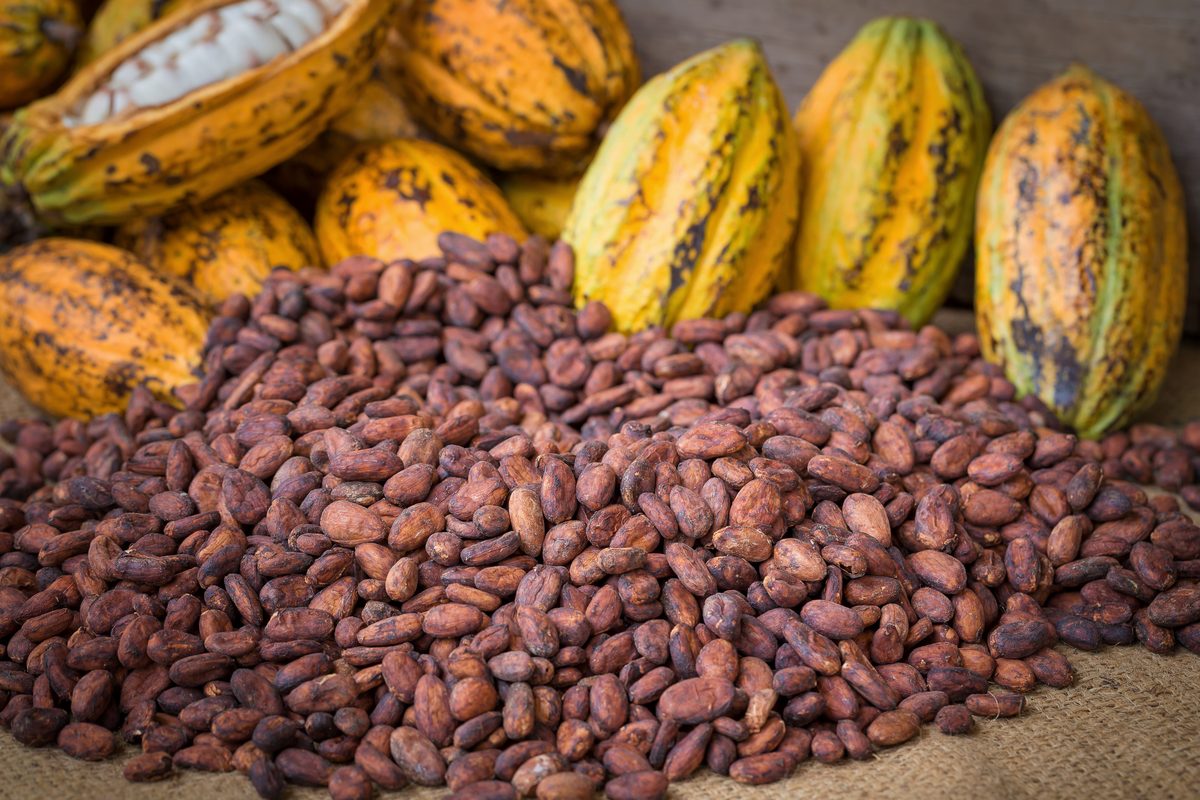
Cocoa contains flavanols, polyphenols studied for their effects on blood vessels. Only one health claim is authorised for chocolate in the European Union (EU Regulation No 851/2013, after a favourable EFSA opinion): “cocoa flavanols help maintain the elasticity of blood vessels, which contributes to normal blood flow”.
The detail matters: the effect is obtained with 200 mg of cocoa flavanols a day, provided by 10 g of a dark chocolate specially made to stay rich in flavanols, or 2.5 g of a cocoa powder of the same type. The claim belongs to a manufacturer and does not apply to just any bar: roasting and alkalising cocoa destroy part of the flavanols, and the content is not shown on ordinary packaging.
In humans, the largest trial to date, COSMOS (Sesso et al., 2022, more than 21,000 participants), tested a cocoa extract at 500 mg of flavanols a day for 3.6 years on average. It did not significantly reduce overall cardiovascular events, but deaths from cardiovascular causes were 27% fewer. It was a capsule supplement, not chocolate: we cannot conclude that a bar protects the heart. For other sources of polyphenols, see our guide to antioxidant foods.
And what about saturated fat?
With 28.7 g of saturated fat per 100 g, 70% dark chocolate contains a lot. But its nature is particular: according to Ciqual, 15.8 g is stearic acid, more than half. A systematic review carried out for the WHO (Mensink, 2016) showed that stearic acid, unlike lauric, myristic and palmitic acids, does not raise LDL cholesterol compared with carbohydrate.
Dark chocolate also contains 12 g of palmitic acid per 100 g, which does raise LDL. The reasonable conclusion: the profile of cocoa butter is less unfavourable than that of dairy butter, but 50 g of chocolate a day provides 14.4 g of saturated fat, more than two thirds of the reference value. This is one of the reasons we set the guideline at 20 g.
When is it too much?
There is no toxic dose of chocolate for a healthy adult. The limits are of three kinds.
Calories
This is the most concrete limit. 50 g a day gives 296 kcal, and a whole bar 591 kcal, nearly a third of the needs of a sedentary woman. Added without cutting anything else, chocolate leads to weight gain like any energy-dense food.
Cadmium
Cocoa naturally concentrates the cadmium present in some soils, especially in Latin America. The European Union sets a maximum level of 0.80 mg per kilo for chocolates with 50% or more cocoa dry matter (EU Regulation 2023/915). EFSA sets the tolerable weekly intake at 2.5 µg per kilo of body weight.
Let us do the calculation in the worst case, with a chocolate at the legal ceiling:
| Consumption | Cadmium per week at the legal ceiling | 60 kg adult (150 µg tolerable) | 25 kg child (62.5 µg tolerable) |
|---|---|---|---|
| 10 g a day | 56 µg | 37% | 90% |
| 20 g a day | 112 µg | 75% | 179% |
| 50 g a day | 280 µg | 187% | 448% |
This table overestimates real exposure: 0.80 mg/kg is a permitted maximum, not an average content, and many chocolates contain less. But chocolate adds to the cadmium from cereals, bread and potatoes, which are the main sources according to EFSA. Two conclusions: in adults, 20 g a day leaves a margin; in children, very high-cocoa dark chocolate should not become a daily habit. Varying brands and origins also limits the risk of landing on a heavily loaded bar every day.
Caffeine and theobromine
According to the USDA, 70 to 85% dark chocolate contains about 80 mg of caffeine and 802 mg of theobromine per 100 g, which is 16 mg of caffeine per 20 g. EFSA considers up to 400 mg of caffeine a day safe for adults: the portion of chocolate represents 4% of that. Theobromine is a milder stimulant, with no official threshold for humans. The full calculation of caffeine sources is in our guide to how much coffee a day.
Do you have diabetes? See our guide to dark chocolate and diabetes: glycaemic index, choosing a chocolate, and studies.
Depending on your profile
Child
EFSA sets safe caffeine intake in children at 3 mg per kilo per day, which is 75 mg for 25 kg: a square of chocolate provides a few milligrams. The real question is cadmium, see the table above. For a child, a 50 or 70% chocolate from time to time, in small quantities, is more reasonable than a very strong bar every day. Chocolate remains a sugary product: it has its place as an afternoon snack, not for grazing. Our guide to children’s nutrition gives the general framework.
Pregnancy and breastfeeding
Chocolate is not a food at risk of listeriosis or toxoplasmosis. The only point of caution is caffeine: EFSA recommends not exceeding 200 mg a day during pregnancy and breastfeeding. 20 g of dark chocolate, or 16 mg, weighs little, but adds to coffee and tea. See our guides to eating during pregnancy and eating while breastfeeding.
Diabetes
20 g of 70% dark chocolate provides 3.6 g of sugars and 5.4 g of carbohydrate in total, against 11.3 g of sugars for the same amount of milk chocolate. One or two squares of dark chocolate can therefore fit into a diet suited to type 2 diabetes, counted in the carbohydrate of the meal. The simplest way is to have them at the end of a meal rather than on their own. The general framework is in our guide to type 2 diabetes.
Athlete
Dark chocolate is energy-dense and provides magnesium and iron, two minerals drawn on by exercise. It can complement a snack, but it is not a recovery food: 20 g provides only 2.1 g of protein. For muscle gain, see our guide to nutrition and muscle gain.
Older adults
For older people who eat little, a square of dark chocolate can help maintain the pleasure of eating and provide a little energy and minerals. It replaces neither protein nor dairy products, which are the priority for preventing malnutrition.
Acid reflux
Chocolate is among the foods often cited as reflux triggers. Not everyone reacts to it: if you suffer from reflux, watch whether symptoms follow eating chocolate, especially in the evening. See our guide to acid reflux: what to eat.
What time of day
No time is nutritionally better. Two practical guidelines:
- At the end of a meal or as an afternoon snack, rather than grazing in front of a screen, where you quickly lose count of the squares.
- In the evening, 20 g provides 16 mg of caffeine, far less than a coffee. People who are very sensitive to caffeine may still prefer chocolate during the day. Our guide to foods for sleep reviews the question.
How to choose a bar well
- At least 70% cocoa: this is the threshold from which sugar becomes the minor ingredient.
- A short ingredient list: cocoa mass, sugar, cocoa butter, possibly vanilla and an emulsifier. Lecithin is common and has no known problem.
- The nutrition table: compare sugars per 100 g from one bar to another, as they vary a lot at the same percentage.
- Filled bars are a different product: dark chocolate filled with praline contains 48.8 g of sugars per 100 g according to Ciqual, almost three times as much as 70% eating chocolate.
How to fit it in
Dark chocolate is also an ingredient. A few recipes on the site where it plays the leading role:
- Chocolate cake: a slice provides far more than 20 g of chocolate, so save it for occasions.
- Brownie: cut into small squares to keep control of the portion.
- Chocolate chip cookies: choose dark chocolate chips.
Day to day, the simplest idea is to pair two squares with a piece of fruit or a few almonds, for a more filling snack. Unsweetened cocoa powder, in a yoghurt or porridge, gives the taste of chocolate without the sugar: see the unsweetened cocoa page.
Frequently asked questions
How many squares of dark chocolate a day?
Two to four squares, which is 10 to 20 g, depending on the weight of the square. Divide the weight of the bar by the number of squares to find out.
Does dark chocolate make you gain weight?
No more than any other food if the portion stays reasonable: 20 g gives 118 kcal. A whole bar gives 591. It is the quantity, not dark chocolate itself, that makes the difference.
Is eating a bar of dark chocolate a day dangerous?
No immediate danger, but 100 g a day provides 591 kcal, 28.7 g of saturated fat, more than the 20 g reference value, and, in the worst case, more cadmium than the tolerable weekly intake set by EFSA.
Is dark chocolate rich in magnesium?
Yes, 200 mg per 100 g for 70% according to Ciqual. But the reasonable 20 g portion provides only 40 mg, 11% of the reference value: it is a top-up, not the foundation.
What cocoa percentage should you choose?
70% or more. At 70%, 20 g provides 3.6 g of sugars; at 50%, 9.3 g; milk chocolate, 11.3 g.
Is there caffeine in dark chocolate?
Yes, about 80 mg per 100 g according to the USDA, which is 16 mg per 20 g, compared with the 400 mg a day considered safe by EFSA for adults.
Other quantity guidelines
how many seeds a day, how many almonds a day, how much coffee a day, how much sugar a day, how much red meat a week, how much fish a week, how much cheese a day, how many walnuts a day, how many eggs a day, how many bananas a day, how much water to drink a day, how much rice per person, how much pasta per person.
Our sources
- Table Ciqual 2025 (Anses): 70% dark eating chocolate, 50% dark chocolate, dark baking chocolate, dark chocolate with no added sugar, dark chocolate filled with praline, milk chocolate, white chocolate.
- USDA FoodData Central, SR Legacy, “Chocolate, dark, 70-85% cacao solids”: caffeine and theobromine.
- Regulation (EU) No 1169/2011, Annex XIII: labelling reference values; Annex III: compulsory statement for polyols.
- Regulation (EU) No 851/2013: health claim on cocoa flavanols.
- Regulation (EU) 2023/915: maximum levels of cadmium in chocolate; EFSA, opinion on cadmium in food, 2009 and 2011: tolerable weekly intake.
- EFSA, scientific opinion on the safety of caffeine, 2015.
- WHO, guidelines on sugars intake for adults and children, 2015.
- Mensink RP. Effects of saturated fatty acids on serum lipids and lipoproteins: a systematic review and regression analysis. WHO, 2016.
- Sesso HD et al. Effect of cocoa flavanol supplementation for the prevention of cardiovascular disease events: the COSMOS randomized clinical trial. American Journal of Clinical Nutrition, 2022.
- Manger Bouger (Santé publique France), recommendations on sugary and fatty products.


