Tinned tuna when pregnant: allowed, but limit it
The short answer
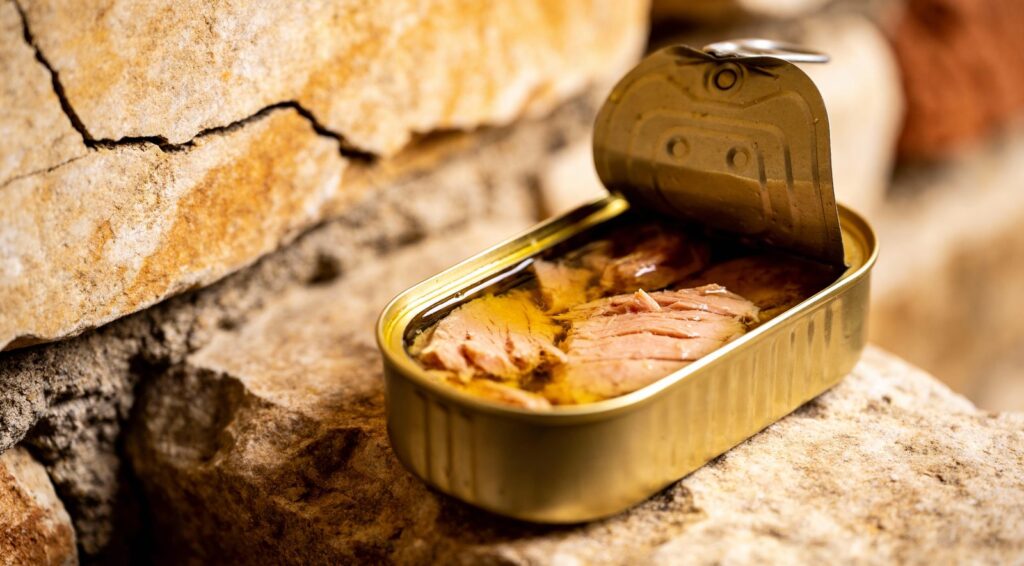
Yes, you can eat tinned tuna when pregnant, but in limited amounts. Tinned tuna is cooked and sterilised: it poses no listeriosis problem. The limit comes from mercury. Tuna is a large predatory fish that accumulates it, and Manger Bouger (French public health guidance) advises limiting eel, monkfish, sea bass, sea bream, skate and « tuna, including tinned » during pregnancy. For your two portions of fish a week, prefer small oily fish, sardines, mackerel and herring, and keep tuna for an occasional portion.
These benchmarks follow the official French recommendations. If in doubt, your midwife or doctor can answer you.
The real risk: mercury
Mercury released into the environment is turned in water into methylmercury, which builds up along the food chain. Large predatory fish, which live a long time and eat other fish, contain the most. Methylmercury crosses the placenta and can affect the development of the baby’s nervous system, hence the stricter advice during pregnancy.
Anses (the French food safety agency), in its 2016 consumption advice, recommends that pregnant women and children under 3 years keep to two portions of fish a week, one of them oily fish, but avoid swordfish, marlin, siki shark, shark and lamprey, and limit wild predatory fish, including tuna.
What the law says about mercury in tuna
The European regulation on food contaminants, (EU) 2023/915, sets a maximum mercury level for each group of fish. Tuna is not grouped with small oily fish, but with swordfish, shark and marlin:
| Fish | Maximum mercury level |
|---|---|
| Tuna, bonito, swordfish, sharks, marlin, halibut, pike, sturgeon… | 1.0 mg/kg |
| Flesh of most other fish, crustaceans | 0.50 mg/kg |
| Sardine, mackerel, herring, anchovy, salmon and trout, cod, pollack, whiting, sole | 0.30 mg/kg |
These figures are ceilings, not usual levels: most tins are below them. But the law allows more than three times as much in tuna as in sardine or mackerel. This is the regulatory translation of Manger Bouger’s advice.
To put the issue in context, EFSA set in 2012 a tolerable weekly intake of 1.3 µg of methylmercury per kilo of body weight, or about 85 µg a week for a woman weighing 65 kg. In the same opinion, it notes that unborn children are the most vulnerable group, and that high fish consumers, who may include pregnant women, can exceed this dose by up to about six times. Hence the value of rotating species rather than eating tuna at every fish meal.
The other risk of tuna: histamine
Beyond mercury, tuna carries a less well-known risk: histamine poisoning, also called scombroid poisoning. It is not specific to pregnancy, but it is common and worth knowing about. Histamine forms when bacteria break down an amino acid that is abundant in the flesh of tuna and mackerel, especially if the fish is left at room temperature. The key point: according to Anses, histamine is destroyed neither by cooking nor by freezing.
Anses and the poison control centres analysed the histamine poisonings that occurred in France from 2012 to 2021:
| Data | Result |
|---|---|
| People poisoned | 543, across 173 meals |
| Share of meals involved linked to tuna | 85%; mackerel 7%, sardines 3% |
| Tinned fish | 10% of the meals involved |
| Grilled fish, so cooked | 55% of the meals involved |
| Time before symptoms appear | 35 minutes on average |
| Symptoms | hives 79%, skin redness 71%, headache 50%, itching 37%, racing heart 33%, nausea 20% |
| Hospitalisations | 4.6% of patients; all recovered |
The symptoms look like an allergy, but it is not one: a person who has been poisoned can eat well-stored tuna again. Product recalls confirm this: the RappelConso database lists 40 tuna recalls for histamine between 2021 and September 2026, mostly loins and steaks of fresh tuna.
The traffic light for tuna
| Form | Pregnant | Why |
|---|---|---|
| Tinned tuna, in brine or in oil | 🟠 limit | cooked fish, but a predator rich in mercury |
| Fresh tuna cooked through | 🟠 limit | same reason |
| Raw tuna: sushi, tataki, tartare, rare tuna | 🔴 avoid | raw fish: listeriosis, parasites; mercury |
| Shop-bought tuna rillettes, from the chilled aisle | 🔴 avoid | ready-to-eat product kept chilled |
| Homemade tuna rillettes or salad, tinned tuna | 🟠 limit | eat within 3 days; counts as a portion of tuna |
| Swordfish, marlin, shark, siki shark, lamprey | 🔴 avoid | very rich in mercury |
| Sardines, mackerel, herring, tinned or cooked | 🟢 favour | small oily fish, rich in omega-3, low in mercury |
Storing tuna properly
Prevention rests entirely on the cold chain. Anses recalls the following rules, which apply during pregnancy as at any other time:
- put fresh tuna in the fridge quickly, or freeze it;
- never leave it at room temperature or in the sun: Anses cites slices of tuna forgotten on the parcel shelf of a car;
- if it is frozen, thaw it quickly and eat it straight away;
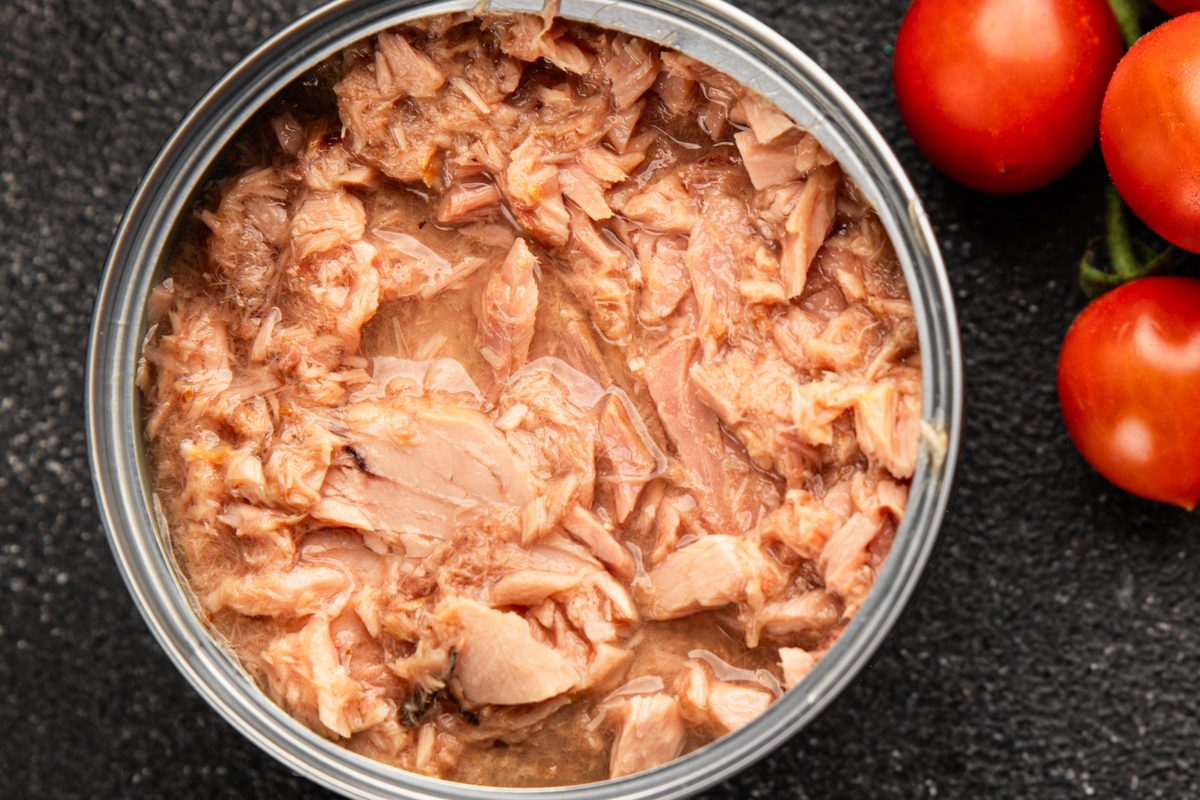
- for tinned tuna: once the tin is open, transfer what is left to a closed container in the fridge, and eat it within 3 days.
Poisonings are more frequent from July to October, when heat encourages histamine to form if the cold chain is broken. In summer, at a picnic or barbecue, keep the fish in a cool box until the last moment.
How much tinned tuna?
The French authorities say « limit », without setting a number of tins. A reasonable benchmark is not to make it your usual fish: one portion of tuna from time to time, not several a week, leaving room for other fish. Varying species and sources of supply is Anses’s basic advice for limiting contaminants. See our guide to how much fish a week.
Tuna or sardine: what you get
| 100 g of | Calories | Protein | DHA | Vitamin D | Iodine |
|---|---|---|---|---|---|
| Tuna in brine, tinned | 143 kcal | 26.8 g | 0.87 g | 5.1 µg | 16 µg |
| Tuna in sunflower oil, tinned | 206 kcal | 23.3 g | 0.09 g | 0.8 µg | less than 20 µg |
| Oven-baked salmon | 214 kcal | 22.1 g | 1.46 g | – | – |
| Oven-baked mackerel | 228 kcal | 21.5 g | 1.34 g | 7.7 µg | 46 µg |
Tinned tuna is an excellent source of protein, but it provides far less omega-3 than oily fish, especially in sunflower oil. For DHA, which is useful for your baby’s brain development, cooked salmon and mackerel provide one and a half times more than tuna in brine, and fifteen times more than tuna in sunflower oil. See our guide to foods high in omega-3.
Sandwiches, salads, onigiri: where the real risk is
Tinned tuna itself is sterilised: in the RappelConso database, the 20 recalls for Listeria involving tuna products since 2021 did not concern tins of tuna, but mostly ready-to-eat preparations made with tuna:
| Type of product recalled for Listeria | Examples |
|---|---|
| Mixed salads | tuna and potato salad, seafood salad with tuna, raw vegetable salad with tuna and egg |
| Sandwiches and snacks | pan bagnat, half baguette with tuna and raw vegetables, tuna « américain » sandwich, tuna onigiri |
| Terrines, rillettes, ready meals | tuna terrine, mackerel and tuna rillettes, tuna penne |
| Smoked or raw tuna | smoked albacore tuna, « sashimi quality » tuna steaks |
The lesson is clear: it is not tinned tuna that is the problem, but what is done with it once it is out of the tin, when it is mixed with other ingredients, prepared in advance and kept chilled for days.
| Product | Pregnant | Advice |
|---|---|---|
| Homemade tuna salad or sandwich, eaten the same day | 🟢 allowed | well-washed raw vegetables, well-cooked hard-boiled egg |
| Deli or tub tuna salad | 🟠 conditional | use-by date, kept cold, eat as soon as opened; homemade is safer |
| Shop-bought tuna sandwich or onigiri | 🟠 conditional | fresh product prepared in advance; raw vegetables eaten away from home are not advised by Ameli (the French health insurance service) |
| Smoked tuna | 🔴 avoid | smoked fish |
| Tataki, tartare, rare tuna | 🔴 avoid | raw fish |
| Fresh tuna steak cooked through | 🟠 limit | mercury; kept well chilled for histamine |
In brine, in oil, in tomato sauce: which tuna to choose?
Not all tins of tuna are equal. For the same 100 g drained portion, the differences are clear:
| Tinned tuna, 100 g drained | Calories | Protein | Fat | EPA + DHA | Salt |
|---|---|---|---|---|---|
| In brine | 143 kcal | 26.8 g | 3.9 g | 1.07 g | 0.74 g |
| Yellowfin in brine | 127 kcal | 24.8 g | 1.5 g | 0.47 g | 0.78 g |
| Albacore in olive oil | 192 kcal | 31.3 g | 7.0 g | 0.82 g | 0.67 g |
| In sunflower oil, whole | 206 kcal | 23.3 g | 12.2 g | 0.11 g | 0.93 g |
| Flakes in tomato sauce | 140 kcal | 13.0 g | 7.7 g | not measured | 1.67 g |
Two lessons. Tuna in brine is the most interesting: rich in protein, low in fat, and it keeps the most omega-3. Tuna in sunflower oil contains almost ten times less, and flakes in tomato sauce have half the protein and twice the salt. Whichever you choose, the mercury rule stays the same: tuna is to be limited during pregnancy, and tinned sardines or mackerel are better habits for omega-3.
Sardines, mackerel, salmon: the other tins compared
For your two portions of fish a week, the cupboard offers better than tuna. Here is what 100 g drained of the main tins provide:
| 100 g drained | Calories | Protein | EPA + DHA | Vitamin D | Calcium | Salt |
|---|---|---|---|---|---|---|
| Tuna in brine | 143 kcal | 26.8 g | 1.07 g | 5.1 µg | 6 mg | 0.74 g |
| Sardines in olive oil | 224 kcal | 23.3 g | 1.77 g | 10.3 µg | 432 mg | 0.79 g |
| Sardines in tomato sauce | 194 kcal | 20.2 g | 2.77 g | 12.5 µg | 378 mg | 0.70 g |
| Boneless sardine fillets, olive oil | 202 kcal | 23.2 g | 1.52 g | 7.4 µg | 108 mg | 1.07 g |
| Mackerel in brine | 221 kcal | 18.8 g | 3.36 g | 4.6 µg | 38 mg | 0.86 g |
| Tinned salmon | 144 kcal | 21.0 g | 1.25 g | 18.1 µg | 181 mg | 1.02 g |
Three lessons. Mackerel in brine provides three times more long-chain omega-3 than tuna in brine. Tinned salmon is the best source of vitamin D in the aisle, 18 µg per 100 g. And whole sardines, bones included, are a real source of calcium: 432 mg per 100 g, against 108 mg for boneless fillets. The bones are eaten with the fish: that is what makes the difference.
A special case: anchovies. They are among the fish to favour according to Santé publique France, but not in just any form. Marinated anchovies, such as boquerones, are marinated fish, which the same source advises against during pregnancy. Salted anchovy fillets in oil contain 13.6 to 15.2 g of salt per 100 g according to Ciqual: they are used as a condiment, in small amounts, cooked in a sauce or on a pizza.
Safe meal ideas
- Grilled sardines with lemon, to be favoured.
- Oven-baked salmon fillet, the oily fish of the week.
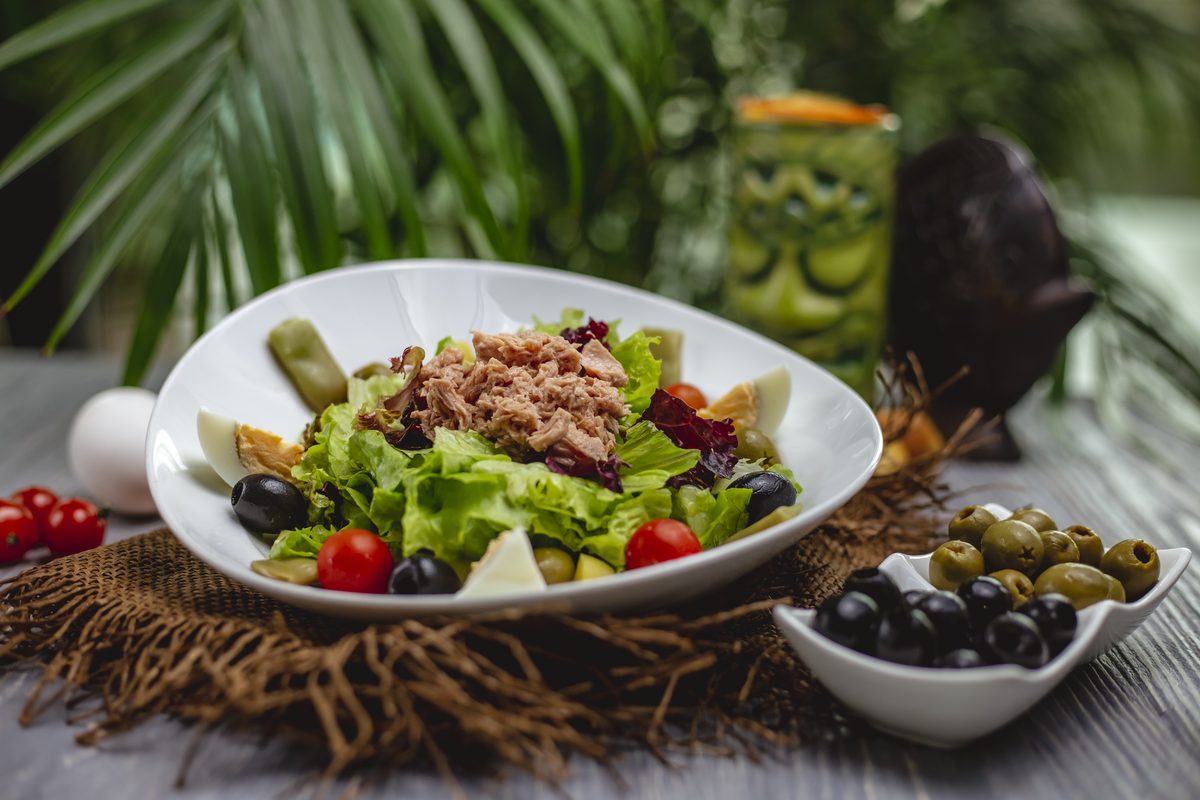
- A tuna pasta salad from time to time, made at home and eaten within 3 days.
- Spaghetti with sardines and tomato, a store-cupboard alternative to tuna.
See also our guides to sushi when pregnant, smoked salmon when pregnant and eating during pregnancy.
And while breastfeeding?
While breastfeeding, Anses still advises limiting swordfish, marlin, shark and predatory fish, including tuna. See our guide to eating while breastfeeding.
Frequently asked questions
Can you eat tinned tuna when pregnant?
Yes, but in limited amounts, because of mercury: Manger Bouger advises limiting tuna, including tinned, during pregnancy.
How many tins of tuna a week during pregnancy?
The authorities set no number: an occasional portion, leaving room for sardines, mackerel and cooked salmon.
Does tinned tuna carry a risk of listeriosis?
No, as long as it is eaten just after opening or kept for 3 days at most: it is cooked and sterilised.
Is rare tuna allowed when pregnant?
No: the raw centre exposes you to the risks of raw fish, on top of the mercury.
Which tinned fish should you favour when pregnant?
Sardines, mackerel and herring: rich in omega-3 and low in mercury.
Can tuna cause a reaction that looks like an allergy?
Yes: histamine poisoning causes hives, redness and headache, on average 35 minutes after the meal. It is due to badly stored tuna, not to an allergy. If you have difficulty breathing or feel faint, call emergency services (15 in France, or 999 in the UK).
Does cooking destroy the histamine in tuna?
No: according to Anses, neither cooking nor freezing destroys histamine that has already formed. Only respecting the cold chain prevents it.
Can tinned tuna contain histamine?
It is rarer, but possible: tinned fish accounted for 10% of the meals involved in the Anses study from 2012 to 2021.
What is the maximum mercury level allowed in tuna?
1.0 mg per kilo under European regulation (EU) 2023/915, as for swordfish and shark, against 0.30 mg per kilo for sardine, mackerel or salmon.
Are tinned sardines rich in calcium?
Yes, with their bones: 432 mg per 100 g of sardines in olive oil according to Ciqual. Boneless fillets provide only 108 mg.
Are anchovies allowed when pregnant?
Yes, well cooked: Santé publique France lists them among the fish to favour. Marinated anchovies are to be avoided, like all marinated fish.
Can you eat it when pregnant? The series
Food by food, what is allowed, conditional or to be avoided during pregnancy: cheesecake when pregnant, foie gras when pregnant, feta when pregnant, mozzarella when pregnant, raclette when pregnant, surimi when pregnant, cured meats when pregnant, smoked salmon when pregnant, tiramisu when pregnant, chorizo when pregnant, taramasalata when pregnant, honey when pregnant, camembert and brie when pregnant, prawns when pregnant, soft-boiled egg when pregnant, sushi when pregnant, cured ham when pregnant, hummus when pregnant.
Our sources
- Manger Bouger (Santé publique France), « Quels aliments éviter et quelles précautions prendre quand on est enceinte ? », 2026 update: « thon y compris en conserve » (tuna including tinned) to be limited.
- Anses, « Poissons et produits de la pêche : conseils de consommation », February 2016.
- Ciqual 2025 table (Anses): tinned tuna in brine and in oil, cooked salmon and mackerel.
- Anses, Vigil’Anses No. 17, « Intoxications à l’histamine : veillez à conserver vos poissons au frais ! », June 2022.
- RappelConso, public dataset of product recalls (data.economie.gouv.fr), tuna, 2021 to September 2026.
- RappelConso, recalls for Listeria of tuna-based preparations, 2021 to September 2026.
- Commission Regulation (EU) 2023/915 of 25 April 2023 on maximum levels for certain contaminants in food, Annex I, section 3.3 (mercury).
- EFSA, CONTAM Panel. Scientific Opinion on the risk for public health related to the presence of mercury and methylmercury in food. EFSA Journal 2012;10(12):2985: tolerable weekly intake of 1.3 µg/kg body weight for methylmercury.
- Santé publique France, guide « De la grossesse à l’arrivée de bébé » (Manger Bouger, ref. DT05-535-26B): anchovies among the fish to favour; smoked or marinated fish not advised.
- Ciqual 2025 table (Anses): sardines, mackerel, salmon and anchovies, tinned or semi-preserved.