Group · Condiments & sauces
Barbecue sauce
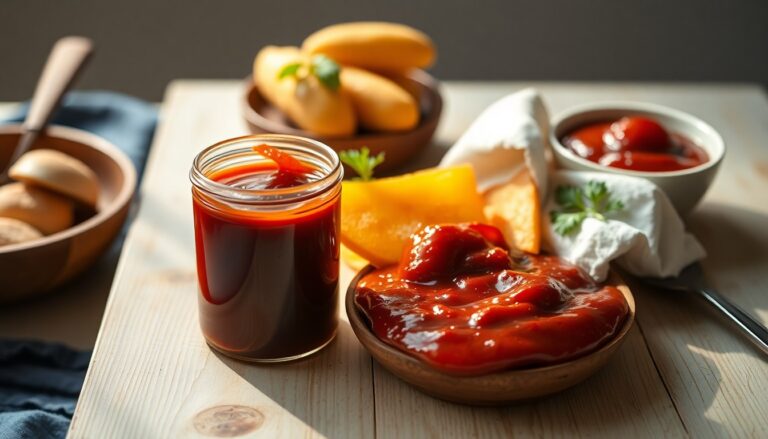
Barbecue sauce, or « BBQ », is a condiment of American origin with a taste that is sweet, smoky and slightly tangy. Made from a base of tomato, vinegar, sugar and spices (smoked paprika, garlic, onion, sometimes molasses or honey), it comes in milder, spicier or hickory-smoked versions. It is used as a marinade, a cooking glaze or an accompanying sauce. With around 136 kcal per 100 g and 30.3 g of carbohydrate, it is above all a sweet sauce, low in fat and with no protein. It adds enjoyment and indulgence to a meal, as long as you use it in moderation as part of a balanced diet.
Macronutrient breakdown
Nutrition table per 100 g
| Calories | 136 kcal |
| Kilojoules | 578 kJ |
| Protein | 0,6 g |
| Carbohydrate | 30,3 g |
| Fat | 0,6 g |
| Fibre | 1,2 g |
Micronutrients per 100 g
All measured nutrients, ranked by share of the daily reference intake.
- Potassium220 mg11 %
- Vitamin E1,17 mg10 %
- Manganese0,16 mg8 %
- Iron0,93 mg7 %
- Calcium46 mg6 %
- Vitamin B99,28 µg5 %
- Copper0,04 mg4 %
- Vitamin B30,53 mg3 %
See the other 10 nutrients
- Magnesium12 mg3 %
- Vitamin B60,04 mg3 %
- Vitamin K11,62 µg2 %
- Phosphorus15 mg2 %
- Omega-6 LA0,19 g2 %
- Vitamin B50,1 mg2 %
- Total omega-30,04 g2 %
- Zinc0,1 mg1 %
- Omega-3 ALA0,02 g1 %
- Vitamin A7,26 µg1 %
Anses Ciqual 2025. Source: Anses, 2025, Ciqual food composition table
Tips
Barbecue sauce has many uses: brushed on grilled food at the end of cooking to form a caramelised glaze, worked into a marinade a few hours before cooking, or served cold with meat, burgers and chips made from sweet potato. Allow a sensible portion of about 15 to 20 g (one tablespoon): this is enough to liven up a dish without weighing down the calorie balance.
Nutrition facts and points to watch. The calories in barbecue sauce come mainly from carbohydrates (30.3 g per 100 g), mostly added sugars. Its glycaemic index therefore tends to be high. It remains very low in fat and contains no significant protein or fibre. For weight control, the main thing to watch is the sugar: read the labels, as some commercial recipes combine glucose syrup and salt. Choose reduced-sugar versions or make your own sauce to better control its energy density. On this subject, the article on empty calories and their alternatives can help you make smarter choices.
Varieties and pairings. Depending on the region, you will find sauces that are more vinegary (Carolina style), sweeter and more tomato-based (Kansas City style) or spicy. It goes perfectly with chicken, pork and beef, but also with grilled vegetables and plant proteins. To vary your condiments, explore other options in the condiments and sauces family, such as ketchup or chilli sauce for a spicier touch.
Tips for active people. Barbecue sauce provides neither protein nor real fibre: it is no substitute for a nutritional source, but it can make a recovery meal more appetising. After exercise, combine a small amount with a source of lean protein (chicken, turkey) and starchy foods to replenish glycogen. If you follow a mass-gain or cutting programme, include it in your daily calorie count without overdoing it. To find out more about energy balance when training, see our feature on fitness nutrition.
Storage. Once opened, keep the bottle in the fridge and use it within the time stated. For a homemade version, blend tomato puree, vinegar, a little maple syrup and smoky spices: you will get a more natural sauce that you can tailor to your taste.