How many bananas a day? No maximum, but one portion among five
The short answer
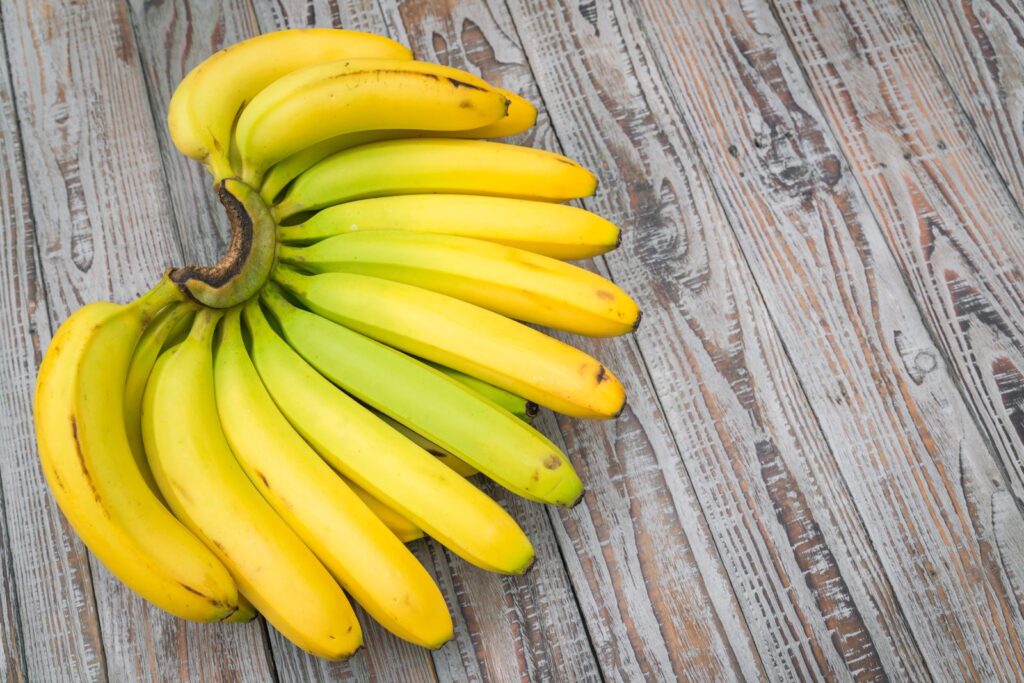
There is no maximum number of bananas per day. One banana counts as one of your 5 portions of fruit and veg, and Manger Bouger (the French public health guidance) suggests, for example, 2 fruits and 3 vegetables a day. One to two bananas a day fit in easily, as long as you vary the other fruit you eat. An average 118 g banana provides 103 kcal, 18.4 g of sugars and 378 mg of potassium.
What a banana provides
| For an average 118 g banana | Amount | Share of the reference |
|---|---|---|
| Calories | 103 kcal | |
| Carbohydrate | 23.2 g, of which 18.4 g sugars | |
| Fibre | 3.2 g | 11% of 30 g |
| Potassium | 378 mg | 11% of 3,500 mg |
| Vitamin B6 | 0.21 mg | 13% of 1.6 mg |
| Magnesium | 33 mg | 11% of 300 mg |
| Vitamin C | 8.4 mg | 8% of 110 mg |
The banana is a handy fruit, but it is not a major source of any nutrient: 11% of the day’s potassium, when a baked potato provides twice as much, as our ranking of foods high in potassium shows, and 11% of the magnesium, far behind seeds, as in our guide to foods high in magnesium.
Two or three bananas: is it too many?
| Bananas per day | Calories | Sugars |
|---|---|---|
| 1 | 103 kcal | 18.4 g |
| 2 | 207 kcal | 36.8 g |
| 3 | 310 kcal | 55.2 g |
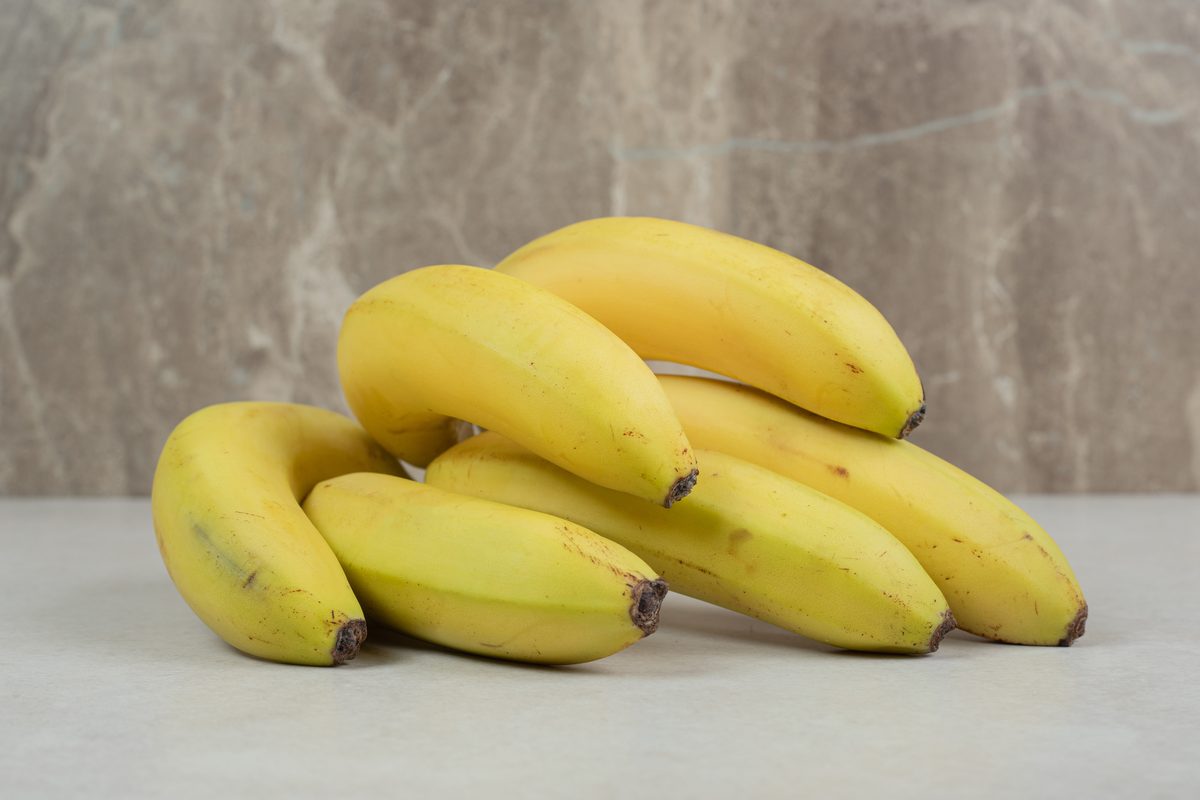
The sugars in a whole banana do not count towards the WHO limit on free sugars. They do, however, count towards the 100 g limit on total sugars set by Anses: three bananas make up more than half of it, and the banana is one of the sweetest fruits, with 15.6 g per 100 g, as our ranking of the lowest-sugar fruits shows. The real drawback of three bananas a day lies elsewhere: they take the place of other fruit, whereas Manger Bouger stresses variety.
The banana compared with other fruit
You often hear that the banana is « the most calorific fruit ». That is true among common fresh fruit, but the gap is smaller than people think. The table compares 100 g of flesh, which is roughly one portion of fruit under Manger Bouger (80 to 100 g).
| Per 100 g | Calories | Sugars | Fibre | Potassium | Vitamin C |
|---|---|---|---|---|---|
| Banana | 87.6 kcal | 15.6 g | 2.7 g | 320 mg | 7.2 mg |
| White grapes | 71.6 kcal | 15.5 g | 1 g | 200 mg | 1.1 mg |
| Mango | 71.1 kcal | 12.9 g | 1.6 g | 150 mg | 25 mg |
| Kiwi | 60.9 kcal | 8.9 g | 2.4 g | 290 mg | 81.9 mg |
| Pear (with skin) | 56.6 kcal | 9.8 g | 2.9 g | 132 mg | 4.3 mg |
| Apple (with skin) | 54 kcal | 10.6 g | 1.4 g | 119 mg | 4.6 mg |
| Orange | 42 kcal | 7.6 g | 2.7 g | 180 mg | 47.5 mg |
| Strawberry | 35.1 kcal | 5.6 g | 3.8 g | 140 mg | 54 mg |
Three things stand out from this table:
- On sugar, grapes are level with the banana: 15.5 g against 15.6 g per 100 g. Yet nobody counts their grapes with the same suspicion.
- On potassium, the banana comes first among these fresh fruits, ahead of the kiwi. That is its real strength, even if it remains modest next to pulses or potatoes.
- On vitamin C, it is far behind: the kiwi contains 11 times more, the orange 7 times more.
This is where the « how many a day » question is decided. Two bananas provide 16.9 mg of vitamin C. One banana and a 100 g kiwi provide about 90 mg, more than 80% of the 110 mg reference. Same number of pieces of fruit, very different intake. Variety is not a slogan: it is what takes vitamin C from 15% to over 80% of the reference without adding anything to your plate.
Raw, dried, plantain, nectar: they are not the same foods
When people talk about « bananas per day », they think of the yellow fruit you peel. But bananas are also eaten dried, cooked (plantain), as juice or in baby food pots. Their profiles have almost nothing in common.
| Per 100 g | Calories | Carbohydrate | of which starch | Sugars | Fibre | Potassium |
|---|---|---|---|---|---|---|
| Raw banana | 87.6 kcal | 19.7 g | 3.8 g | 15.6 g | 2.7 g | 320 mg |
| Raw plantain | 132 kcal | 29.6 g | 23.7 g | not measured | 2.3 g | 499 mg |
| Cooked plantain | 125 kcal | 28.9 g | not measured | 14 g | 2.3 g | 465 mg |
| Dried banana | 365 kcal | 78.4 g | not measured | 47.3 g | 9.9 g | 1,490 mg |
| Banana nectar | 53.8 kcal | 12.8 g | less than 0.35 g | 12.6 g | 0.5 g | 91 mg |
Plantain counts as a starchy food
Raw, plantain contains 23.7 g of starch per 100 g, six times more than the dessert banana. So you do not eat it as it comes: you boil, fry or grill it, and on the plate it plays the role of a potato. With 28.9 g of carbohydrate per 100 g once cooked, 150 g of plantain provides about 43 g of carbohydrate, like a serving of starchy food. It does not fit the same logic as « one banana a day ».
Nectar is no substitute for the fruit
Banana nectar keeps almost all the sugar (12.6 g per 100 g) but loses most of the fibre: 0.5 g against 2.7 g for the fruit. It also contains less potassium, 91 mg against 320 mg. Santé publique France (the French national public health agency) is clear on this: fruit juices are very sweet and low in fibre, and it is best not to exceed one glass a day, preferably freshly squeezed.
Dried banana, for the occasional treat
The same guidelines place dried fruit (dates, raisins, dried apricots) in the « occasional » category, because it is very sweet. A 30 g handful of dried banana already provides 110 kcal and 14 g of sugars, the calorie equivalent of a whole fresh banana, in a volume that fills you up far less.
If you count your carbohydrate: the equivalents
Some people, notably those on insulin or under dietetic supervision, count carbohydrate in fixed portions. Here is how much of each form provides about 20 g of carbohydrate, calculated from Ciqual.
| Form | Amount for 20 g of carbohydrate | What it looks like |
|---|---|---|
| Raw banana | 100 g | one small banana, or a little less than an average one |
| Cooked plantain | 70 g | a few slices |
| Dried banana | 25 g | a small handful |
| Banana nectar | 155 ml | a small glass |
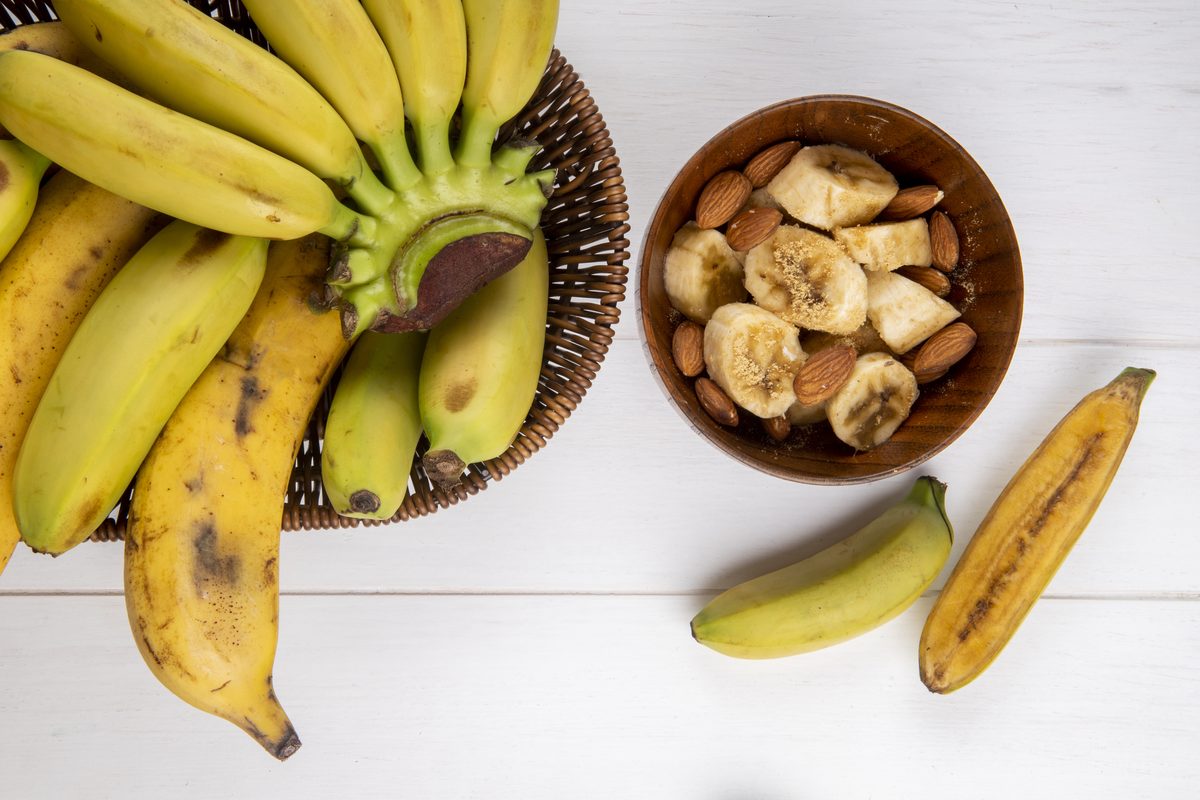
An average 118 g banana provides 23.2 g of carbohydrate, so a little more than a 20 g portion. Ripeness mainly changes the split between starch and sugars, and therefore how quickly these carbohydrates reach the blood. In the international glycaemic index tables (Atkinson, 2008), boiled green banana measured in New Zealand and Jamaica comes in at around 37 to 38, whereas raw ripe banana ranges from 47 (Australia) to 70 (South Africa) depending on variety and country. The detail by ripeness stage is in our guide to bananas and diabetes. Adjusting treatment doses is a matter for your doctor or dietitian.
Bananas and sport: what a study of cyclists showed
The banana is the fruit of the feed station. An American team checked whether it was as good as a sports drink. The study, published in PLoS One in 2012, had 14 trained cyclists ride 75 km twice, in a randomised order:
- once with bananas;
- once with a 6% carbohydrate drink;
- at an equal dose: 0.2 g of carbohydrate per kilo of body weight every 15 minutes.
Result: the same performance (2.41 h against 2.36 h, a non-significant difference) and the same blood glucose. Markers of inflammation, oxidative stress and immunity changed in the same way with both strategies.
In practice: for a 70 kg cyclist, 0.2 g per kilo every 15 minutes is 14 g of carbohydrate per quarter of an hour, or about 56 g an hour. That is close to two and a half bananas an hour, and nearly six bananas over the length of the ride. This figure shows that the right amount depends on context. For an endurance athlete, five or six bananas over the day may be perfectly appropriate. For a sedentary person, they would replace other fruit for no reason.
Two limitations: the study is small, and it involved trained cyclists, not runners, whose stomachs tolerate solid food less well. To organise your intake around training, see our guide on what to eat before and after exercise.
Where to fit your banana into the day
A banana does not have to be eaten on its own. Pairing it with protein and fibre makes the snack more filling. A few ideas from our recipes, with their values calculated per portion:
- At breakfast: the banana and almond porridge (488 kcal, 20.5 g of protein and 10.3 g of fibre), or the high-protein fromage blanc and banana toast (337 kcal, 8.3 g of fibre).
- As a snack: the banana and blueberry smoothie (196 kcal per glass), which blends two fruits, or a slice of healthy banana bread (137 kcal).
- After exercise: the banana and cocoa recovery shake (39.7 g of protein and 54.7 g of carbohydrate).
- For dessert: the banana nice cream (163 kcal), an instant ice cream with no added sugar.
A simple tip to avoid eating too many: keep the banana for the moments when it is really practical (on the move, before sport, in a porridge) and choose other fruit the rest of the time. Overripe bananas belong in banana bread or nice cream rather than in the bin. Each recipe page gives its values per portion, calculated ingredient by ingredient with the Ciqual table, so you can compare a banana breakfast and a simple snack at a glance.
Who should be careful
With kidney failure, potassium may need to be limited: your doctor should set the amount of potassium-rich fruit. For the rest of the population, the official guidelines set no limit. Dried banana is a different food: 365 kcal and 47.3 g of sugars per 100 g, three times sweeter and four times more calorific than the fresh fruit.
Diabetic? Our guide to bananas and diabetes gives the glycaemic index by ripeness and the right portion.
Why the banana helps you reach the 5-a-day target
The « at least 5 fruit and veg a day » guideline is well known, but not as well as you might think. In Anses’s INCA 3 study (2014-2015), only 59% of adults knew that at least five are needed. 38% thought that eating fewer could be enough: 15% answered three a day, 8.7% two a day and 5.5% just one. This knowledge falls with age: 64% among 18 to 44 year-olds, 46% after 65. Among teenagers aged 11 to 17, the guideline is better known: 74% know they should eat at least five a day. But knowing is not enough: it is putting it into practice that is the sticking point.
Among 15 to 17 year-olds, the same study asked why they did not eat enough fruit. 39% of those who thought they ate too little said they did not like it, 12% that it was too expensive and 11% that it was time-consuming to prepare and peel.
That is precisely the banana’s strong point. It peels without a knife, travels without a box and is eaten in two minutes. Its mild taste often appeals to those who turn up their noses at tart fruit. For a teenager or an adult who eats little fruit, one more banana a day is therefore real progress, not an excess.
The question « how many bananas » is actually the wrong way round for most people. The risk is not eating too many, but eating too little fruit and veg in general. Santé publique France reminds us that increasing your fruit and veg intake, even slightly, is good for your health, whether fresh, frozen or tinned.
Frequently asked questions
What is the maximum number of bananas per day?
No maximum is set. One or two a day fit easily into the 5 daily portions of fruit and veg, as long as you vary them.
How many calories are in a banana?
About 103 kcal for an average 118 g banana, according to Ciqual, or 87.6 kcal per 100 g.
Does a banana count as a portion of fruit?
Yes, Manger Bouger gives it as an example of an 80 to 100 g portion.
Do bananas make you put on weight?
No more than any other food at equal calories: 103 kcal per fruit. It is the day’s total that counts.
How much sugar is in a banana?
18.4 g for an average 118 g banana, according to Ciqual. These sugars, in a whole fruit, do not count as free sugars for the WHO.
Is one banana enough for a portion of fruit?
Yes, easily. A portion of fruit is 80 to 100 g according to Santé publique France, and an average banana weighs about 118 g without the skin.
Does dried banana count as a portion of fruit?
Santé publique France advises eating dried fruit occasionally, because it is very sweet. With 365 kcal and 47.3 g of sugars per 100 g (Ciqual), dried banana is no substitute for fresh fruit day to day.
Is a glass of banana nectar worth a banana?
No. It keeps the sugar but almost none of the fibre: 0.5 g per 100 g against 2.7 g for the fruit. The guidelines limit juice to one glass a day.
Is plantain eaten like a banana?
No, it is cooked like a starchy food. Raw, it contains 23.7 g of starch per 100 g, six times more than the dessert banana (Ciqual).
How many bananas during a long effort?
In a study of cyclists, the dose tested (0.2 g of carbohydrate per kilo every 15 minutes) worked out, for 70 kg, at about two and a half bananas an hour, with the same performance as a sports drink.
Other guides on how much to eat
how many seeds a day, how many almonds a day, how much coffee a day, how much sugar a day, how much red meat a week, how much fish a week, how much cheese a day, how many walnuts a day, how many eggs a day, how much water to drink a day, how much dark chocolate a day, how much rice per person, how much pasta per person.
Our sources
- Manger Bouger (Santé publique France), recommendation on fruit and vegetables.
- Table Ciqual 2025 (Anses); USDA FoodData Central, SR Legacy, « Bananas, raw ».
- Anses, nutritional reference values, 2021, and recommendations on sugars, 2016; WHO, guideline on sugars, 2015.
- Santé publique France, Recommandations relatives à l’alimentation, à l’activité physique et à la sédentarité pour les adultes, 2019 (fruit juice, dried fruit, portions of 80 to 100 g).
- Nieman DC, Gillitt ND, Henson DA et al. Bananas as an energy source during exercise: a metabolomics approach. PLoS One, 2012. PMID 22616015.
- Atkinson FS, Foster-Powell K, Brand-Miller JC. International tables of glycemic index and glycemic load values: 2008. Diabetes Care, 2008. PMID 18835944.
- Anses, Étude individuelle nationale des consommations alimentaires 3 (INCA 3), expert collective report, referral 2014-SA-0234, April 2017, chapter 8.3.1.
- Recipe pages on this site: nutritional values per portion calculated from Ciqual.