Iron and anaemia: iron-rich foods and absorption tips
Iron carries oxygen in your blood. In France, deficiency mainly affects women of childbearing age: according to Santé publique France’s Esteban study, 20% of them have completely depleted iron stores and 4% have iron-deficiency anaemia, most often untreated. The good news is that diet makes a real difference, provided you understand one thing: the iron in meat and the iron in plants are not absorbed in the same way. Official reference values, foods, proven absorption tips, diagnosis and supplements: here is what matters.
👉 Free tool: Calorie needs – calculate it in 30 seconds, no sign-up needed.
What is iron for?
Anses points out that iron is used to carry and use oxygen: it is at the heart of haemoglobin (in red blood cells) and myoglobin (in muscles), and takes part in energy production in the mitochondria. An adult man contains about 4 g, of which 70% is in haem form, that is, bound to haemoglobin and myoglobin.
The European regulation on health claims (No. 432/2012) recognises that iron contributes to the normal formation of red blood cells and haemoglobin, normal oxygen transport, normal cognitive function, normal functioning of the immune system, normal energy metabolism and the reduction of tiredness and fatigue.
A mineral the body cannot get rid of
An essential feature: the body does not regulate its iron losses, which remain low (1 to 2 mg a day in adults according to Anses) thanks to efficient recycling of iron from red blood cells. The whole balance rests on intestinal absorption, which increases when stores are low and decreases when they are full. This is why an excess of iron is possible, and why you should not take supplements « just in case ».
How much do you need?
The Anses references (2021) distinguish the average requirement (AR) and the population reference intake (PRI), which covers the needs of almost everyone.
| Population | AR (mg/day) | PRI (mg/day) |
|---|---|---|
| Children aged 1 to 2 | 4 | 5 |
| Children aged 3 to 6 | 3 | 4 |
| Children aged 7 to 11 | 5 | 6 |
| Teenage boys aged 12 to 17 | 8 | 11 |
| Teenage girls aged 12 to 17, light to moderate periods or none | 7 | 11 |
| Teenage girls aged 12 to 17, heavy periods | 7 | 13 |
| Adult men | 6 | 11 |
| Adult women, light to moderate periods | 7 | 11 |
| Adult women, heavy periods | 7 | 16 |
| Pregnant or breastfeeding women | 7 | 16 |
| Post-menopausal women | 6 | 11 |
How are these figures calculated? The agencies divide obligatory iron losses (basal losses, plus periods in women) by an absorption rate. EFSA estimated these losses at 0.95 mg a day in men and 1.34 mg in menstruating women for the median, and used absorption rates of 16% for men and 18% for women. The gap between 11 and 16 mg in women therefore mainly reflects how heavy the periods are.
For vegetarians, the US IOM considers that the iron in a vegetarian diet is absorbed at about 10%, and proposes intakes 1.8 times higher than for omnivores. Anses cites this reasoning without making it a separate French reference.
Who is short of iron in France?
The Esteban study (2014-2016), published by Santé publique France in 2019, gives a precise picture:
- 20% of women of childbearing age have totally depleted iron stores;
- 7% have anaemia;
- 4% have iron-deficiency anaemia, mostly untreated;
- among girls aged 6 to 17, iron-deficiency anaemia exceeds 10%.
Anses classes iron among the nutrients for which meeting needs remains a public health issue. The at-risk groups it cites: those whose needs rise with growth (infants, children, pregnant women), those who lose more (heavy periods, visible or hidden bleeding linked to an illness), and those who absorb poorly (inflammation, infection). If you are a teenage girl, our guide to teenage nutrition complements this point; if you are pregnant, see the pregnancy guide.
Haem and non-haem iron
This is the key to the whole subject. The iron in food comes in two forms:
- Haem iron, found only in animal flesh (meat, offal, fish, seafood), where it makes up 15 to 80% of the iron depending on the species and cut, according to Anses. It is protected inside a haem molecule, which makes it more soluble and insensitive to plant « traps ».
- Non-haem iron, found in almost all foods, plant-based (pulses, cereals, green vegetables) as well as animal-based (eggs, and some of the iron in meat).
Anses sums up the differences in absorption: in a person with adequate stores (ferritin above 40 µg/L), about 25% of haem iron is absorbed, compared with 5 to 10% of non-haem iron depending on the quality of the meal. A reference review (Hurrell and Egli, 2010) estimates overall iron bioavailability at 14 to 18% for a mixed diet and 5 to 12% for a vegetarian diet, in people without stores.
An important point stressed by this review: your iron status generally matters more than the composition of the meal. When your stores are low, your gut absorbs more. This is a natural adaptation, not a reason to neglect your plate.
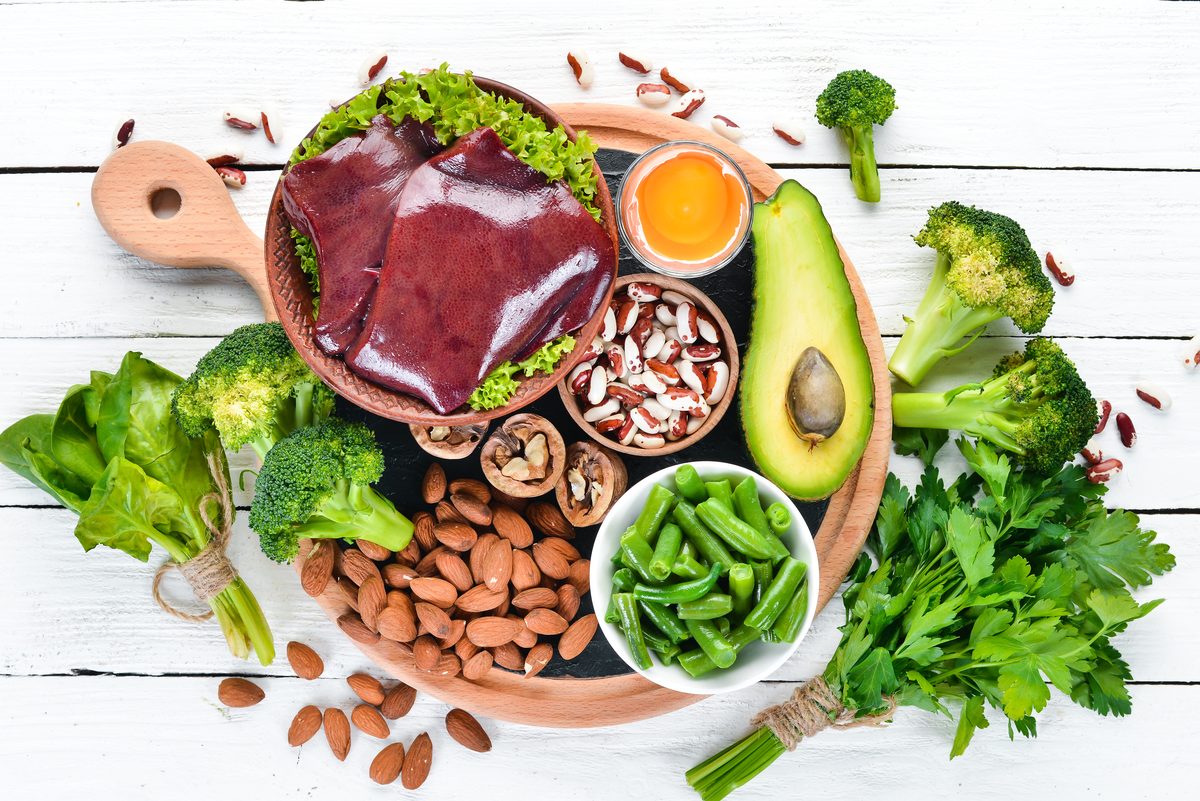
The richest foods in iron
The detailed ranking, portion by portion, is in our guide to iron-rich foods. Here are the orders of magnitude, with the form of iron.
| Food (Ciqual) | Iron (mg per 100 g) | Share of the 11 mg PRI | Share of the 16 mg PRI | Haem iron? |
|---|---|---|---|---|
| Grilled black pudding | 22.8 | 207% | 143% | yes, partly |
| Sesame seeds | 14.6 | 133% | 91% | no |
| Cooked chicken liver | 12 | 109% | 75% | yes, partly |
| Dark chocolate 70% | 11 | 100% | 69% | no |
| Dried pumpkin seeds | 8.82 | 80% | 55% | no |
| Cooked mussels | 3.99 | 36% | 25% | yes, partly |
| Rolled oats | 3.8 | 35% | 24% | no |
| Minced beef 5% fat, cooked | 2.83 | 26% | 18% | yes, partly |
| Cooked green lentils | 2.45 | 22% | 15% | no |
| Plain tofu | 2.4 | 22% | 15% | no |
| Cooked kidney beans | 2.3 | 21% | 14% | no |
| Cooked spinach | 2.14 | 19% | 13% | no |
| Wholemeal bread | 2 | 18% | 13% | no |
| Hard-boiled egg | 1.72 | 16% | 11% | no |
| Cooked chickpeas | 1.3 | 12% | 8% | no |
| Grilled chicken breast | 0.39 | 4% | 2% | yes, partly |
Two remarks: black pudding and offal are very rich, but they are fatty, salty foods that you do not eat every day; and red meat should still be limited to 500 g a week (pork, beef, veal, mutton, lamb, offal included) according to Santé publique France. To work out amounts, see how much red meat per week.
Absorbing iron better: what really works
Vitamin C, proven
European regulation No. 432/2012 authorises the claim « vitamin C increases iron absorption ». It is one of the few dietary effects officially recognised. In practice, combine your plant sources of iron with a food rich in vitamin C in the same meal: raw red pepper (121 mg per 100 g according to Ciqual), fresh parsley (133 mg), kiwi (81.9 mg), a squeeze of lemon juice. Our guide to vitamin C-rich foods gives you more ideas.
The brakes: phytates, polyphenols, calcium
The review by Hurrell and Egli cites the factors that change non-haem iron absorption: phytates (wholegrain cereals, pulses), polyphenols (tea, coffee, red wine) and calcium slow it down; ascorbic acid (vitamin C) and muscle tissue (meat, fish) promote it. Anses explains that tannins and phytates form insoluble complexes with non-haem iron, whereas haem iron, being protected, escapes them.
Effects to keep in perspective
Hurrell and Egli stress it: these effects are clear when measured on a single meal, but more modest across a varied diet over several days. There is no need, then, to avoid tea or wholegrain cereals. Two simple habits are enough: have tea or coffee away from meals rich in plant iron if your stores are low, and add a source of vitamin C to those meals.
An iron-rich vegetarian day
| Time | Foods | Iron (mg) |
|---|---|---|
| Breakfast | 50 g of rolled oats, a kiwi | 1.9 |
| Lunch | 200 g of cooked green lentils, raw red pepper, parsley, lemon | 4.9 |
| Snack | 20 g of pumpkin seeds, 20 g of dark chocolate 70% | 4 |
| Dinner | 100 g of tofu, 100 g of wholemeal bread | 4.4 |
| Total (excluding accompanying fruit and vegetables) | 15.2 | |
This day exceeds the 11 mg PRI and approaches 16 mg. But all this iron is non-haem: its absorption depends on the combinations described above. That is why the kiwi, pepper, parsley and lemon are there. To build your meat-free menus, see our guide to becoming vegetarian; Manger Bouger reminds us that vegans can run short of iron.
Recognising and confirming a deficiency
Tiredness, breathlessness on exertion, pallor: these signs go with anaemia, but they are not specific. Only a blood test settles it. The Haute Autorité de santé (HAS, France’s national health authority) specified in 2011 which test to request:
- in common cases, a ferritin test alone as a first step: low ferritin is enough to confirm the deficiency;
- in case of inflammation, chronic kidney disease, or if ferritin is not low despite strong suspicion: iron and transferrin tests to calculate the transferrin saturation coefficient;
- testing serum iron alone, or iron + ferritin, is not recommended.
Remember that, according to the HAS, normal ferritin does not always rule out a deficiency when there is inflammation or kidney disease: it is precisely for these cases that it provides for a fuller work-up. Your doctor will also look for the cause of the shortfall (heavy periods, gut bleeding, absorption disorder), which is at least as important as correcting it.
Iron supplements
Effective when there is a deficiency
A Cochrane review (Low et al., 2016, 67 trials, 8,506 menstruating women) shows that daily iron supplementation reduces the risk of anaemia (RR 0.39) and iron deficiency (RR 0.62), and increases haemoglobin. In return, digestive problems are more frequent: diarrhoea (RR 2.13) and constipation (RR 2.07).
Every other day, a line of research
A Swiss study (Stoffel et al., 2017) in women with low stores (ferritin ≤ 25 µg/L) compared 60 mg of iron every day for 14 days with 60 mg every other day for 28 days: cumulative absorption was better every other day (21.8% versus 16.3%). The explanation put forward: each dose raises hepcidin, a hormone that slows the absorption of the next dose. This is a study of 40 women: something to discuss with your doctor, not to apply on your own.
Limits to respect
- In 2024, EFSA set a safe intake level of 40 mg a day for adults, pregnant and breastfeeding women included (35 mg for ages 15 to 17, 10 mg for ages 1 to 3). This level does not apply to people treated for anaemia under medical supervision.
- Digestive effects have been seen from 50 to 60 mg a day of non-haem iron as a supplement, especially taken on an empty stomach, Anses points out.
- A very high acute intake (of the order of 20 mg per kilo of body weight) can cause serious gut damage: keep tablets out of children’s reach.
Too much iron exists too
Anses judges the risk of overload from food to be negligible when the gut works normally. But chronic overload can occur in blood disorders or haemochromatosis, a genetic iron-overload disease described by the HAS. This is why you should never take iron without a blood test. If your results show ferritin that is too high, our guide high ferritin: what to eat takes stock.
Myths about iron
« Spinach is the best source of iron »
No. With 2.14 mg per 100 g cooked according to Ciqual, it does less well than green lentils (2.45 mg) and far less well than pumpkin seeds or black pudding. And its iron is non-haem.
« Without meat, you are bound to be deficient »
Not so either. Manger Bouger points out that most vegetarians consume enough protein and flags a risk of iron shortfall mainly in vegans. A well-planned plant-based diet provides plenty of iron; it is absorption that needs attention.
« You have to cut out tea and coffee »
Moving them away from meals is enough. The effect of polyphenols is clear on a single meal but more modest across the diet as a whole.
« An iron supplement for tiredness can’t do any harm »
It can. Without a deficiency, it brings no proven benefit and exposes you to digestive problems; in haemochromatosis, it worsens the overload.
Iron-rich recipes
On the menu: lentil and spinach dahl, chickpea, spinach and tomato curry spiced up with curry powder, or saag tofu. Finish with a kiwi or a few orange segments for the vitamin C. On the vegetarian recipes side, there is no shortage of ideas.
Precautions
- No iron supplement without a blood test or medical advice.
- An iron deficiency can come from bleeding, visible or hidden, which Anses cites among the causes: your doctor will look for the origin before treating.
- If you take other medicines, ask your pharmacist how to space out the iron.
- Black stools on iron: this is a known effect (it is in fact on this sign that EFSA based its safe level), but mention it if you are in doubt.
💼 Careers & guidance: interested in this field professionally? Discover our career profiles: micronutritionist.
Frequently asked questions
How much iron a day does a woman need?
Anses sets the PRI at 11 mg a day if periods are light to moderate and at 16 mg if they are heavy, as well as during pregnancy and breastfeeding. After the menopause, it is 11 mg.
Which test shows whether I am short of iron?
Ferritin, as a first step according to the HAS. In case of inflammation or kidney disease, your doctor will add the transferrin saturation coefficient.
Which food contains the most iron?
Among common foods, black pudding (22.8 mg per 100 g according to Ciqual), sesame seeds, chicken liver and dark chocolate. For the best-absorbed iron, it is meat, offal, fish and seafood.
Do you need to eat red meat to get iron?
No, but it is a source of well-absorbed iron. If you eat it, stay under 500 g a week according to Santé publique France. Otherwise, make up for it with pulses, seeds, wholegrain cereals and vitamin C in the same meal.
Does lemon really help you absorb iron?
Yes, thanks to its vitamin C: the European Union authorises the claim « vitamin C increases iron absorption ». The effect is clearer on a single meal than on the diet as a whole.
What is the maximum dose of iron as a supplement?
EFSA sets a safe intake level of 40 mg a day for an adult, from all sources combined. Anaemia treatment under medical supervision may exceed this level.
This article is for information only and does not replace the advice of your doctor or a dietitian.
Our sources
- Anses. Avis et rapport d’expertise collective relatifs à l’actualisation des références nutritionnelles françaises en vitamines et minéraux (saisine 2018-SA-0238). Mars 2021.
- Anses. Table de composition nutritionnelle des aliments Ciqual. 2025.
- Santé publique France. Esteban 2014-2016, chapitre dosages biologiques des vitamines et minéraux. Décembre 2019.
- Haute Autorité de santé. Choix des examens du métabolisme du fer en cas de suspicion de carence en fer. Juin 2011.
- Haute Autorité de santé. Prise en charge de l’hémochromatose liée au gène HFE (hémochromatose de type 1). Juillet 2005.
- EFSA NDA Panel. Scientific opinion on the tolerable upper intake level for iron. EFSA Journal, juin 2024.
- Commission européenne. Règlement (UE) n° 432/2012 établissant une liste des allégations de santé autorisées. 2012.
- Hurrell R, Egli I. Iron bioavailability and dietary reference values. American Journal of Clinical Nutrition, 2010. PMID 20200263.
- Low MS, Speedy J, Styles CE, De-Regil LM, Pasricha SR. Daily iron supplementation for improving anaemia, iron status and health in menstruating women. Cochrane Database of Systematic Reviews, 2016. PMID 27087396.
- Stoffel NU, Cercamondi CI, Brittenham G et al. Iron absorption from oral iron supplements given on consecutive versus alternate days and as single morning doses versus twice-daily split dosing in iron-depleted women. Lancet Haematology, 2017. PMID 29032957.
- Santé publique France, Manger Bouger. Peut-on être végétarien ou végétalien sans risque pour sa santé ? ; Limiter la viande pour préserver sa santé (sante.fr).